Finding digital activities that children can enjoy while also learning something useful can be difficult. Many games are designed primarily to keep players engaged, while educational activities can sometimes feel too much like schoolwork. PBS Kids Games take a different approach by turning familiar characters, stories, and everyday challenges into interactive learning experiences.
The platform brings together games connected to PBS KIDS programming, covering areas such as literacy, mathematics, science, creativity, problem-solving, and social-emotional development. The biggest advantage is that children can practice these skills through interaction rather than simply watching or memorizing information.
For parents, the real question is not whether a game is labeled “educational.” It is whether the activity is appropriate for a child’s age, whether the learning objective is clear, and whether screen use fits comfortably into the child’s broader routine.
This guide looks at what makes PBS KIDS games useful, how different types of activities support learning, where parents can add value, and what to consider before making digital play part of a child’s daily routine.
What Are PBS Kids Games?
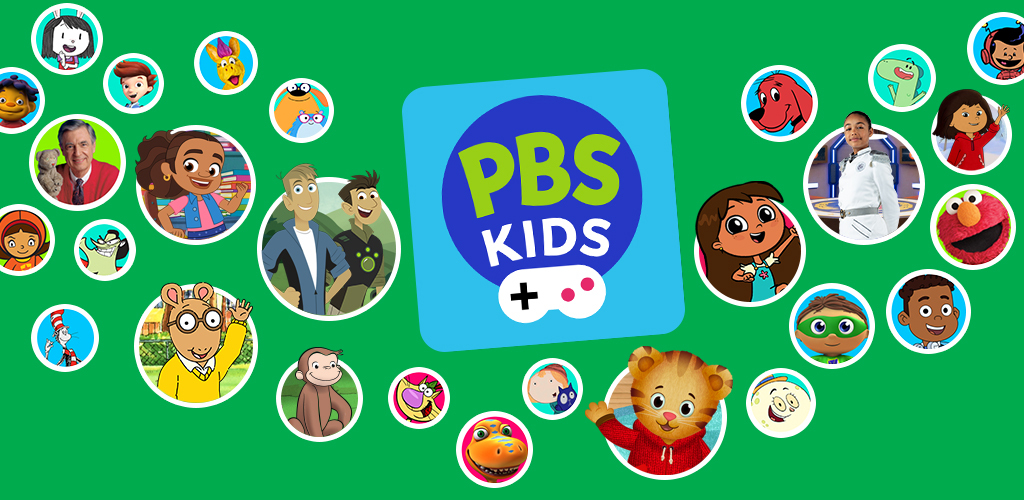
PBS Kids Games are interactive digital activities created around the educational mission and children’s programming of PBS KIDS.
The games cover a wide range of subjects and play styles. Depending on the title, a child may be asked to recognize letters, count objects, solve a puzzle, explore a science concept, create something, or help a familiar character complete a task.
This variety matters because young children do not all learn in the same way.
One child may enjoy puzzles, while another responds better to stories. Someone who becomes bored with traditional worksheets may become interested when the same concept is presented as an interactive challenge.
The games are therefore best viewed as supplementary learning activities, rather than replacements for classroom teaching, reading, outdoor play, or hands-on experiences.
Why Learning Through Games Can Work
Young children naturally learn by doing.
They experiment, make mistakes, try again, and observe what happens. Well-designed educational games can reproduce part of this process in a digital environment.
Instead of simply presenting a number, for example, a game can ask a child to use numbers to complete a task.
Instead of showing a vocabulary word, an activity can place that word inside a story or problem.
This creates a simple learning loop:
Explore → Try → Receive feedback → Adjust → Try again
The interactive element can make practice feel less like a formal lesson.
However, the quality of the activity still matters. A game is not automatically educational simply because it contains numbers, letters, or colorful characters. The interaction needs to reinforce the skill rather than distract from it.
PBS KIDS Games and Early Literacy
Early literacy involves much more than learning the alphabet.
Children gradually develop skills involving:
- Letter recognition
- Sounds and phonics
- Vocabulary
- Listening
- Story comprehension
- Sequencing
- Communication
- Early writing awareness
Games can provide additional opportunities to practice these skills.
For example, an activity might ask children to identify letters, match sounds, complete words, or follow a story.
Why Familiar Characters Help
A familiar character can make an unfamiliar task feel less intimidating.
When children already recognize the setting or characters from PBS KIDS programming, they may be more willing to explore the activity.
The character itself does not create the learning benefit. Rather, familiarity can reduce the barrier to starting the task and make the activity feel more approachable.
Parents can strengthen this benefit by asking children questions afterward.
For example:
- “What happened in the story?”
- “Which word did you learn?”
- “Why did the character make that choice?”
A short conversation can turn a digital activity into a broader learning experience.
Math Skills Through Interactive Play
Early mathematics is another common focus.
Children can practice concepts such as:
- Counting
- Number recognition
- Shapes
- Patterns
- Sorting
- Measurement
- Basic problem-solving
Interactive games can make these concepts concrete.
Instead of asking a child to complete a page of counting exercises, a game may involve counting objects to solve a problem.
That difference can be useful for children who respond better to context and action.
Look Beyond the Correct Answer
Parents should not focus only on whether a child gets an answer right.
The more interesting question is how the child reached the answer.
If a child correctly identifies five objects, ask them how they counted them.
If they complete a pattern, ask what comes next and why.
These small conversations encourage children to explain their thinking rather than simply memorize results.
Science and Discovery
Science learning is particularly well suited to interactive experiences because children are naturally curious about how things work.
PBS KIDS activities can introduce ideas related to:
- Nature
- Animals
- Weather
- The environment
- Physical processes
- Observation
- Cause and effect
The strongest learning opportunity often comes when the child makes a prediction before interacting.
For example:
“What do you think will happen if we change this?”
Afterward, compare the prediction with the result.
That turns a simple game interaction into a basic scientific-thinking exercise.
Problem-Solving and Critical Thinking
Not every useful learning outcome has to be tied to a school subject.
Puzzle-based and decision-based activities can encourage children to:
- Recognize patterns
- Compare choices
- Plan ahead
- Test solutions
- Identify mistakes
- Adjust strategies
These skills are valuable because they transfer across different situations.
A child who learns that one approach does not work and then tries another is practicing a basic form of problem-solving.
The important part is giving the child enough freedom to experiment.
Social and Emotional Learning
Child development also includes understanding emotions, relationships, cooperation, and self-regulation.
Some PBS KIDS content incorporates situations involving:
- Friendship
- Cooperation
- Empathy
- Sharing
- Managing emotions
- Understanding other perspectives
Digital activities cannot replace real social interaction, but they can provide situations that give parents and educators something to discuss.
For example, after an activity, a parent might ask:
“How do you think that character felt?”
That simple question can encourage children to identify emotions and think about another person’s perspective.
Gentle Feedback Can Support Confidence
Children do not need every activity to be effortless.
They need opportunities to make mistakes without feeling that mistakes are failures.
Well-designed educational games can provide immediate feedback and allow children to try again.
This can help children understand an important idea:
Getting something wrong is part of figuring it out.
Parents can reinforce this by avoiding excessive correction.
Instead of immediately giving the answer, try:
“What could you try differently?”
That keeps the child involved in the problem-solving process.
Age Appropriateness Matters
One of the most important considerations for parents is age.
A game that is appropriate for a preschooler may be too easy for an older child. Likewise, an activity designed for a more advanced learner may create unnecessary frustration for a younger player.
Before choosing an activity, consider:
- The child’s age
- Reading ability
- Attention span
- Current interests
- Learning needs
- Difficulty level
The goal is to find an activity that is challenging enough to be interesting but not so difficult that the child immediately gives up.
Accessibility and Ease of Use
Young children often struggle with complicated controls.
Educational games work best when the interface makes the intended action obvious.
Clear instructions, recognizable symbols, understandable audio, and simple interactions can make digital activities easier for children to navigate independently.
Accessibility also matters for children with different abilities and learning needs.
Parents should observe how their child interacts with an activity rather than assuming that a game marketed for children will automatically work equally well for every child.
If a child consistently struggles with navigation rather than the actual learning task, another activity may be a better choice.
The Role of Parents in Digital Learning
One misconception about educational games is that the best experience happens when adults leave children completely alone.
Independent play has value, but occasional involvement can make digital learning much more meaningful.
Parents can:
- Help the child choose an appropriate activity.
- Let the child explore independently.
- Ask questions afterward.
- Connect the game’s concept to everyday life.
- Encourage the child to explain what they learned.
For example, if a game introduces shapes, parents can point out similar shapes around the house.
If an activity involves counting, everyday objects can become additional practice.
This is where screen-based learning can connect with the real world.
PBS Kids Games as a Supplement, Not a Replacement
Educational games should sit within a larger childhood experience.
Children also need:
- Physical activity
- Face-to-face interaction
- Reading
- Creative activities
- Outdoor exploration
- Rest
- Unstructured play
A digital activity can complement these experiences, but it cannot provide everything a growing child needs.
This distinction is particularly important when parents are evaluating educational technology.
The question should not be:
“Can this game teach my child everything?”
Instead:
“Does this activity add something useful to my child’s existing learning and play?”
Managing Screen Time Without Making It a Battle
Even high-quality educational content is still screen-based.
Parents can make digital play easier to manage by creating predictable routines.
For example:
- Choose a reasonable time of day.
- Decide the stopping point in advance.
- Give a short warning before the session ends.
- Avoid using the game as the only form of entertainment.
- Encourage a transition to another activity afterward.
Predictability is often more effective than repeatedly arguing about when a child should stop.
A child who knows that digital play ends after a particular routine may find the transition easier.
How Educators Can Use PBS KIDS Games
Teachers can also use digital activities as supplementary classroom resources.
A game can work particularly well when it reinforces something students are already learning.
For example, after introducing patterns, a teacher might use an interactive activity to provide additional practice.
The game should support the lesson rather than become the lesson itself.
Teachers can also use discussion to extend the experience.
Students can explain:
- What they tried
- What worked
- What failed
- Why they changed their approach
This turns gameplay into a collaborative learning activity.
Creativity Is More Than Entertainment
Creative digital activities can give children opportunities to experiment with design, storytelling, music, drawing, or construction.
The value is not necessarily the finished product.
The process matters.
When children make choices, change their ideas, and experiment with different possibilities, they practice flexible thinking.
Parents can encourage this by asking:
“Why did you choose that?”
rather than simply:
“Is it finished?”
That small change places attention on the creative process.
Common Mistakes Parents Should Avoid
Assuming every game teaches equally well
Educational branding does not mean every activity is equally useful for every child.
Choose activities based on your child’s needs.
Focusing only on academic skills
Social-emotional learning, creativity, curiosity, and problem-solving also matter.
Taking over the game
If an adult solves every problem, the child loses the opportunity to experiment.
Offer hints rather than immediate solutions.
Using digital games as a substitute for everything else
Educational screen time should complement other forms of play and learning.
Treating screen time as automatically harmful or automatically beneficial
The context matters.
What the child is doing, how long they are doing it, what the activity replaces, and whether it is appropriate for their developmental stage all matter.
Three Practical Insights Parents Often Miss
The conversation after the game can matter as much as the game
A child may spend only a few minutes interacting with an activity, but a short discussion afterward can help connect that experience to real-world understanding.
Ask the child to explain rather than simply asking whether they enjoyed it.
The best game is not always the most educationally advanced one
If a child is bored, frustrated, or unable to navigate an activity, its theoretical learning value becomes less important.
A simpler game that encourages genuine participation may produce a better experience.
Watch what the child does without help
Independent behavior provides useful information.
If a child immediately asks for the answer, they may need more confidence or a simpler challenge. If they experiment with several approaches before asking for help, the activity may be encouraging productive problem-solving.
Why PBS KIDS Games Remain Useful
The enduring appeal of PBS KIDS games comes from their combination of familiar children’s content and interactive learning.
They offer a middle ground between passive entertainment and formal instruction.
A child can play, make decisions, explore ideas, and practice foundational skills without every interaction feeling like a worksheet.
For parents, the strongest value is not that a game can replace traditional learning. It is that a thoughtfully selected activity can create another opportunity for curiosity.
Conclusion
PBS Kids Games demonstrate how digital play can support learning when technology is used with a clear purpose.
Their activities can reinforce early literacy, mathematics, science, problem-solving, creativity, and social-emotional development. Familiar characters and simple interactive mechanics can make these concepts approachable, while immediate feedback gives children opportunities to experiment and try again.
But the best results come from putting digital play in context.
Choose activities appropriate for the child’s age and interests. Avoid measuring educational value solely by scores or correct answers. Let children experiment, ask them about what they discovered, and connect digital concepts to everyday experiences.
Most importantly, remember that a screen is only one part of childhood.
The strongest learning environment combines digital exploration with books, conversation, physical activity, creativity, social interaction, and plenty of opportunities to discover the world beyond the screen.
Used that way, PBS KIDS games are not simply a way to keep children occupied. They can become a small but useful part of a much larger journey of learning through play.
FAQ
What are PBS Kids Games?
PBS Kids Games are interactive games and activities associated with PBS KIDS programming. They cover subjects and developmental areas such as literacy, mathematics, science, creativity, and problem-solving. They are designed as children’s learning and entertainment experiences rather than replacements for formal education.
Are PBS Kids Games educational?
Many PBS KIDS games are designed around specific educational or developmental goals. Depending on the activity, children may practice counting, letters, vocabulary, patterns, problem-solving, scientific thinking, or social-emotional skills. Their value depends on choosing an activity that matches the child’s age, ability, and learning needs.
What can children learn from PBS Kids Games?
Children can encounter a range of foundational skills through different activities, including early literacy, mathematics, science concepts, problem-solving, creativity, and social-emotional learning. The exact learning objective varies from one game to another. Parents can increase the learning value by discussing the activity and connecting it with real-life examples.
Are PBS Kids Games suitable for preschool children?
Many PBS KIDS activities are designed with young children in mind, but suitability varies by game. Parents should consider the recommended age or skill level, reading ability, difficulty, and how comfortably their child can use the controls. A suitable activity should be understandable enough to explore while still providing an appropriate challenge.
Should parents play PBS Kids Games with their children?
Parents do not need to participate in every session. Independent exploration can be valuable, but occasional involvement can deepen learning through questions and conversation. Asking a child to explain what happened or why they made a particular choice can turn a short game session into a broader learning opportunity.
Can PBS Kids Games replace traditional learning?
No. Educational games are best treated as supplementary experiences. Children still benefit from reading, physical activity, social interaction, hands-on exploration, creative play, and formal education. Digital games can complement these experiences when they are selected thoughtfully and used as part of a balanced routine.