
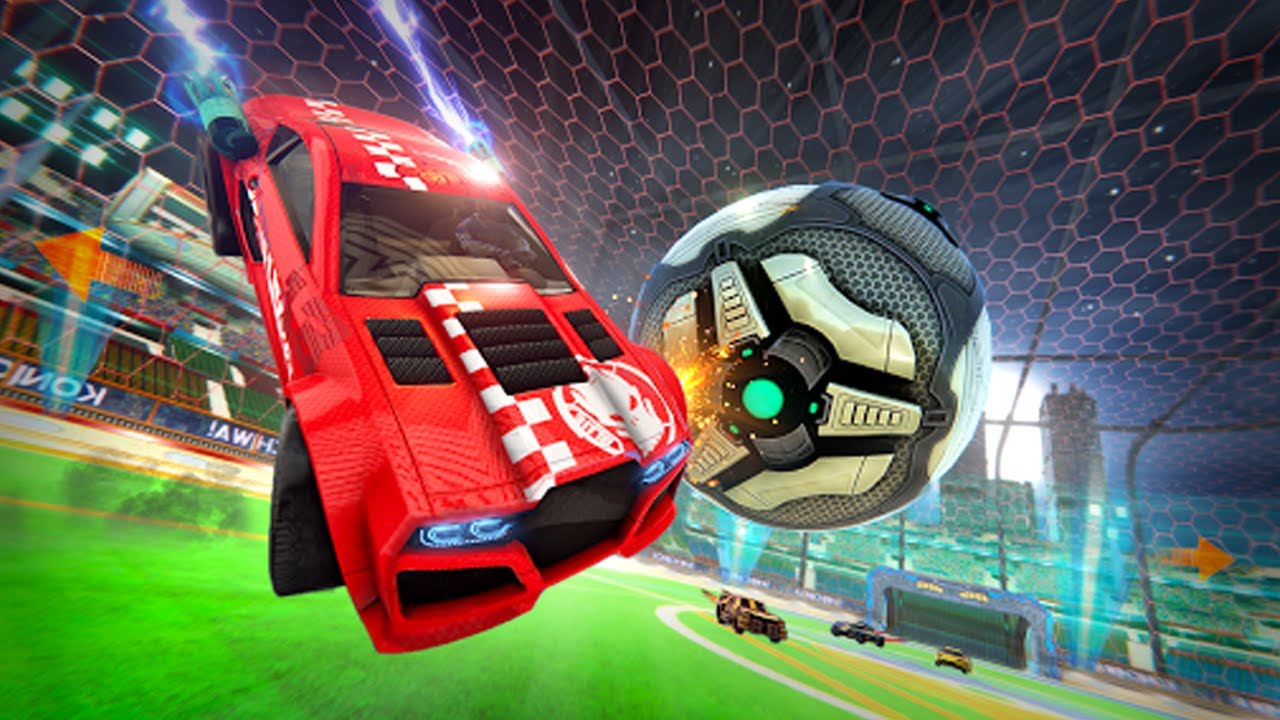
Imagine combining the speed of a racing game with the competitive excitement of soccer. Instead of controlling footballers on a traditional pitch, you drive a fast car, chase a giant ball and try to score before your opponents. That simple idea captures the appeal behind Rocket Soccer Derby.
Games built around this concept have become popular because they combine two very different styles of play: fast vehicle control and team-based sports strategy. You need quick reactions, good positioning and an understanding of momentum to succeed.
Whether you’re discovering Rocket Soccer Derby for the first time or looking for ways to improve, understanding its core mechanics can make the experience much more enjoyable.
What Is Rocket Soccer Derby?
Rocket Soccer Derby is a car-based soccer game concept in which players use vehicles instead of traditional football players. The objective is straightforward: control your car, hit the ball and score more goals than the opposing side.
The appeal comes from the unusual combination of driving and football mechanics. A traditional racing game rewards speed and lap times, while a soccer game focuses on positioning, passing and scoring. A car-soccer game requires players to think about both at the same time.
A typical match can involve:
- Driving around a dedicated arena
- Hitting and redirecting a large ball
- Using acceleration or boost
- Defending your goal
- Setting up scoring opportunities
- Working with teammates
- Recovering quickly after collisions
This combination makes every match unpredictable. A player can dominate for several minutes and still concede a goal because of one poorly timed challenge.
How Rocket Soccer Derby Gameplay Works
The basic gameplay is easy to understand, which is one reason the concept appeals to newcomers.
You control a vehicle inside an enclosed soccer arena. The ball can be pushed, bounced or redirected by hitting it with the car. Your objective is to move the ball toward the opponent’s goal while preventing the other team from doing the same.
However, the simplicity disappears once you start playing competitively.
Speed Isn’t Everything
A common beginner mistake is assuming that the fastest player will automatically win.
In reality, uncontrolled speed can make it harder to position your car correctly. Sometimes slowing down and approaching the ball from the right angle is more effective than using maximum acceleration.
Good players learn to balance:
- Speed
- Positioning
- Momentum
- Timing
- Ball direction
- Defensive awareness
That balance separates random movement from deliberate play.
Why Physics Matter
Physics are one of the most important elements in car-based soccer.
When your vehicle hits the ball, the result depends on factors such as the direction of the vehicle, its speed and the point of impact. The ball can bounce off walls, change direction after collisions and create unexpected opportunities.
Understanding these interactions helps players predict what will happen next.
For example, instead of simply hitting the ball toward the goal, an experienced player may intentionally send it toward a wall so that it rebounds into a more favorable position.
Momentum Creates Opportunities
Momentum can be both useful and dangerous.
A fast-moving vehicle can deliver a powerful hit, but excessive speed can also send you out of position. After attacking the ball, you may need several seconds to recover and return to a defensive position.
This creates an important strategic question:
Is hitting the ball now worth losing your position?
Learning to answer that question is one of the biggest steps toward becoming a better player.
The Importance of Boost
Boost or turbo mechanics add another layer to the experience.
A boost can help you:
- Reach the ball quickly
- Recover defensively
- Chase an opponent
- Make a powerful challenge
- Create a scoring opportunity
- Escape a dangerous position
However, using boost constantly isn’t necessarily effective.
If you spend all your boost chasing the ball and an opponent immediately launches a counterattack, you may have no acceleration available to recover.
Use Boost Strategically
Instead of asking, “Can I use boost?”
Ask:
“Will using boost now create a meaningful advantage?”
Save it for important moments such as:
- A goal-line save
- A fast counterattack
- A race toward a loose ball
- A recovery after a missed challenge
- A decisive offensive push
Good boost management can be more valuable than simply having a faster car.
Offensive Strategy
Scoring goals requires more than repeatedly hitting the ball toward the opponent’s net.
1. Approach From a Useful Angle
The direction from which you contact the ball influences where it travels.
Try to approach the ball in a way that gives you control over its next movement rather than simply making contact.
2. Look for Open Space
If several players are fighting around the ball, rushing into the same area can create unnecessary chaos.
Sometimes the best move is to position yourself elsewhere and wait for the ball to come toward you.
3. Follow Up Your Shot
A powerful shot isn’t always enough.
If the goalkeeper blocks it, the ball may rebound directly into another player’s path. Staying nearby can allow you to capitalize on the second opportunity.
4. Don’t Chase Every Ball
This is especially important in team matches.
If two teammates are already attacking, another player may be more useful by staying behind them and preparing for a counterattack.
Defensive Strategy
Defense is often overlooked by beginners because scoring feels more exciting.
But reliable defense can completely change the outcome of a match.
Protect the Center
The area directly in front of your goal is particularly important. Losing control of this space can give opponents a clear shooting opportunity.
Watch the Ball and Players
Don’t focus exclusively on the ball.
Look at where opposing players are positioned. A player approaching from the side may be preparing for a pass or rebound.
Be Patient
A premature defensive challenge can actually help the opponent.
Instead of attacking immediately, wait until the opponent commits to a direction and then challenge the ball.
Teamwork Makes a Difference
Car-based soccer becomes significantly more interesting when multiple players work together.
A simple team structure can involve:
- Attacker: focuses on creating scoring opportunities
- Support player: follows attacks and collects rebounds
- Defender: protects the goal and prepares for counterattacks
These positions don’t have to remain fixed. Players can rotate depending on the situation.
The biggest mistake is having every player chase the ball simultaneously.
When everyone attacks, nobody is left to defend.
Common Beginner Mistakes
If you’re new to Rocket Soccer Derby, avoiding a few basic mistakes can dramatically improve your performance.
Chasing the Ball Constantly
The ball isn’t always your responsibility.
Sometimes your best move is to stay in position.
Using Boost at the Wrong Time
Boost is valuable. Treat it as a strategic resource rather than an unlimited speed button.
Ignoring Your Teammates
Even excellent individual players can struggle if they don’t coordinate with their team.
Attacking Without Considering Defense
Before moving forward, consider what happens if you miss.
If you’re the last player defending your goal, a failed challenge can immediately create a scoring chance for the opposition.
Overcommitting
Going all-in on every ball creates gaps that opponents can exploit.
Controlled aggression is usually more effective than constant aggression.
How to Improve Your Skills
Improvement comes from understanding why you make mistakes rather than simply playing more matches.
Practice Car Control
Spend time learning how your vehicle accelerates, turns and stops.
You should eventually be able to position your car without thinking about every individual control.
Learn Ball Rebounds
Pay attention to how the ball reacts to walls and other vehicles.
Once you understand common rebound patterns, you can predict where the ball is likely to go.
Watch Your Own Matches
If replay functionality is available, review important moments.
Ask yourself:
- Why did I miss the ball?
- Was I positioned correctly?
- Should I have saved my boost?
- Did I leave the goal exposed?
- Could I have passed instead?
These questions turn mistakes into useful practice.
Customization and Visual Appeal
Vehicle customization can add another enjoyable element to car-based sports games.
Depending on the particular version or platform, players may encounter options involving:
- Vehicle appearance
- Colors
- Decals
- Wheels
- Visual effects
- Cosmetic accessories
Customization doesn’t necessarily improve gameplay. Its main purpose is to allow players to create a vehicle that feels personal.
That distinction is important because competitive advantage should ideally come from player skill rather than cosmetic purchases.
Why Car-Soccer Games Are So Entertaining
The appeal of this genre comes from its unpredictability.
Traditional sports have unpredictable moments, but adding vehicles dramatically increases the possibilities.
A single play can involve:
- A player racing toward the ball.
- Another player attempting a defensive challenge.
- The ball bouncing off a wall.
- A teammate arriving unexpectedly.
- A last-second shot toward the goal.
- A dramatic save or rebound.
This chain reaction can happen within seconds.
That’s why matches can feel exciting even when very little seems to be happening at the beginning.
Rocket Soccer Derby vs. Traditional Racing Games
The biggest difference is the objective.
| Feature | Car-Soccer Gameplay | Traditional Racing |
|---|---|---|
| Main objective | Score goals | Finish fastest |
| Main skill | Ball control + driving | Driving |
| Teamwork | Often important | Usually limited |
| Arena | Enclosed sports field | Racing circuit or road |
| Strategy | Positioning and attacks | Racing lines and overtaking |
| Physics | Vehicle + ball interaction | Vehicle handling |
| Match outcome | Goals | Finishing position |
This hybrid structure gives car-soccer games a broader gameplay loop than ordinary racing.
Is Rocket Soccer Derby Easy to Learn?
The basic controls can be easy to understand, but becoming consistently good requires practice.
A new player can quickly learn how to:
- Drive
- Accelerate
- Turn
- Hit the ball
- Defend the goal
The difficult part is learning when to perform each action.
Timing, positioning and anticipation become increasingly important as opponents improve.
That’s what creates a satisfying learning curve: the controls may be simple, but the decisions are not.
Responsible and Safe Gaming
If you’re playing Rocket Soccer Derby or another online car-soccer game, it’s worth keeping a few practical points in mind.
Use legitimate game platforms and avoid suspicious downloads claiming to provide modified or “unlocked” versions. Unknown files can contain malware or attempt to steal account information.
For younger players, parents can also review:
- Chat settings
- Privacy controls
- Spending options
- Playtime
- Friend and communication settings
A good gaming experience should be enjoyable without creating unnecessary security or financial risks.
The Future of Car-Soccer Games
The broader concept of combining sports with vehicles still has plenty of room for innovation.
Future games could introduce:
- Larger multiplayer arenas
- More advanced vehicle physics
- New competitive formats
- Expanded customization
- Cross-platform multiplayer
- Virtual reality experiences
- More sophisticated spectator features
Improved hardware could also make vehicle movement and ball physics increasingly realistic.
At the same time, developers will need to maintain the balance between realism and fun. A game doesn’t need to perfectly simulate real-world physics to be enjoyable.
FAQ
What is Rocket Soccer Derby?
Rocket Soccer Derby refers to a car-based soccer game concept where players control vehicles and compete to score goals by hitting a large ball around an arena.
Is Rocket Soccer Derby a racing game?
It combines racing-style vehicle controls with soccer mechanics. Unlike traditional racing games, winning isn’t determined by completing a track first. Players must score goals and work strategically.
How do you get better at Rocket Soccer Derby?
Focus on car control, positioning, boost management and defensive awareness. Avoid constantly chasing the ball and learn how rebounds and momentum affect gameplay.
Is speed the most important factor?
No. Speed helps, but timing and positioning are equally important. A player who moves intelligently can often outperform someone who simply drives faster.
Is teamwork important?
Yes. In team-based matches, coordinated positioning is usually more effective than having every player chase the ball.
Final Thoughts
Rocket Soccer Derby represents an entertaining idea at the intersection of racing and soccer. Its appeal comes from a simple premise that creates surprisingly complex gameplay: drive a vehicle, control the ball and outplay the opposition.
The best players aren’t necessarily the ones who move the fastest. They understand positioning, manage their boost, anticipate rebounds and know when to attack or defend.
That combination of accessibility and depth is what makes car-based soccer so engaging. Every match can produce a different story, from spectacular goals and unexpected rebounds to last-second defensive saves.
Whether you’re a casual player looking for quick matches or someone interested in mastering competitive mechanics, the key is the same: learn the physics, think ahead, work with your team and don’t confuse speed with strategy.