
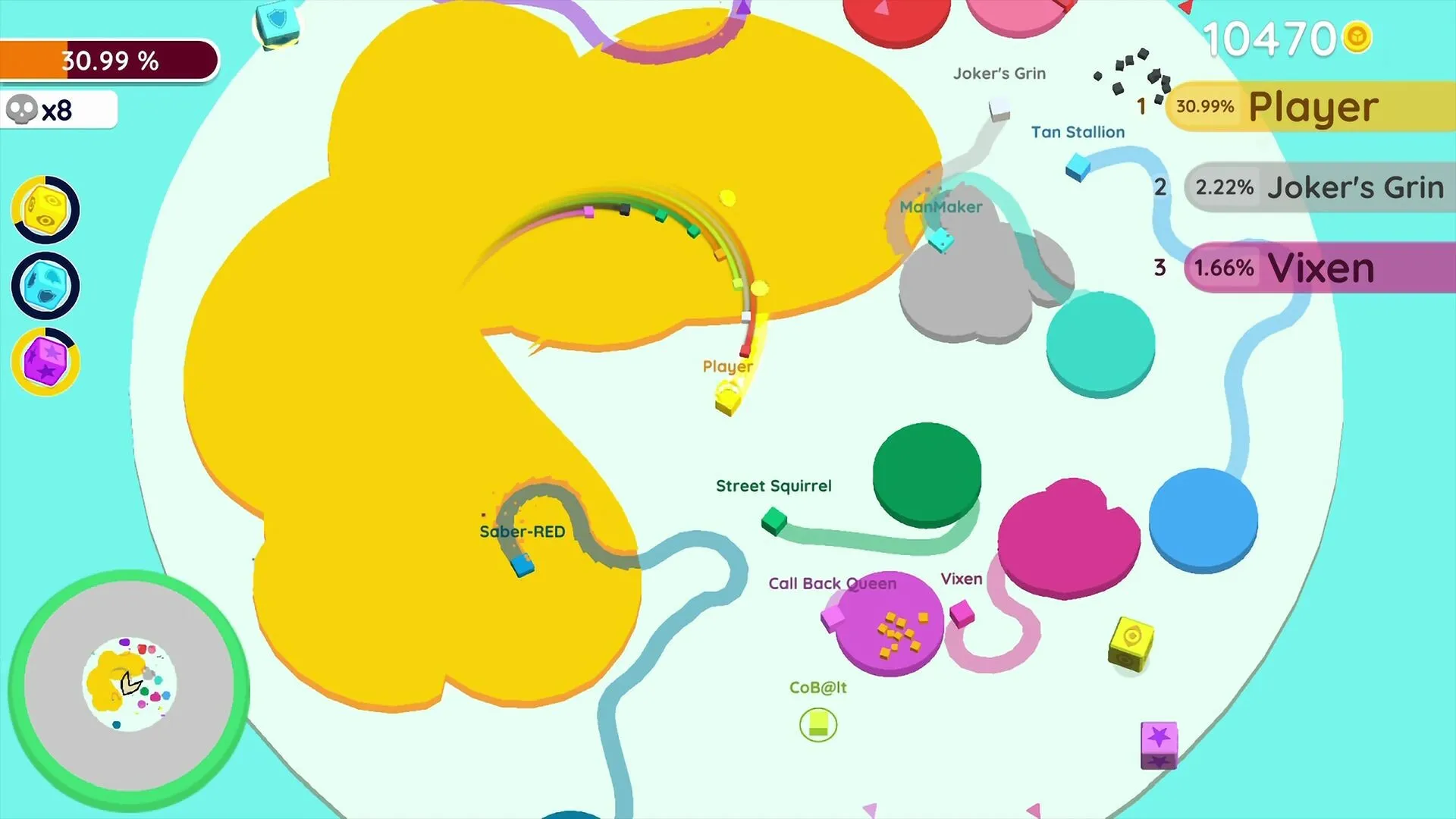
In the vast world of online games, few titles capture the perfect balance between simplicity and strategy quite like paper io. It’s a game that, at first glance, seems almost childishly straightforward: move a colored square around the screen, claim territory, and try not to get eliminated. But beneath its bright visuals and minimalist design lies a surprisingly strategic, competitive, and deeply satisfying gameplay loop that keeps players coming back for more.
What makes Paper io stand out isn’t just its accessible design—it’s the way it draws out raw instincts of competition, creativity, and survival in an environment where anyone can rise to dominance or lose it all in seconds.
The Origins of a Global Phenomenon
Paper io was developed by Voodoo, a French mobile gaming company known for its portfolio of easy-to-learn yet hard-to-master arcade-style games. Like many of Voodoo’s creations, Paper io was designed around a simple premise with enormous replayability.
The concept draws inspiration from classic territory-control games, but with a twist. Instead of controlling armies or complex characters, you control a small block that leaves a trail—your color. The objective? Expand your territory by enclosing new areas while protecting your base and avoiding getting hit by enemies when you’re outside your zone.
It’s a concept so intuitive that anyone—whether a child or an adult—can pick it up instantly, yet it carries the kind of competitive thrill that appeals to serious gamers.
How Paper io Works
At its core, Paper io is a battle for control. Each player starts with a small piece of colored territory on a shared map. As you move, you draw a line behind your square. When you circle back to your territory, everything enclosed within your trail becomes part of your empire.
The rules sound simple enough, but the tension rises quickly:
- Venture too far, and you risk another player cutting your trail and eliminating you.
- Play too safe, and you’ll be stuck with a small area, unable to climb the leaderboard.
- Time your attacks, and you can take over vast sections or even wipe out opponents entirely.
Every move becomes a decision between greed and caution, speed and patience—a delicate balance that keeps every game unpredictable.
The Psychology Behind Its Appeal
What makes paper io so addictive is not just its mechanics, but how it taps into human psychology. The desire to conquer territory, protect what’s yours, and outsmart others has deep evolutionary roots. The game transforms these primal instincts into colorful, fast-paced entertainment.
- Instant Gratification – Each new area you claim feels rewarding, giving constant small wins.
- Risk and Reward – The tension between venturing out and staying safe mirrors real-world decision-making.
- Visual Feedback – The expansion of your color across the map provides a satisfying, almost artistic sense of progress.
- Competition – Even without communication, the battle for dominance becomes personal. Every opponent represents a challenge, and every win feels earned.
Paper io succeeds because it is both soothing and thrilling—a rare combination that appeals to players seeking both relaxation and excitement.
The Evolution of the Game
Since its original release, Paper io has evolved through multiple versions and updates. Each iteration has refined the gameplay while introducing new modes, graphics, and smoother performance.
- Paper io 2 brought 3D visuals and fluid movement, making the experience more immersive.
- Multiplayer modes introduced real-time battles, allowing players to compete directly against others rather than bots.
- Themed maps and skins added personalization, turning the game into not just a contest but an aesthetic expression of one’s playstyle.
These updates kept the community alive and growing, ensuring that even long-time players found something new to master.
The Art and Strategy of Playing Paper io
Winning in paper io isn’t just about speed—it’s about strategy. While luck plays a small part, the best players know how to manage risk, control territory, and anticipate others’ moves.
1. Master the Edges
The edges of the map are often the safest place to start building. With one side protected by the boundary, you can focus on expanding inward. Many expert players hug the edges until they’ve secured enough space to challenge opponents in the center.
2. Watch for Open Trails
An opponent’s trail is their greatest weakness. When they step outside their territory, their tail becomes vulnerable. A well-timed strike can eliminate them instantly, giving you not only satisfaction but also a huge chunk of territory.
3. Expand in Shapes
Random wandering may look fun, but strategic expansion matters. Building square or rectangular zones minimizes exposure and helps maintain efficient control.
4. Patience Wins Games
Aggressive players often dominate early but lose quickly. The calm, patient player who expands steadily and defends well often lasts longest and wins big.
5. Mind Games and Traps
Paper io isn’t just mechanical—it’s psychological. Skilled players bait opponents by pretending to leave openings, only to lure them into dangerous territory. It’s a battle of wits disguised as an arcade game.
Why Simplicity Is Its Superpower
The beauty of Paper io lies in its simplicity. There are no complicated controls, no long tutorials, and no hidden mechanics. It’s just movement and timing. This minimalism strips away barriers and keeps players focused on the action itself.
Simplicity also makes the game universally accessible. Whether on a mobile phone during a lunch break or on a PC at home, anyone can dive in and compete. The design encourages quick play sessions but has enough depth to sustain hours of continuous play.
This accessibility is what makes Paper io a global favorite across all age groups—it’s easy to learn, hard to master, and endlessly replayable.
The Competitive Edge: Community and Challenges
Despite its simplicity, Paper io has fostered a loyal and competitive player community. Players often share their gameplay experiences, strategies, and personal records on social media and gaming forums.
Some even set self-imposed challenges, such as:
- Reaching 100% map domination (a nearly impossible feat)
- Surviving for 10 minutes without elimination
- Playing only with defensive tactics
These challenges keep the gameplay fresh, while the community’s creativity adds a sense of camaraderie to the competition. It’s not just about winning—it’s about improving, sharing strategies, and pushing personal limits.
Why Paper io Continues to Thrive
After years on the market, most mobile games fade into obscurity. Yet paper io continues to thrive because it delivers something timeless: the joy of control and creation.
Unlike many games that overwhelm players with options, upgrades, and monetization systems, Paper io remains pure in its intent. Its reward loop is organic—you play, you improve, you expand, you fall, and you try again.
It’s this simple rhythm of success and failure that gives it longevity. Players don’t feel pressured to spend or grind; they play because every round feels like a new story.
The Broader Influence of Paper io
Paper io has also inspired a generation of browser and mobile games that follow its “.io” naming style. The “.io” genre, which includes titles like Slither.io and Agar.io, all share similar traits—minimalism, multiplayer chaos, and a focus on territory or survival.
But Paper io stands out for blending creativity with conquest. It doesn’t just make you compete—it lets you paint the battlefield with your color. Every game feels like a unique artwork shaped by risk and timing. The result is part strategy, part creativity, and part adrenaline.
A Game for Everyone
One of the game’s most enduring qualities is its universal appeal. It transcends demographics:
- Kids love the colorful visuals and easy mechanics.
- Casual gamers appreciate quick rounds and light competition.
- Strategists enjoy mastering maps and perfecting timing.
- Competitive players chase high scores and total domination.
Its cross-platform nature—available on both web browsers and mobile—makes it accessible anywhere, anytime. It’s one of those rare games you can pick up for five minutes and end up playing for an hour.
The Deceptive Calm of Paper io
At first glance, Paper io feels peaceful. The background hums softly, colors glide smoothly, and your little square dances calmly across the grid. But underneath this calm exterior is tension—the kind that keeps your heart racing as you risk it all for one more piece of territory.
That balance between calm and chaos is the magic formula. It creates a meditative focus while still fueling competition. Each movement feels personal, each decision consequential.
When you lose, frustration comes not from the game but from your own choices—and that accountability makes every victory feel even sweeter.
Conclusion
In the crowded world of digital entertainment, paper io remains a shining example of how simplicity can captivate millions. It’s proof that a game doesn’t need cinematic graphics or complex plots to be engaging; it only needs tension, creativity, and the thrill of taking risks.
From its humble beginnings to becoming one of the most played casual games worldwide, Paper io has achieved what few games manage: timeless replay value. It taps into human instincts—the desire to grow, protect, and conquer—while wrapping them in a smooth, minimalist package that anyone can enjoy.
Ultimately, Paper io is not just a game—it’s a reflection of life itself. Sometimes you expand bravely, sometimes you retreat strategically, and sometimes you start over entirely. But every round teaches you something new. And that’s what keeps us coming back—coloring our little piece of the digital world, one line at a time.