Few video game genres create such a direct emotional reaction as juegos de terror. A quiet hallway, a distant sound, a door that slowly opens, or an enemy you cannot defeat can create tension in seconds. Unlike a horror movie, however, a game puts the player inside the situation. You decide whether to open the door, enter the dark room, hide from the creature, or keep moving.
That interaction is what makes horror games so effective.
Over the decades, juegos de terror have developed from simple haunted-house experiences into sophisticated adventures involving psychological storytelling, survival mechanics, environmental puzzles, multiplayer cooperation, and immersive sound design. Some games rely on monsters and jump scares, while others create fear through isolation, uncertainty, disturbing ideas, or the feeling that something is wrong without ever explaining exactly what.
This guide explores the history of horror gaming, its major subgenres, the mechanics that make players afraid, influential titles, and the qualities that separate memorable horror from predictable scares.
What Are Juegos de Terror?
Juegos de terror is the Spanish term for horror games or terror games. It describes video games designed primarily to create feelings such as fear, anxiety, suspense, unease, or vulnerability.
Horror games can take many forms. A game may feature:
- Supernatural creatures
- Psychological themes
- Survival mechanics
- Puzzles
- Stealth
- Resource management
- Cooperative multiplayer
- Body horror
- Folklore
- Mystery and investigation
The important distinction is that horror is not defined by the presence of a monster.
A game can be terrifying without showing an enemy at all.
Sometimes the most effective threat is uncertainty.
How Horror Games Have Evolved
The history of juegos de terror reflects the development of video game technology itself.
Early games had severe technical limitations, so developers relied heavily on atmosphere and the player’s imagination. Simple graphics could still create fear because players filled in missing details themselves.
The genre became much more recognizable during the 1990s with games such as Alone in the Dark and Resident Evil. These titles established many conventions associated with survival horror, including restricted resources, dangerous enemies, exploration, puzzles, and unsettling environments.
Later, games began experimenting with psychological horror and vulnerability.
Silent Hill 2, for example, demonstrated how horror could be closely connected to character psychology and themes such as guilt and grief.
Then games such as Amnesia: The Dark Descent and Outlast pushed the idea of vulnerability further by making players feel powerless.
Modern horror has continued expanding into cooperative multiplayer, immersive simulation, virtual reality, and experimental indie games.
Why Horror Games Feel Different From Horror Movies
Watching a horror movie is passive.
Playing a horror game is participatory.
That difference dramatically changes the emotional experience.
When a movie character walks toward a dark basement, you may already know something is waiting there. In a game, you are the person deciding whether to enter.
This creates a unique form of tension.
The player becomes responsible for the frightening decision.
Even simple actions can become stressful:
- Opening a door
- Entering a dark corridor
- Checking an unfamiliar room
- Following a strange sound
- Turning around
- Exploring alone
The game does not merely show you a scary situation. It asks you to participate in it.
The Major Types of Juegos de Terror
Horror is a broad category, and different games use fear in very different ways.
1. Survival Horror
Survival horror combines exploration, combat, puzzles, and resource management.
Games in this category often limit ammunition, healing items, or other resources.
That creates difficult decisions.
Should you fight an enemy?
Should you run?
Is it worth spending valuable ammunition?
Classic Resident Evil games helped establish this structure, while later titles such as Dead Space expanded the formula with more action-oriented systems.
The defining feature is usually survival under pressure, rather than simply frightening visuals.
2. Psychological Horror
Psychological horror focuses on the mind.
Instead of relying entirely on monsters, these games explore subjects such as:
- Guilt
- Trauma
- Isolation
- Grief
- Paranoia
- Identity
- Memory
- Fear of losing control
Silent Hill 2 is one of the most influential examples because its horror is closely tied to the protagonist’s emotional state.
This type of game can stay with players long after they stop playing because the disturbing ideas are not limited to individual scares.
3. Supernatural Horror
This category uses ghosts, demons, curses, spirits, or unexplained forces.
The attraction is often the unknown.
Players may understand that something supernatural is present without knowing its rules.
Games inspired by folklore can be particularly effective because they introduce cultural ideas about death, spirits, rituals, and the afterlife.
4. Survival and Stealth Horror
Some horror games deliberately reduce the player’s ability to fight.
Instead, survival depends on:
- Hiding
- Running
- Listening
- Managing visibility
- Understanding enemy behavior
- Choosing when to move
Amnesia: The Dark Descent and Outlast are notable examples of this approach.
The fear comes from vulnerability.
5. Cooperative Horror
Multiplayer horror creates a completely different experience.
Games such as Phasmophobia allow players to investigate supernatural situations together.
Communication becomes part of the gameplay.
You may feel safer because friends are with you, but that safety can disappear quickly when something unexpected happens.
The result can be frightening, funny, or both.
6. Action Horror
Action horror combines traditional combat with horror themes.
Games such as Resident Evil 4 and Dead Space demonstrate how developers can make the player feel powerful while still maintaining tension.
The challenge is balancing combat with vulnerability.
If the player becomes too powerful, enemies stop being frightening. If the player is too weak, combat can become frustrating.
What Actually Makes a Horror Game Scary?
A common misconception is that horror depends on jump scares.
Jump scares can be effective, but they are only one tool.
The strongest horror games often rely on anticipation.
Imagine walking through a dark hallway.
Nothing happens.
You continue.
Still nothing.
You hear a noise behind you.
You turn around.
Nothing.
That moment may be more frightening than an obvious monster attack because your imagination has already created possibilities.
Uncertainty
The less information players have, the more they speculate.
Is that sound an enemy?
Is the room safe?
Did something move?
Good horror uses uncertainty carefully.
Vulnerability
A player who knows they can easily defeat everything is unlikely to feel genuine fear.
Limited ammunition, weak weapons, restricted visibility, or powerful enemies can increase vulnerability.
Isolation
Being alone changes how players interpret their surroundings.
A familiar environment can suddenly feel threatening when the player has no companion nearby.
Pacing
Constant scares become predictable.
Effective horror often alternates between:
Tension → relief → tension → escalation.
That rhythm gives the player time to relax before the next threat.
Sound Design Is One of Horror’s Secret Weapons
Visuals immediately attract attention, but sound often creates anticipation.
Footsteps behind the player can be more effective than showing the creature responsible for them.
Horror developers can use:
- Distant voices
- Breathing
- Floorboards
- Mechanical noises
- Environmental ambience
- Sudden silence
- Directional sound
- Music that changes subtly
Silence is particularly powerful.
When a game suddenly removes its background sound, players notice the absence.
That creates the question:
Why did everything become quiet?
The player begins expecting something.
That expectation itself becomes part of the horror.
Lighting and Darkness
Darkness is another fundamental horror mechanic.
It limits information.
When players cannot see the entire environment, they must make decisions with incomplete knowledge.
However, effective darkness is not simply making the screen black.
Good lighting design creates contrast.
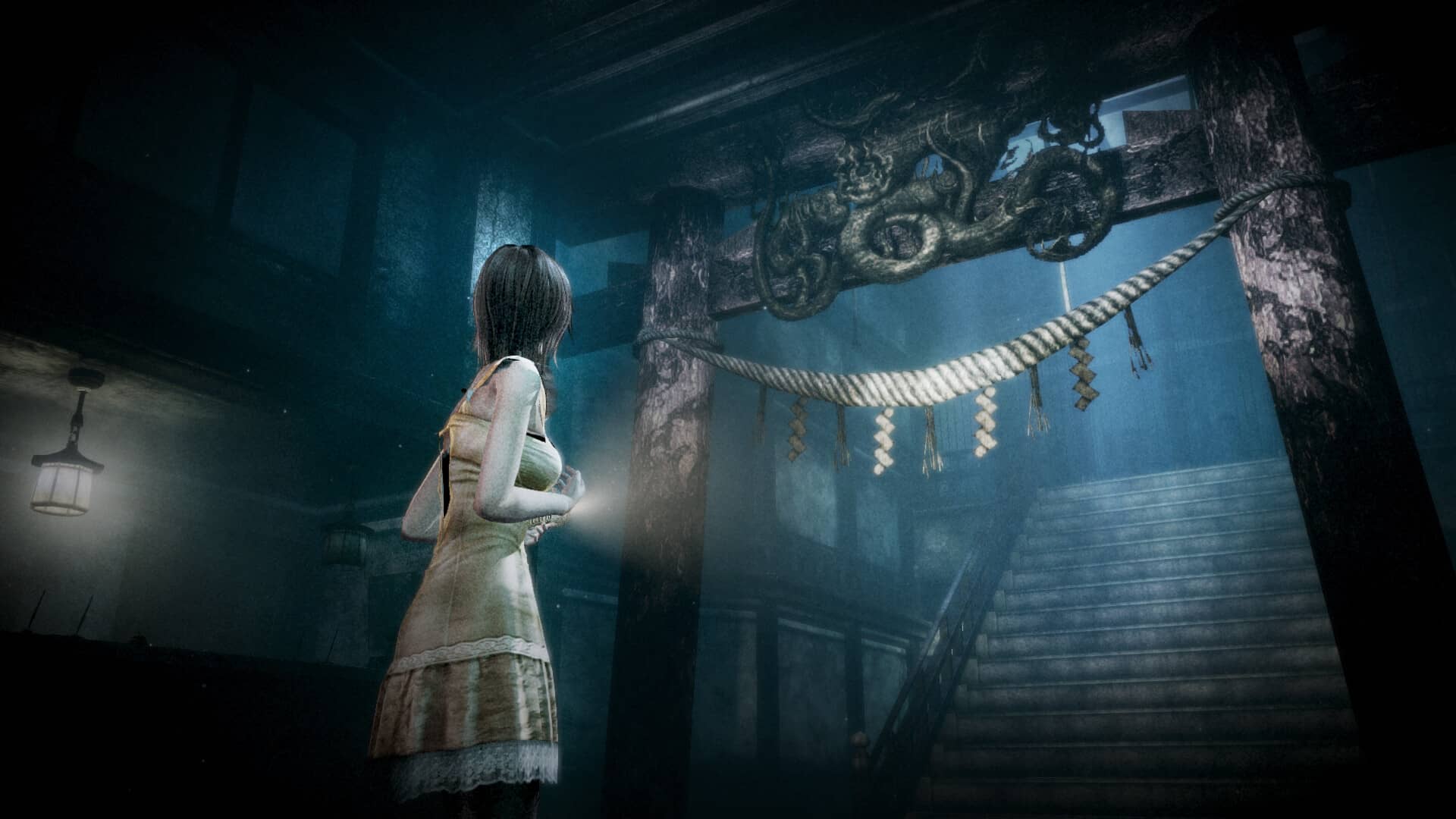
A dim corridor with one visible doorway can be more effective than complete darkness because the player can clearly see just enough to imagine what might be hidden outside the visible area.
The Role of the Environment
A memorable horror setting often feels like a character itself.
Consider the difference between a generic dark room and an abandoned hospital filled with signs of previous activity.
The second environment tells a story.
Details can include:
- Abandoned objects
- Damaged furniture
- Strange writings
- Unusual architecture
- Environmental clues
- Signs that someone was recently present
These details encourage players to investigate while simultaneously making them uncomfortable.
Why Resource Management Creates Fear
Resource scarcity is one of survival horror’s most effective mechanics.
Suppose you have only a few bullets.
You encounter an enemy.
Now the game has created a decision:
Fight or run?
If ammunition were unlimited, that decision would disappear.
Scarcity turns ordinary enemies into strategic problems.
The same applies to healing items, batteries, keys, and other limited resources.
Horror Bosses and Enemy Design
A good horror enemy is not necessarily the strongest enemy.
It is an enemy that changes how you behave.
An enemy may:
- Force you to hide
- Control an area
- Detect sound
- Chase you unexpectedly
- Reappear later
- Restrict movement
- Change the layout of an encounter
This makes enemies feel like gameplay systems rather than simple targets.
One particularly effective technique is giving an enemy recognizable rules while keeping the player uncertain about exactly when those rules will matter.
The Psychology of “One More Room”
Horror games create an interesting contradiction.
Players are frightened, yet they continue.
Why?
Because fear is combined with curiosity.
You want to know:
- What is behind the door?
- What happened here?
- Who made that sound?
- Where does the corridor lead?
- What is the creature?
- What happens next?
This creates a powerful loop:
Fear → curiosity → exploration → discovery → increased tension.
The player may want to stop, but the unanswered question encourages them to continue.
Horror and the Power of the Unknown
One of the most useful principles in horror design is that showing less can sometimes achieve more.
If a monster is fully revealed immediately, players can study its appearance and become familiar with it.
If the game instead provides fragments—a sound, a shadow, a glimpse, a strange movement—the player’s imagination completes the picture.
That is why mystery remains so important to horror.
The unknown is difficult to predict.
And unpredictability creates fear.
Influential Juegos de Terror
Several games have had an enormous influence on the genre.
Resident Evil
The original Resident Evil helped popularize survival horror on consoles through exploration, puzzles, resource management, and memorable enemy encounters.
Silent Hill 2
Its psychological approach demonstrated how horror could explore complex emotional themes rather than relying only on physical threats.
Amnesia: The Dark Descent
Its emphasis on vulnerability and hiding showed how frightening a game can be when combat is removed or severely limited.
Outlast
By giving the player a camera instead of conventional weapons, Outlast reinforced the feeling of being hunted rather than being a traditional action hero.
Alien: Isolation
The game is notable for building tension around an unpredictable and extremely dangerous creature, making simple movement and hiding decisions stressful.
Phasmophobia
Its cooperative structure brought horror into a social setting, where communication and investigation are central to the experience.
The Growth of Indie Horror
Independent developers have played an enormous role in modern horror.
Small teams do not necessarily need massive budgets to create fear.
A carefully designed environment, clever sound effect, strong pacing, and an unusual concept can be enough.
This has led to a wide variety of experimental horror games.
Indie developers can also take risks that larger productions might avoid, including unusual interfaces, surreal storytelling, short experiences, and deliberately uncomfortable mechanics.
Virtual Reality and Horror
Virtual reality can intensify horror because the player is surrounded by the environment rather than viewing it through a conventional screen.
A sound behind the player becomes especially effective because the player must physically turn to investigate.
VR can increase immersion, but it also requires thoughtful design.
Too many intense effects can become uncomfortable, and players need appropriate options for movement, comfort, and accessibility.
The best VR horror experiences use immersion to enhance tension rather than relying on constant shocks.
AI and the Future of Horror
Artificial intelligence may influence horror games by allowing enemies and environments to respond more dynamically to player behavior.
Imagine an enemy that changes its search patterns based on how frequently you hide in the same location.
That could make familiar strategies less reliable.
However, intelligent enemy behavior is not automatically frightening.
The goal should be meaningful unpredictability, not random behavior.
Players need to believe that their choices matter while still feeling uncertain about what will happen next.
A More Important Future Trend: Emotional Horror
The future of horror is unlikely to be defined only by better graphics.
Some of the most memorable modern horror experiences already demonstrate that emotional storytelling can be more powerful than visual spectacle.
Future games may increasingly combine horror with:
- Family relationships
- Grief
- Moral choices
- Personal identity
- Memory
- Loneliness
- Social relationships
This can create horror that remains meaningful after the immediate scare has disappeared.
How to Choose the Right Horror Game
Not every horror game is suitable for every player.
If you prefer classic survival mechanics, look for games emphasizing exploration, puzzles, and resource management.
If you enjoy psychological storytelling, choose games where atmosphere and character development are central.
If you prefer multiplayer experiences, cooperative horror may be more enjoyable.
If you want pure tension, stealth-focused horror can provide a stronger sense of vulnerability.
And if you dislike jump scares, look for horror built around atmosphere, mystery, or psychological themes instead.
Tips for Playing Juegos de Terror
A few practical habits can make horror games more enjoyable.
Explore Carefully
Do not rush through every area. Environmental details often provide useful clues.
Listen
Sound can communicate danger before you see it.
Learn Enemy Patterns
Once you understand how an enemy behaves, you can make better decisions.
Manage Resources
Do not automatically spend valuable items whenever an enemy appears.
Take Breaks
Horror is designed to create sustained tension. If the experience becomes overwhelming, stepping away for a few minutes can help.
Adjust Accessibility Settings
If available, brightness, subtitle, audio, motion, difficulty, and control settings can make the experience more comfortable without removing the game’s core appeal.
FAQ
What does “juegos de terror” mean?
“Juegos de terror” is Spanish for horror games. The term covers many different types of games, including survival horror, psychological horror, supernatural games, stealth horror, action horror, and cooperative multiplayer experiences.
What is the scariest type of horror game?
There is no universal answer because fear is subjective. Players who dislike helplessness may find stealth horror particularly frightening, while others may respond more strongly to psychological or supernatural themes. Atmosphere, pacing, sound, and uncertainty often matter more than the specific subgenre.
Are horror games only about jump scares?
No. Jump scares are just one technique. Strong horror games can create fear through atmosphere, anticipation, sound design, isolation, resource scarcity, psychological themes, enemy behavior, and uncertainty.
Why are horror games so addictive?
Horror combines fear with curiosity and problem-solving. Players want to understand the mystery, overcome the threat, and see what happens next. That creates a powerful cycle in which tension encourages exploration rather than simply stopping the player.
Are horror games suitable for everyone?
No. Horror games can contain intense violence, disturbing imagery, frightening sounds, psychological themes, or other mature material. Players should check the content and age rating of a specific game before playing, particularly when choosing games for younger players.
What makes a good horror game?
A strong horror game usually combines atmosphere, effective pacing, meaningful mechanics, sound design, and a compelling reason to keep exploring. The best examples make fear part of the gameplay rather than simply placing occasional scares between ordinary sections.
Conclusion
Juegos de terror have evolved far beyond simple monsters and jump scares. The genre now includes psychological dramas, survival adventures, supernatural investigations, cooperative experiences, stealth games, and experimental indie projects.
What connects them is not a particular enemy or visual style. It is the ability to make players feel vulnerable, curious, uncertain, and emotionally involved.
The most effective horror games understand that fear comes from anticipation as much as surprise. A quiet hallway, limited resources, an unexplained sound, or a locked door can be enough to make the player hesitate.
Technology will continue changing how horror is presented, but the fundamental principle is unlikely to disappear: give players just enough information to make them curious, then let their imagination do some of the frightening work.
That is why the best juegos de terror stay memorable long after the screen goes dark. They do not simply show us something frightening—they make us choose to walk toward it.