The Origins of a Digital Learning Classic
For many students, learning mathematics often feels like a structured, formal task. Yet some educational programs manage to transform this experience into something imaginative and exciting. Among these programs, Math Blaster stands out as one of the most memorable. Its early versions introduced a fresh approach to learning by merging fast-paced gameplay with essential math challenges, capturing the interest of children who may not have realized they were building skills every time they completed a mission.
The concept began with a simple philosophy: children learn best when they are engaged. By creating an environment filled with colorful characters, adventurous themes, and rapid problem-solving moments, the game provided a space where learning felt natural. The program blended entertainment and education seamlessly, setting a foundation that would inspire countless adaptations and updates in the years that followed.
A Look at the Design That Made Math Blaster Unique
How Gameplay Encouraged Real Learning
The structure of Math Blaster was built around motion, decision-making, and quick mental calculations. Instead of passively absorbing information, players were invited into a world where mathematical accuracy had direct consequences. If a student solved a problem correctly, they progressed through the adventure with confidence. If not, they quickly learned to rethink and adjust.
The action-driven style made the program appealing even to those who typically struggled with traditional math lessons. Every session became a balance between enjoyment and challenge. The interactive nature of the game ensured that learning happened almost unconsciously, with students developing valuable skills as they attempted to outthink obstacles and reach new objectives.
Engagement Through Storytelling and Character Interaction
One of the program’s most enduring strengths was its ability to create a lively universe. Characters were fun, quirky, and engaging enough to keep children invested in their missions. The storylines were simple yet effective, giving players a sense of purpose as they navigated each challenge.
The combination of humor, color, and movement added energy to the learning experience. Instead of feeling like an academic exercise, each session felt like entering a small adventure. This emotional connection contributed significantly to the game’s long-term appeal and educational effectiveness.
The Enduring Appeal of Math Blaster
Years after its first introduction, Math Blaster continues to hold a place in conversations about educational gaming. Part of its enduring appeal lies in how well it blends learning with fun. Children naturally gravitate toward games that allow them to explore, experiment, and succeed through effort. This program offered all of that while helping them build foundational skills.
Parents and educators appreciated how the game encouraged critical thinking. While the challenges were simple enough for young learners, they required focus and quick responses. This mix of cognitive training and entertainment helped the program shape a generation of learners who became more comfortable with numbers and faster in their reasoning.
The ability of Math Blaster to engage through play remains central to its legacy. In an era where educational technology continues to evolve, the program serves as a reminder that well-designed learning tools do not rely solely on complex features—they rely on meaningful interaction.
Why the Game Resonated Across Generations
A Learning Style That Felt Natural
One of the most remarkable aspects of the game was how naturally children adapted to its structure. Challenges unfolded at a comfortable pace, and players quickly learned to anticipate patterns and strategies. The game did not demand perfection; it invited exploration. Children were able to develop confidence by testing different approaches and seeing how their decisions influenced the gameplay.
This natural learning rhythm made the experience enjoyable rather than stressful. Students were motivated not by pressure, but by curiosity and the desire to improve.
Accessibility and Timeless Simplicity
Although the game evolved over time and adopted new formats, its core principles remained accessible. The controls were simple. The environment was friendly. The missions were clear. As technology advanced, many games became increasingly complex, but this program retained its charm by staying true to an easy-to-understand structure.
This simplicity helped it remain relevant across generations. Even as newer educational platforms emerged, many families continued to turn to this classic because it offered straightforward, effective learning without unnecessary complications.
The Educational Impact of Math Blaster
Strengthening Core Math Skills
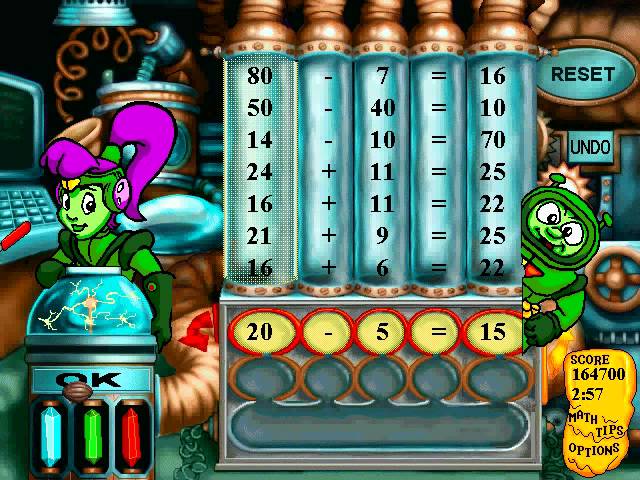
At its heart, the game focused on essential skills such as addition, subtraction, multiplication, and division. These fundamental concepts were woven into missions in a way that required players to use quick thinking. Over time, students became more familiar with numerical relationships, developed faster recall, and built stronger problem-solving abilities.
Because the game challenged players to respond quickly, their mental agility improved as well. It fostered a faster comprehension of basic operations, which later supported their growth in more advanced topics.
Encouraging Persistence and Problem-Solving
Every mission was designed with obstacles that required determination. If a player struggled, they could try again, adjust their strategy, and continue improving. This structure encouraged a mindset of persistence. Instead of viewing mistakes as setbacks, children learned to see them as part of the learning process.
This approach mirrored real academic success: improvement comes through effort, repetition, and resilience.
How Math Blaster Influenced Modern Educational Games
Setting the Standard for Blended Learning
Before interactive learning became widespread, this program introduced a formula that many modern platforms continue to follow. It recognized that children learn differently when they are active participants. Today, many educational games draw inspiration from this foundation, incorporating movement, puzzles, and skill reinforcement similar to the early structure of the classic.
It proved that technology could enhance understanding rather than distract from it, and it helped shift educational trends toward more engaging teaching tools.
A Legacy of Creativity in Learning
Beyond mathematics, the game inspired creativity in the educational industry. Designers realized that learning could be immersive and dynamic. The playful combination of science-fiction themes, math challenges, and clever characters demonstrated how imagination could be a powerful teaching tool.
This legacy continues in modern classrooms where gamified learning is now embraced as an effective way to motivate students and support diverse learning styles.
Why Students Still Enjoy Revisiting Math Blaster
The Comfort of Nostalgia
Children who grew up with the game often recall it fondly. The combination of energetic missions, colorful graphics, and lighthearted music created an atmosphere of comfort. Revisiting the game years later often brings back memories of the excitement that came with each completed mission.
Nostalgia is powerful, especially when tied to positive learning experiences. Many adults appreciate how the game made math approachable during their formative years.
A Fun Way to Reinforce Essential Skills
Even today, the game can offer value to learners. Its style remains relevant because the core skills it teaches remain essential. Whether used as a supplement to schoolwork or as a fun activity during free time, it continues to support skill-building without the stress that sometimes accompanies formal lessons.
Modern Adaptations and Continuing Influence
Evolving While Staying True to Its Roots
Over time, different versions of the program have appeared, each incorporating new interfaces and updated designs. Yet the essence remains: learning through action. These adaptations show how strong the original concept was and how easily it could be adjusted to modern formats.
The evolution reflects a commitment to staying relevant while preserving the qualities that made the program beloved from the beginning.
Reaching New Generations of Learners
The continued interest in updated versions proves that the approach still resonates. New generations discover the joy of combining learning with interactivity, and educators continue to appreciate how organically the program helps children build confidence in mathematics.
This ongoing relevance underscores its lasting value in an ever-changing digital learning landscape.
A Fresh Understanding of Math Through Play
How Fun Shapes Academic Growth
Learning becomes far more effective when emotion is involved. Enjoyment creates memory, and memory strengthens understanding. This is one of the key reasons the game remains so influential. It offered an emotional experience—excitement, curiosity, anticipation—while teaching foundational skills.
Because children associated math with adventure rather than pressure, their comfort with numbers grew naturally. This approach continues to inform modern pedagogy across subjects.
Inspiring Positive Attitudes Toward Mathematics
Many students struggle with confidence when approaching math. The game provided a supportive introduction that helped reduce fear and uncertainty. By presenting problems in the context of fast-paced missions, it shifted the narrative: math was not something to dread but something to conquer.
This shift in mindset made a significant impact on how young learners approached the subject in school and beyond.
Conclusion
The influence of Math Blaster is rooted in its ability to merge learning and adventure into one meaningful experience. It proves that education does not have to be rigid or overwhelming. When teaching is infused with imagination, movement, and thoughtful challenges, students engage more deeply and develop lasting skills.
Its legacy endures because it championed a simple yet powerful idea: children learn best when they are immersed in something they enjoy. The program continues to serve as an example of how creativity and education can coexist, shaping generations of learners who discovered that mathematics could be both approachable and exciting.
In a world filled with evolving technologies and rapidly changing educational tools, Math Blaster remains a reminder of the transformative potential of curiosity, play, and thoughtful design.