Imagine diving into a neon world where every beat of the music guides your next move, where one mistimed tap can shatter your progress, and where victory feels like pure adrenaline. That’s the heart of Geometry Dash — a rhythm-based platformer that has captivated millions with its simplicity, intensity, and hypnotic energy.
This is more than just a game; it’s a journey through rhythm, patience, and persistence. Let’s explore what makes this minimalist yet mesmerizing game such a lasting phenomenon.
What Makes Geometry Dash So Addictive?
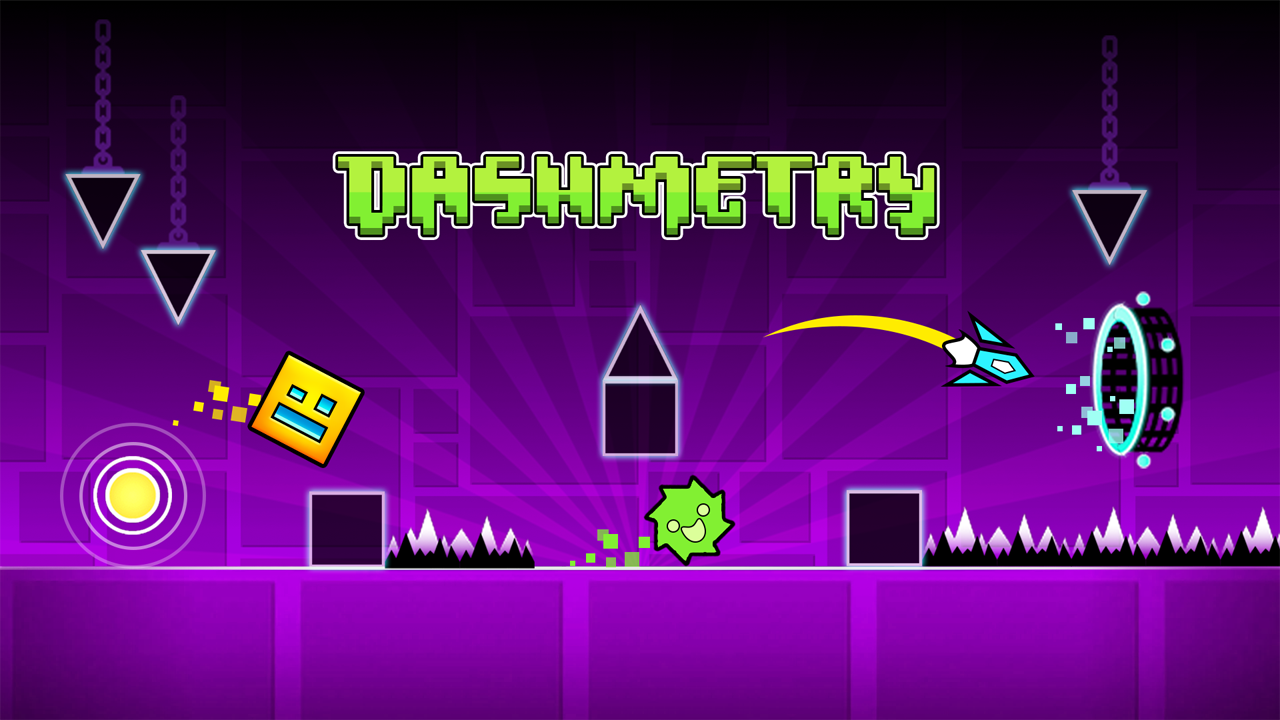
At first glance, Geometry Dash looks like any other side-scrolling platformer. You guide a small geometric icon through a landscape filled with spikes, portals, and pulsing obstacles. But once you start playing, it becomes clear — this is not an ordinary mobile game. It’s a rhythmic test of skill and timing that keeps players locked in a cycle of failure and triumph.
The Power of Simplicity
There’s only one control: tap to jump. That’s it. No complex mechanics, no power-ups, no confusing buttons. This simplicity is what makes the game so accessible — anyone can pick it up. Yet, beneath that simplicity lies a brutal challenge. Every tap must be precise, every jump perfectly timed.
The beauty of the design is that it feels fair. When you fail — and you will, countless times — you know exactly why. That constant feedback loop of “try, fail, learn, improve” becomes addictive. Players often describe the moment they finally complete a difficult level as euphoric.
Music Meets Motion
What truly sets Geometry Dash apart is how the gameplay syncs with the soundtrack. Every movement, jump, and obstacle aligns perfectly with the rhythm of the background music. The beats guide you subconsciously, making every run feel like a dance — part game, part music video.
As you play, your fingers instinctively move to the pulse of the song. When you nail a series of jumps in perfect sync with the beat, it feels almost magical. The seamless fusion of sound and gameplay transforms frustration into flow.
Endless Creativity from the Community
While the official levels are iconic, the real heartbeat of the game lies in its community. Players can create and share their own levels using a powerful built-in editor. Over the years, this has led to an explosion of creativity — from simple rhythm-based challenges to breathtakingly complex worlds filled with moving parts, lighting effects, and original soundtracks.
Some creators spend weeks designing intricate levels that rival the official ones. Others experiment with storytelling, art, and rhythm to push the limits of what the game engine can do. This never-ending stream of user-generated content keeps the experience fresh and evolving.
The Sweet Agony of Difficulty
Part of what keeps players coming back is the sense of accomplishment. Levels range from easy to nearly impossible, and each success feels hard-earned. You’ll die hundreds of times — maybe even thousands — but every small improvement pushes you closer to victory.
The game turns failure into motivation. Instead of feeling defeated, you feel determined. That’s why even years after release, people still chase new personal bests and conquer levels that once seemed impossible.
The Evolution of Geometry Dash
Behind the flashing lights and catchy beats is a fascinating story of development, innovation, and community growth.
Humble Beginnings
The game began as a small project by Swedish developer Robert Topala under his studio, RobTop Games. Released in 2013 for mobile devices, the first version featured only a handful of levels. But what it lacked in content, it made up for with tight controls, energetic music, and brutal challenge.
Players were immediately hooked. Word spread fast, and soon, Geometry Dash became one of the most downloaded rhythm games in the world.
Constant Updates and New Features
The developer continued to expand the game with regular updates. Each new version introduced fresh mechanics — like portals that change gravity, vehicles like ships and balls, and different speed settings.
Later updates brought new game modes, customization options, secret coins, and even a practice mode to help players master each level. Every major update felt like a new chapter in the game’s evolution.
Spin-Off Titles and Expansions
To keep things fresh, several spin-off versions were released, each offering unique levels and music. Titles like Geometry Dash Meltdown, SubZero, and World introduced new songs, visual styles, and challenges. These versions allowed players to experience the thrill of the game without needing to purchase the full version.
The consistent updates and free spin-offs helped the franchise stay relevant across mobile and PC platforms, gaining millions of new players with each release.
Mastering the Mechanics of Geometry Dash
The appeal of Geometry Dash lies in its perfect balance between simplicity and complexity. It’s easy to understand but incredibly hard to master.
Different Forms, Different Challenges
Depending on the level, your icon transforms into different forms — each with unique physics. As a cube, you jump over spikes. As a ship, you fly through tight tunnels by tapping to control altitude. As a ball, you flip gravity, and as a wave, you zigzag through narrow corridors.
These shifting forms keep the gameplay fresh and unpredictable. You never know what comes next, so reflexes and adaptability are key.
Portals and Triggers
Levels are filled with portals that alter gravity, speed, size, or even the type of character you control. You might go from slow motion to lightning speed in an instant. The unpredictability forces you to stay alert at all times.
More advanced levels also use “triggers,” which can move obstacles, change colors, or sync effects perfectly to the music. This level of design depth makes even user-created maps feel professional.
Level Editor and Player Creativity
The level editor is one of the most advanced tools ever built into a mobile game. Players can adjust every element — from block placement to light effects and camera movement. Over time, the community has turned the editor into a full creative suite.
Thousands of players have built careers or YouTube channels around showcasing their custom levels. The sheer variety — from pixel-art masterpieces to rhythm-based puzzles — shows how much creativity the game inspires.
The Role of the Community
The Geometry Dash community is one of the most passionate in gaming. It’s not just about playing; it’s about creating, sharing, and celebrating.
Competitive Spirit
Players compete globally for high scores, level completions, and leaderboard rankings. Beating an “Extreme Demon” level — the hardest difficulty — is considered an achievement worthy of celebration. Videos of these runs often rack up millions of views.
Endless Replayability
Because of the endless stream of new content, the game never truly ends. You can always find a new level to conquer, a new challenge to face, or a new creative idea to explore. This sense of infinite possibility keeps the game fresh even a decade after its release.
Collaboration and Support
The community isn’t just about competition — it’s about collaboration. Level creators often work together to build massive “mega-collab” levels involving dozens of designers. Players share tips, feedback, and design tricks, making the game both a playground and a classroom for aspiring developers.
The Psychology of Challenge and Flow
Why do players keep retrying even after hundreds of failures? The answer lies in the psychology of challenge and flow.
Geometry Dash constantly balances frustration and reward. Each failure teaches you something new — a rhythm, a pattern, or a timing cue. This creates a “flow state,” where your brain locks into a rhythm, reacting instinctively rather than consciously.
When you finally succeed, the dopamine rush is powerful. You don’t just complete a level — you conquer it. The sense of mastery is what keeps players pressing “retry” again and again.
The Enduring Appeal and Future of Geometry Dash
Even years after its initial release, Geometry Dash continues to thrive. It’s not just nostalgia; it’s relevance.
Timeless Design
The minimalist visuals, catchy music, and tight mechanics make the game timeless. It doesn’t rely on trends or flashy graphics. Instead, it focuses on precision and rhythm — elements that never age.
The 2.2 Update and Beyond
The long-awaited 2.2 update introduced new game modes, mechanics, and creative tools. With every update, the boundaries of what players can create expand further. The developer continues to support the game, ensuring that both new and veteran players have something exciting to look forward to.
Why It Still Matters
In an age of massive open-world games and cinematic storytelling, Geometry Dash reminds us that pure gameplay can be just as compelling. It proves that success in gaming doesn’t come from complexity, but from rhythm, flow, and mastery.
Whether you’re a casual player looking for a quick challenge or a creator aiming to design your masterpiece, the game offers something for everyone.
The Legacy of Geometry Dash
Over a decade after its debut, Geometry Dash remains a defining example of how creativity and community can sustain a game far beyond its launch. It’s more than just tapping to a beat — it’s a global network of players and creators united by rhythm, challenge, and imagination.
Its enduring success is a reminder that great games don’t need to be complicated; they just need to be engaging, rewarding, and built with heart. The game has become a cultural touchstone, influencing indie developers, inspiring fan creations, and showing that one developer’s vision can spark a worldwide movement.
Conclusion
Geometry Dash isn’t just a rhythm platformer — it’s a story of perseverance, creativity, and passion. From its humble beginnings to its global community of creators, it stands as proof that simple ideas, executed brilliantly, can captivate millions.
Every jump, crash, and retry tells a story of growth. Every beat reminds you that progress is built through rhythm, patience, and persistence. Whether you’re conquering your first level or designing a new one, the thrill never fades.
So tap that screen, feel the rhythm, and take the leap. Because in this game, every failure is just another step toward your next victory.