Few zombie games create the same uneasy feeling as Dead Frontier. Instead of making survival look heroic or glamorous, the game puts you in a damaged world where ammunition, equipment, money, and safe routes all matter. A careless decision can turn a routine trip into a desperate escape.
Released as a browser-based online survival game in 2008, Dead Frontier built its identity around zombie combat, scavenging, character progression, trading, and interaction with other survivors. Its setting, Fairview City, gives the game a distinctive atmosphere: you leave the relative safety of an outpost knowing that the streets can quickly become much more dangerous than they first appear.
What makes Dead Frontier interesting is the relationship between risk and preparation. Shooting zombies is only one part of survival. Choosing what to carry, deciding when to retreat, managing ammunition, and knowing when an area is too dangerous can be just as important.
This guide explains how Dead Frontier works, what makes its survival system distinctive, how beginners can avoid common mistakes, and why the game has maintained a dedicated community despite its age.
What Is Dead Frontier?
Dead Frontier is a multiplayer survival horror game set in the fictional post-apocalyptic city of Fairview.
Players create survivors and explore a city devastated by a zombie outbreak. They can fight infected enemies, search for useful equipment, complete missions, trade items, improve their characters, and interact with other players.
The central gameplay loop is straightforward:
Prepare → Enter Fairview → Loot and fight → Manage resources → Return safely → Upgrade → Repeat
The important part is the word safely.
A successful expedition is not necessarily the one where you kill the most zombies. Sometimes the best run is the one where you recognize that things are becoming dangerous and return to an outpost before losing everything.
The Origins of Dead Frontier
Dead Frontier first appeared publicly in 2008 and was created by Neil Yates under Creaky Corpse Ltd. It became known during the era when browser-based multiplayer games could attract large communities without requiring the hardware associated with major PC or console releases.
That accessibility helped the game develop a distinctive identity.
Rather than competing directly with blockbuster zombie games through graphical spectacle, Dead Frontier emphasized:
- Persistent online progression
- Resource management
- Character development
- Scavenging
- Trading
- Multiplayer interaction
- Survival-oriented decision-making
The game later evolved beyond its original browser format, helping preserve its place within the online zombie-game community.
Exploring Fairview City
Fairview is more than a backdrop.
The city itself contributes heavily to the survival experience.
Players encounter streets, buildings, interior areas, and dangerous districts where the concentration and strength of infected enemies can change the risk of an expedition.
This creates a practical question every time you leave safety:
How much risk is worth taking for the potential reward?
You might enter an area looking for valuable equipment and find exactly what you need. But continuing deeper into a dangerous district may eventually leave you surrounded by enemies with too few resources to escape.
That tension makes exploration meaningful.
Outposts as Safe Bases
Outposts provide an important contrast to the dangerous city.
They function as places where survivors can prepare, manage equipment, trade, and interact with other players.
A good player learns to think of an outpost not simply as a starting location, but as a planning checkpoint.
Before leaving, ask:
- Do I have enough ammunition?
- Is my equipment appropriate for the area?
- Do I have enough healing or recovery resources?
- Am I carrying valuable items that I cannot afford to lose?
- What is the purpose of this trip?
These questions can prevent unnecessary deaths.
How Combat Works
Combat is central to Dead Frontier, but approaching every encounter as a shooting opportunity can be a mistake.
Zombies vary in their threat level and behavior. Some can be handled relatively easily, while others can rapidly turn a manageable encounter into a dangerous situation.
The key skill is learning when to fight and when to reposition.
Why Positioning Matters
A large group of enemies is more dangerous when the player has limited space to maneuver.
Narrow routes, enclosed areas, and poorly chosen positions can reduce your escape options.
Experienced players therefore pay attention to their surroundings rather than focusing exclusively on the target directly in front of them.
A useful rule is:
Always know where you will go if the fight suddenly becomes worse.
That mindset is valuable because the most dangerous moment is often not when you encounter one zombie, but when additional enemies arrive and remove your escape route.
Weapons and Equipment
Equipment determines how effectively a survivor can operate outside an outpost.
Different weapons and gear support different play styles, and players need to consider more than simple damage numbers.
Important factors can include:
- Damage output
- Ammunition requirements
- Attack speed
- Effective range
- Accuracy
- Durability or equipment condition
- Character statistics
- Cost of maintaining the setup
A powerful weapon is not automatically the best weapon for every situation.
For example, a weapon that consumes expensive ammunition rapidly may be inefficient for routine scavenging. Conversely, a weaker weapon may become problematic when dealing with stronger enemies.
The best loadout is therefore the one that matches your objective.
Looting: Risk Versus Reward
Scavenging is one of the most important parts of Dead Frontier.
Players search dangerous areas for equipment, supplies, and valuable items. The attraction is obvious: better loot can improve your survivor and provide resources for future progression.
But looting creates a natural risk-reward problem.
Suppose you have already found several useful items.
You could:
Return to safety now and secure what you have.
Or:
Continue exploring and potentially find something even better.
The second choice can be exciting, but it also exposes your current gains to additional danger.
This is one of the most useful lessons for new players:
A successful loot run is not measured by how long you stayed outside. It is measured by what you brought home.
Character Progression
Dead Frontier uses role-playing elements to give players long-term goals.
Character development allows survivors to become better suited to particular play styles.
Instead of trying to create a character that is perfect at everything, it can be more useful to think about what you actually enjoy doing.
For example:
Combat-focused survivors
These players prioritize fighting and may be more comfortable taking on dangerous enemies.
Scavenging-focused survivors
These players emphasize exploration, resource gathering, and efficient loot runs.
Team-oriented players
These players may build their character and equipment around supporting group activities.
The important point is consistency.
A character build becomes more useful when your equipment, statistics, and play style work together rather than pulling in different directions.
Missions and Objectives
Missions give players reasons to explore beyond simply searching for loot.
They can involve objectives such as eliminating enemies, finding specific items, or traveling into particular areas.
Missions are useful because they create structure.
Without a specific objective, it is easy to wander around Fairview simply because an area looks interesting. With a mission, you have a clearer reason for accepting the associated risk.
However, difficulty should always be considered.
A mission that looks attractive on paper may not be worth attempting if your current equipment is inadequate.
Multiplayer and the Dead Frontier Community
Dead Frontier’s multiplayer component is an important part of its identity.
Other survivors can make the world feel populated and unpredictable. Players can communicate, trade, cooperate, and participate in group-oriented activities.
This creates an interesting social dynamic.
In a single-player zombie game, every threat comes from the game’s systems.
In a multiplayer survival game, the community itself becomes part of the experience.
Players may help each other, exchange information, trade equipment, or organize groups. The social layer can make progression feel less isolated.
Why Community Knowledge Matters
Older multiplayer games often contain a large amount of knowledge that is not obvious to beginners.
Experienced players may know:
- Which areas are particularly dangerous
- Which equipment is worth keeping
- Which purchases are poor investments
- How to prepare for difficult encounters
- When an expedition should end
Learning from that accumulated experience can save a new player a considerable amount of time.
A Practical Beginner Strategy
If you are starting Dead Frontier for the first time, avoid trying to progress as quickly as possible.
Instead, establish a reliable routine.
Step 1: Learn your immediate surroundings
Understand the area around your outpost before attempting ambitious expeditions.
Step 2: Keep your equipment manageable
Do not carry unnecessary items simply because you have space.
Step 3: Learn enemy behavior
Pay attention to how different infected enemies move and how quickly situations escalate.
Step 4: Make short trips
Early on, several successful small expeditions are often more useful than one extremely ambitious run.
Step 5: Reinvest intelligently
Use your earnings to improve the parts of your character and equipment that directly support your preferred play style.
Step 6: Increase risk gradually
Move into more dangerous areas when your equipment and experience justify it.
This approach may feel slower initially, but it reduces the number of expensive mistakes.
Three Common Mistakes That Hurt New Players
1. Staying too long
Players often become greedy after finding valuable loot.
The problem is that every additional minute outside safety creates another opportunity for something to go wrong.
Learning when to leave is a genuine survival skill.
2. Fighting everything
Not every enemy needs to be killed.
Sometimes avoiding an encounter is more efficient than spending ammunition and risking damage.
Combat should support your objective rather than become the objective automatically.
3. Ignoring escape routes
New players tend to focus on whatever is directly ahead.
Experienced players constantly monitor the space around them.
Before engaging a dangerous group, consider where you will move if additional enemies appear.
A Less-Obvious Strategy: Think in Terms of Expedition Value
One useful way to improve at Dead Frontier is to stop measuring success purely by kills.
Instead, consider the value of an expedition.
A successful run might produce:
- Useful equipment
- Currency
- Mission progress
- Character experience
- Information about a dangerous area
If you return with meaningful rewards while avoiding unnecessary damage and ammunition costs, the expedition was efficient.
This changes how you evaluate gameplay.
A player who kills twice as many zombies but returns with fewer useful resources may actually have had the worse run.
Another Important Insight: Information Is a Resource
Ammunition and equipment are obvious resources.
Knowledge is less visible, but it can be just as valuable.
Learning where danger tends to appear, understanding enemy behavior, recognizing poor loot opportunities, and knowing when to retreat all reduce future risk.
That means a failed expedition does not necessarily have to be wasted.
If you learned something that prevents the same mistake later, you gained useful information.
This is one reason older survival games can remain engaging even without constantly introducing new mechanics.
Dead Frontier vs Modern Zombie Games
Dead Frontier’s appeal becomes clearer when compared with modern zombie experiences.
| Dead Frontier | Typical Modern Zombie Game |
|---|---|
| Strong focus on persistent progression | Often campaign or session focused |
| Resource management matters | Resources may be more abundant |
| Multiplayer community is central | Multiplayer varies by title |
| Browser-game roots | Usually dedicated PC/console releases |
| Loot and trading are important | Systems vary considerably |
| Risk management is central | Often more combat-focused |
This does not mean one approach is objectively better.
Dead Frontier appeals to players who enjoy slow-burn progression, preparation, resource decisions, and persistent online survival.
Players looking primarily for cinematic storytelling or fast action may prefer a different type of zombie game.
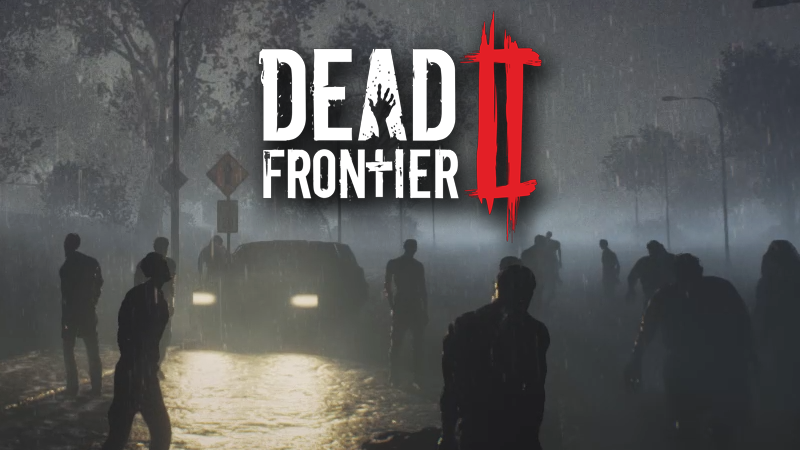
Dead Frontier 2 and the Wider Series
The success and longevity of the original Dead Frontier helped establish a broader franchise, including Dead Frontier 2.
The sequel moves the series toward a more modern presentation while retaining the central survival-horror concept.
However, the two games should not be treated as identical experiences.
The original has its own identity built around its long-running online world, economy, character development, and community history. Dead Frontier 2 provides a different interpretation of the same general universe.
For players interested in the series, trying both can be useful because they demonstrate how the franchise evolved rather than simply repeating the same formula.
Why Dead Frontier Has Lasted So Long
Dead Frontier’s longevity is particularly interesting because the game originated during a very different period of online gaming.
Its survival can be explained by several factors.
Persistent progression
Players have reasons to keep improving their characters and equipment.
Scarcity creates tension
When resources matter, decisions become meaningful.
Community creates continuity
Long-running multiplayer games benefit from players who return regularly and share knowledge.
Simple premise, deep consequences
The basic idea is easy to understand: survive a zombie-infested city.
But the decisions surrounding that goal can become surprisingly complicated.
Is Dead Frontier Still Worth Playing?
For someone who enjoys survival-oriented online games, Dead Frontier can still be interesting because its core appeal does not depend entirely on modern graphics.
It is particularly suited to players who enjoy:
- Zombie survival
- Character progression
- Looting
- Resource management
- Online communities
- Strategic combat
- Risk-and-reward gameplay
It may be less appealing if you want a purely cinematic or story-driven zombie experience.
The game’s age is part of its identity. Rather than trying to imitate every modern survival game, it retains the mechanics and atmosphere that originally gave it a dedicated audience.
FAQ
What is Dead Frontier?
Dead Frontier is an online survival horror game set in the zombie-infested city of Fairview. Players create survivors, explore dangerous areas, fight infected enemies, collect equipment, complete objectives, trade items, and develop their characters.
Is Dead Frontier a multiplayer game?
Yes. Multiplayer interaction is an important part of the game’s identity. Players can communicate, trade, cooperate, and participate in activities within its persistent online world.
What is the best way to survive in Dead Frontier?
Preparation is more important than simply killing as many zombies as possible. Carry equipment suited to your objective, watch your ammunition, understand enemy behavior, maintain an escape route, and return to safety before a profitable expedition becomes unnecessarily dangerous.
Is Dead Frontier still worth playing?
It can be, particularly if you enjoy older online survival games with persistent progression, resource management, scavenging, and community interaction. Its appeal is less about modern presentation and more about the tension created by its survival systems.
What is the difference between Dead Frontier and Dead Frontier 2?
They are separate games within the same broader franchise. The original Dead Frontier is known for its long-running online world and browser-game roots, while Dead Frontier 2 uses a more modern presentation and a different gameplay structure.
Why is Fairview City important in Dead Frontier?
Fairview is the game’s central post-apocalyptic environment and provides the dangerous spaces where players explore, fight zombies, and search for resources. The contrast between dangerous city areas and safer outposts creates the game’s core risk-and-reward loop.
Conclusion
Dead Frontier remains memorable because it treats survival as a series of decisions rather than simply a series of fights.
The zombies create the immediate threat, but resource management, equipment choices, exploration, character development, and multiplayer interaction create the deeper experience. Knowing when to fight, when to loot, and—perhaps most importantly—when to go home can make the difference between a profitable expedition and a disastrous one.
Its long history also demonstrates that a game does not need cutting-edge presentation to build a lasting community. A strong gameplay loop, meaningful progression, and a world that consistently gives players reasons to take risks can keep an online game interesting for years.
For new players, the best approach is simple: start cautiously, learn Fairview one expedition at a time, treat every mistake as information, and resist the temptation to push your luck just because the next piece of loot might be valuable.
In Dead Frontier, survival is not about eliminating every threat. It is about making it back alive with something worth keeping.