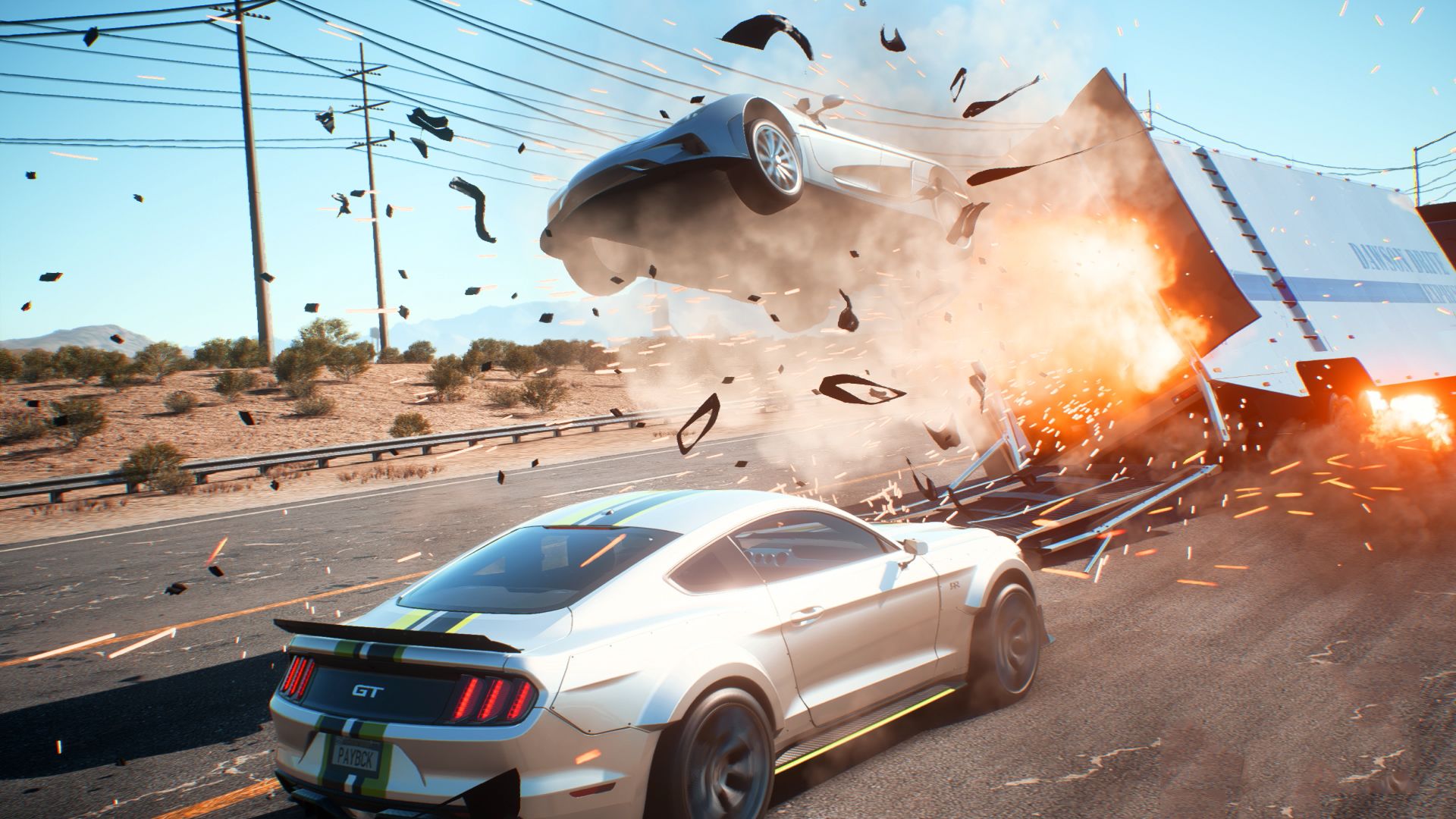
For more than 30 years, Need for Speed has represented one of gaming’s most recognizable interpretations of fast cars, street racing, police pursuits, customization, and automotive style. What began as a straightforward racing series gradually became a collection of very different experiences, moving between exotic-car driving, underground street culture, open-world exploration, simulation-inspired handling, and cinematic action.
Part of the franchise’s appeal is that it has never stayed completely still. Different games have emphasized different ideas about what racing should feel like. Some focus on realistic-looking cars and careful driving, while others turn every corner into an opportunity for a spectacular drift or police escape.
That variety can make the series confusing for newcomers. Which games are the most important? How has the gameplay changed? Why are police chases so closely associated with the franchise? And what makes Need for Speed different from dedicated racing simulators?
This guide looks at the series through those questions, explaining its evolution, gameplay systems, customization, open worlds, soundtrack culture, major eras, and what continues to make it relevant.
What Is Need for Speed?
Need for Speed is a racing-game franchise published by Electronic Arts. Its games generally emphasize speed, accessible driving mechanics, recognizable cars, customization, competitive events, and—depending on the entry—police pursuits and open-world exploration.
Unlike a pure racing simulator, the franchise has traditionally prioritized the feeling of speed.
That means developers can exaggerate certain aspects of driving to make the experience more exciting. A car may accelerate dramatically, a drift may be easier to initiate, and a police pursuit may escalate into an elaborate chase through city streets.
The exact formula changes from one installment to another, but several themes repeatedly return:
- Fast road cars and performance vehicles
- Street-racing culture
- Vehicle customization
- High-speed police pursuits
- Open-world environments in many entries
- Arcade-oriented handling
- Competitive racing events
- Distinctive music and visual presentation
How Need for Speed Started
The franchise began in the 1990s with a strong focus on exotic cars and high-speed driving. Early games were interested in giving players the sensation of driving powerful vehicles while maintaining an approachable control scheme.
As the series developed, it experimented with different forms of racing and different approaches to realism.
This experimentation became one of its defining characteristics.
Rather than following a single formula forever, the franchise repeatedly changed direction when developers wanted to explore a new interpretation of automotive gaming.
That is why comparing the entire series as though every game follows the same design philosophy can be misleading.
The Major Eras of Need for Speed
Understanding the franchise becomes easier when you divide it into broad eras.
The Early Exotic-Car Era
The earliest games emphasized prestigious performance cars, scenic roads, and a relatively straightforward racing experience.
The attraction was simple: choose an impressive car and drive it quickly.
Police interactions and realistic-looking environments helped distinguish the games from simpler arcade racers.
The Underground Era
The early 2000s represented one of the biggest transformations in the franchise.
Need for Speed Underground shifted attention toward tuner culture, nighttime street racing, visual customization, and performance modification.
This was an important change because the car became more than a vehicle used to win races.
It became an identity.
Players could modify appearance and performance, creating cars that reflected their personal taste.
The Most Wanted Era
Need for Speed: Most Wanted combined street racing with a strong police-pursuit system and progression based around rival racers.
The concept worked because it connected two fantasies:
Become the best street racer.
Survive increasingly aggressive police pursuits.
The pursuit system gave the open road a second purpose. You weren’t simply traveling between races; ordinary driving could suddenly become an action sequence.
The Simulation-Inspired Experiment
The franchise later explored a more serious approach to vehicle handling with Need for Speed: Shift and its sequel.
These games moved closer to the track-racing experience, emphasizing cockpit views, vehicle behavior, circuit racing, and more simulation-oriented mechanics.
This period demonstrated that Need for Speed was not permanently locked into one formula.
The Return to Open-World Street Racing
Later releases returned to open-world environments, customization, police encounters, and street-racing themes.
The modern franchise has continued combining traditional arcade accessibility with increasingly detailed vehicles, visual effects, and customization systems.
Why Car Customization Matters
Customization is one of the franchise’s most important features because it turns driving into personal expression.
Players can often modify elements such as:
- Paint
- Wheels
- Body kits
- Decals
- Spoilers
- Exhaust components
- Performance parts
- Suspension
- Tires
- Engine-related upgrades
The exact options depend on the game.
But customization matters for more than appearance.
Performance Builds
A visually impressive car is not necessarily the fastest car.
Players often have to decide whether they want a setup focused on:
- Acceleration
- Top speed
- Cornering
- Drifting
- Braking
- Off-road capability
- Overall balance
That creates an interesting layer of strategy.
A car optimized for straight-line speed may struggle on technical circuits, while a highly responsive build can dominate tight corners but lose ground on long straights.
The Hidden Skill in Tuning
One useful lesson for new players is that the most expensive upgrade is not always the best upgrade.
Performance systems work as combinations.
For example, increasing power without considering traction can make a vehicle harder to control. Likewise, improving top speed provides little benefit if most of the events contain tight corners where acceleration and handling matter more.
A good build should match the track and driving style.
That is one reason experienced players often experiment instead of simply purchasing every available upgrade.
Police Chases: More Than a Side Feature
Police pursuits have become one of the defining features associated with Need for Speed.
Their appeal comes from unpredictability.
A normal race has a clear objective:
Start → race → finish.
A pursuit adds another layer:
Race → attract attention → escape → avoid capture.
Depending on the game, police may use different vehicles, roadblocks, helicopters, spike strips, pursuit technology, or escalating levels of aggression.
The result changes how players use the environment.
A narrow shortcut that is useful during a race might become dangerous during a pursuit. A long straight may provide speed but also expose the player to roadblocks.
This turns the city into part of the strategy.
Open-World Driving and Exploration
Open-world Need for Speed games provide something traditional track racers cannot easily reproduce: freedom between events.
Players can:
- Explore different parts of the map
- Discover shortcuts
- Locate events
- Test vehicles
- Practice driving
- Encounter police
- Search for collectibles or activities
- Travel between races
This creates memorable unscripted moments.
A player might leave a race intending to drive casually and accidentally end up in a long police chase.
That unpredictability is part of the franchise’s personality.
Arcade Handling vs. Realistic Racing
One of the easiest ways to understand Need for Speed is to compare it with racing simulators.
| Feature | Need for Speed | Racing Simulators |
|---|---|---|
| Accessibility | Generally high | Often demanding |
| Handling | Arcade or arcade-inspired in many entries | More simulation-focused |
| Police pursuits | Common in selected entries | Usually uncommon |
| Customization | Frequently important | Varies |
| Open-world driving | Common in many modern entries | Depends on the game |
| Realism | Varies by title | Usually a central goal |
| Main focus | Speed, spectacle, street culture | Driving accuracy and vehicle simulation |
Neither approach is automatically better.
They serve different purposes.
A simulator asks:
“Can you drive this car accurately?”
Need for Speed often asks:
“Can you make this car feel exciting?”
The Importance of Sound
Sound is one of the easiest elements to overlook when discussing racing games.
Yet engine audio strongly influences the perception of speed.
A low engine note can communicate power. A high-revving engine can make acceleration feel more urgent. Tire sounds can help communicate whether the car is gripping or sliding.
Police sirens add another layer of pressure.
Then there is the soundtrack.
Music has been an important part of Need for Speed’s identity for years, helping individual games establish distinct cultural moods.
Different eras have incorporated rock, hip-hop, electronic music, punk, and other styles, reinforcing the connection between racing and broader car culture.
The Importance of Visual Style
Need for Speed has frequently used visual presentation to differentiate itself from more technical racing games.
Depending on the title, that can mean:
- Neon-lit streets
- Underground garages
- Industrial environments
- Desert highways
- Coastal roads
- Urban skylines
- Cinematic weather
- Dramatic nighttime lighting
The visual style isn’t merely decorative.
It supports the fantasy.
A nighttime city filled with modified cars communicates a very different experience from a professional racing circuit.
Need for Speed and Car Culture
The franchise’s cultural influence extends beyond its mechanics.
For many players, these games introduced them to automotive ideas they might not otherwise have encountered.
A player who begins with a standard car may become interested in:
- Engine tuning
- Suspension
- Wheel design
- Aerodynamics
- Drifting
- Drag racing
- JDM culture
- European performance cars
- American muscle cars
That educational element is subtle but significant.
The game turns the garage into a place where players can experiment with automotive concepts without needing to own a real performance car.
Why Some Need for Speed Games Feel So Different
A common mistake is expecting every installment to provide the same experience.
They don’t.
One game might prioritize:
Police chases
Another might emphasize:
Customization and street culture
Another might focus on:
Track racing
Another might emphasize:
Drifting and arcade spectacle
This explains why different players can have completely different favorite Need for Speed games.
The series is less like one continuous formula and more like a collection of interpretations of the same central fantasy: high-speed automotive freedom.
How to Get Better at Need for Speed
New players often focus almost entirely on acceleration.
That can be a mistake.
Learn the Map
Knowing where corners, shortcuts, jumps, and alternate routes are located can be more valuable than having slightly better acceleration.
Brake Before the Corner
Entering a corner too quickly often costs more time than braking early.
Slow down before the turn, rotate the car, and accelerate once you have a clean exit.
Don’t Overuse Nitrous
Nitrous is most effective when used strategically.
Depending on the game, good opportunities include:
- Long straights
- Exiting corners
- Recovering after a collision
- Overtaking
- Maintaining momentum
Tune for the Event
A balanced road-racing setup may not be ideal for drifting or off-road events.
Match the car to the challenge.
Practice Without Racing
Open-world driving provides an excellent opportunity to learn braking points and handling without the pressure of competition.
Common Mistakes Beginners Make
Buying Upgrades Without a Plan
More power does not automatically produce a better car.
Ignoring Handling
A fast vehicle that cannot take corners efficiently can lose to a slower but better-balanced build.
Taking Every Shortcut
Some shortcuts save time; others introduce difficult turns, jumps, or poor surfaces.
Learn which ones actually help.
Fighting Police When Escape Is Easier
During a pursuit, the objective is usually to escape—not to prove that your car can survive forever.
Understanding when to disengage is an important skill.
Driving Too Aggressively
Constantly hitting barriers or traffic destroys momentum.
Smooth driving often beats spectacular driving.
The Community and Competitive Side
Need for Speed has also developed communities around customization, time trials, builds, challenges, and online competition.
Players often debate:
- Which cars are fastest
- Which builds are most effective
- Which handling systems feel best
- Which games have the strongest customization
- Which police systems are most entertaining
This discussion is part of the franchise’s longevity.
Even when players disagree about individual games, those debates demonstrate how strongly the series has connected with different generations of racing fans.
What Makes Need for Speed Different?
The franchise’s greatest strength is arguably its willingness to prioritize fantasy over strict realism.
It lets players drive expensive performance cars through environments designed for spectacle.
It allows customization that would be impractical or impossible in real life.
It turns police pursuits into dramatic high-speed sequences.
And it makes speed immediately understandable.
You don’t need to know advanced motorsport terminology to enjoy the basic experience.
Press the accelerator.
Find the line.
Take the corner.
Use the boost.
Keep moving.
That accessibility is a major reason the franchise has remained recognizable for so long.
The Future of the Franchise
The racing genre continues to evolve, and Need for Speed faces competition from open-world racers, dedicated simulation games, and other arcade-oriented titles.
Future entries have opportunities to combine the franchise’s strongest ideas:
- Deeper customization
- More convincing vehicle handling
- Larger and more interactive cities
- Better police AI
- More meaningful progression
- Stronger multiplayer systems
- Greater variety in racing disciplines
The challenge is balance.
Too much realism could remove the immediacy that defines Need for Speed. Too much arcade spectacle could make progression and driving skill feel less meaningful.
The strongest future direction would likely preserve accessibility while giving experienced players more control and depth.
FAQ
What is Need for Speed known for?
Need for Speed is best known for fast-paced racing, vehicle customization, street-racing themes, open-world driving in many entries, and memorable police pursuits. Different games emphasize these features differently, so the exact experience varies across the franchise.
Is Need for Speed a racing simulator?
Generally, no. Most Need for Speed games are arcade-oriented or arcade-inspired rather than strict racing simulators. Some entries, particularly the Shift games, moved closer to simulation-style racing.
Which is more important in Need for Speed: speed or handling?
Both matter, but handling can be just as important as raw speed. A car with excellent acceleration and top speed can still perform poorly if it loses too much momentum through corners. The best setup depends on the event and driving style.
Why are police chases so popular in Need for Speed?
Police pursuits introduce unpredictability and create a second objective beyond simply winning a race. Players must manage speed, traffic, routes, roadblocks, and pursuit pressure, turning ordinary driving into an escalating challenge.
Is Need for Speed good for beginners?
Yes. Many entries are designed to be accessible, with straightforward controls and clear racing objectives. Beginners can enjoy the basic driving immediately while gradually learning tuning, braking, cornering, route selection, and more advanced techniques.
Why are there so many different Need for Speed games?
The franchise has repeatedly experimented with different racing styles. Some entries emphasize street culture, others police pursuits, customization, open-world exploration, or more realistic circuit racing. This experimentation has allowed the series to evolve rather than remain locked into one formula.
Conclusion
Need for Speed has survived for decades because it understands that racing games are ultimately about more than numbers on a speedometer.
They are about sensation.
The sound of an engine rising through the rev range, the split-second decision to brake before a corner, the satisfaction of building a car that feels uniquely yours, and the sudden panic of seeing police lights appear behind you all contribute to the experience.
The franchise has experimented with realism, street racing, open worlds, customization, simulation, and cinematic action. Not every experiment has appealed to every player, but that willingness to reinvent itself has become part of its identity.
For newcomers, the best way to approach Need for Speed is not to expect every game to feel identical. Instead, think of the franchise as a long-running collection of different answers to the same question:
What is the most exciting way to experience speed behind the wheel?
That question is still powerful—and it explains why Need for Speed remains one of racing’s most recognizable names.