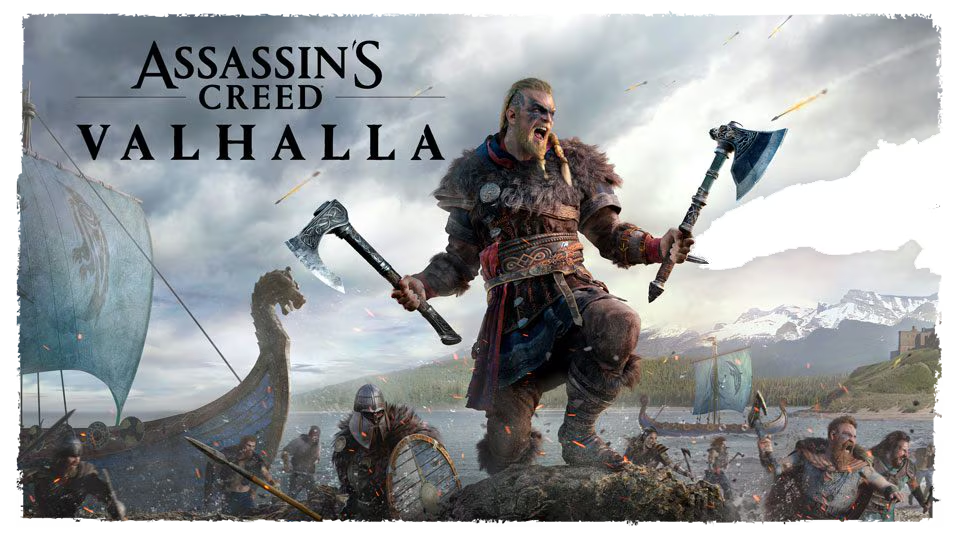
Few modern games attempt something as ambitious as blending historical imagination, personal storytelling, and open-world design on a massive scale. Assassin’s Creed Valhalla does exactly that by placing players in the harsh yet alluring world of the Viking Age. It is not simply a tale of conquest and bloodshed, but a carefully layered experience about belonging, belief, and the cost of ambition.
From its opening moments, the game establishes a tone that feels heavier and more grounded than many of its predecessors. Snow-covered mountains, political betrayal, and the quiet pull of destiny shape a narrative that is both intimate and epic. What unfolds is a journey that values choice, atmosphere, and reflection as much as combat and exploration.
World and Vision of Assassin’s Creed Valhalla
The vision behind Assassin’s Creed Valhalla is rooted in contrast. On one hand, it presents the brutal reality of Viking survival. On the other, it offers moments of stillness, beauty, and introspection. This balance defines the game’s identity and sets it apart within the long-running series.
England is depicted not as a romantic fantasy, but as a fractured land of struggling kingdoms, dense forests, and ancient ruins. Every region feels shaped by history, conflict, and belief. Rather than overwhelming players with constant action, the world invites observation and patience.
A Living Historical Landscape
The environment plays a central role in storytelling. Rolling hills, marshlands, and ruined Roman structures silently communicate the passage of time and the layering of civilizations. Exploration feels purposeful because the world responds with subtle narrative rewards rather than constant markers demanding attention.
Villages feel lived in, with daily routines and local tensions that give context to every alliance and conflict. This grounded approach allows the setting to feel authentic without becoming restrictive or overly academic.
Myth and Reality Intertwined
Norse mythology is woven into the experience in a way that respects its symbolic weight. Dreams, visions, and spiritual encounters do not break immersion, but deepen the understanding of Viking belief systems. Myth is not treated as fantasy alone, but as a lens through which characters interpret their world.
This integration reinforces the idea that faith and identity are inseparable from daily life. The result is a narrative texture that feels richer and more emotionally resonant.
The Protagonist and the Meaning of Choice
At the heart of Assassin’s Creed Valhalla lies Eivor, a protagonist defined less by destiny and more by decision. Their journey is shaped by loyalty, curiosity, and a persistent tension between personal desire and communal responsibility.
Rather than positioning Eivor as a traditional hero, the game allows room for doubt and contradiction. This complexity makes the character relatable, even when their actions are morally ambiguous.
Identity Beyond the Warrior
Although combat is a significant part of the experience, Eivor is not reduced to a weapon. Conversations, alliances, and leadership decisions carry weight. Players are encouraged to think before acting, especially when choices affect the long-term stability of their settlement.
This focus on identity elevates the narrative. The question is not how powerful Eivor becomes, but what kind of leader they choose to be.
Consequences That Feel Personal
Decisions rarely result in immediate rewards or punishments. Instead, their impact unfolds gradually, influencing relationships and political dynamics. This slow burn reinforces the sense that actions matter, even when their outcomes are not instantly visible.
The absence of clear moral binaries allows players to engage with the story on a deeper level, reflecting on compromise, sacrifice, and responsibility.
Combat, Exploration, and Player Freedom
Assassin’s Creed Valhalla refines the series’ action systems without losing accessibility. Combat feels heavier and more deliberate, emphasizing timing and positioning rather than speed alone. Each encounter carries a sense of risk that keeps engagement high.
Exploration is equally deliberate. The game avoids excessive guidance, trusting players to follow curiosity rather than icons on a map.
A More Grounded Combat System
Weapons feel distinct, with weight and rhythm influencing every strike. Dual-wielding introduces flexibility, allowing players to tailor combat to their preferred style. The absence of constant enemy scaling ensures that progress feels earned.
This approach encourages experimentation while maintaining challenge, making each victory feel meaningful.
Discovery Through Curiosity
Instead of filling the map with repetitive objectives, the world offers mysteries that reward attention. Small narrative moments, environmental puzzles, and unexpected encounters replace traditional side quests.
This design philosophy respects player agency and fosters a genuine sense of discovery. Exploration becomes a dialogue between player and world, not a checklist to complete.
Settlement Building and Community
One of the most distinctive elements of Assassin’s Creed Valhalla is the settlement system. Rather than serving as a cosmetic feature, it acts as a narrative anchor and emotional center.
The settlement grows in response to player choices, reflecting priorities and values. It becomes a symbol of stability in an otherwise uncertain world.
A Home Worth Fighting For
Buildings unlock new interactions, stories, and opportunities. Each structure feels purposeful, contributing to the sense that the settlement is alive and evolving. Characters return, relationships deepen, and the community gains identity.
This sense of home grounds the larger narrative, giving context to conquest and diplomacy alike.
Leadership Through Investment
The settlement reinforces the theme of leadership as responsibility. Progress is not achieved through domination alone, but through care, planning, and collaboration. Success is measured not by territory gained, but by the well-being of the people.
This focus adds emotional weight to the broader journey, transforming abstract goals into personal stakes.
Narrative Structure and Pacing
Assassin’s Creed Valhalla embraces a segmented narrative structure, with regional story arcs that function almost like individual sagas. Each arc explores local conflicts while contributing to the overarching story.
This structure allows for variety without losing cohesion. Players experience different cultures, dilemmas, and personalities, keeping the narrative fresh over a long runtime.
Strength in Story Arcs
Each region introduces new characters and moral challenges. Some arcs focus on political intrigue, others on personal tragedy or cultural misunderstanding. Together, they form a mosaic of perspectives that enrich the world.
The episodic feel prevents fatigue and encourages sustained engagement.
A Slow but Intentional Rhythm
The pacing favors immersion over urgency. Moments of quiet reflection balance periods of conflict. This rhythm may feel restrained to some, but it reinforces the game’s thematic depth.
By allowing space for contemplation, the narrative gains emotional resonance that lingers beyond individual missions.
Sound, Atmosphere, and Emotional Tone
The audio design plays a subtle but powerful role in shaping the experience. Music blends traditional Norse influences with ambient tones, enhancing both tension and tranquility.
Silence is used effectively, allowing environmental sounds to carry emotional weight.
Music as Storytelling
Themes shift gently in response to context, underscoring moments of triumph, loss, or introspection. The soundtrack never overwhelms, instead supporting the narrative with restraint.
This careful balance enhances immersion and emotional connection.
A World That Breathes
Wind through trees, distant animal calls, and the crackle of fire contribute to a sense of presence. These details make the world feel inhabited and responsive.
Atmosphere becomes a storytelling tool, not just a backdrop.
Conclusion: A Saga of Meaning and Memory
Assassin’s Creed Valhalla stands as a thoughtful exploration of identity, leadership, and belonging. It resists the temptation to rely solely on spectacle, instead offering a measured, reflective experience that rewards patience and curiosity.
By blending historical grounding with personal storytelling, the game creates a journey that feels both expansive and intimate. Its strength lies not in constant action, but in the spaces between, where choices, consequences, and quiet moments define the true shape of the saga.