Party games often promise quick fun, but only a few manage to stay memorable long after the controllers are put down. Ultimate Chicken Horse is one of those rare titles that turns simple mechanics into endlessly replayable experiences. It blends platforming, strategy, and humor into something that feels fresh every time it is played. At its core, the game is not just about reaching the finish line but about shaping the journey itself.
What makes this experience stand out is its focus on shared creativity. Players are not only competitors but also co-designers of the challenge. Each round becomes a conversation, expressed through obstacles, timing, and clever placement rather than words. This dynamic has allowed the game to build a loyal community and a reputation for chaotic brilliance.
Ultimate Chicken Horse and the Core Concept
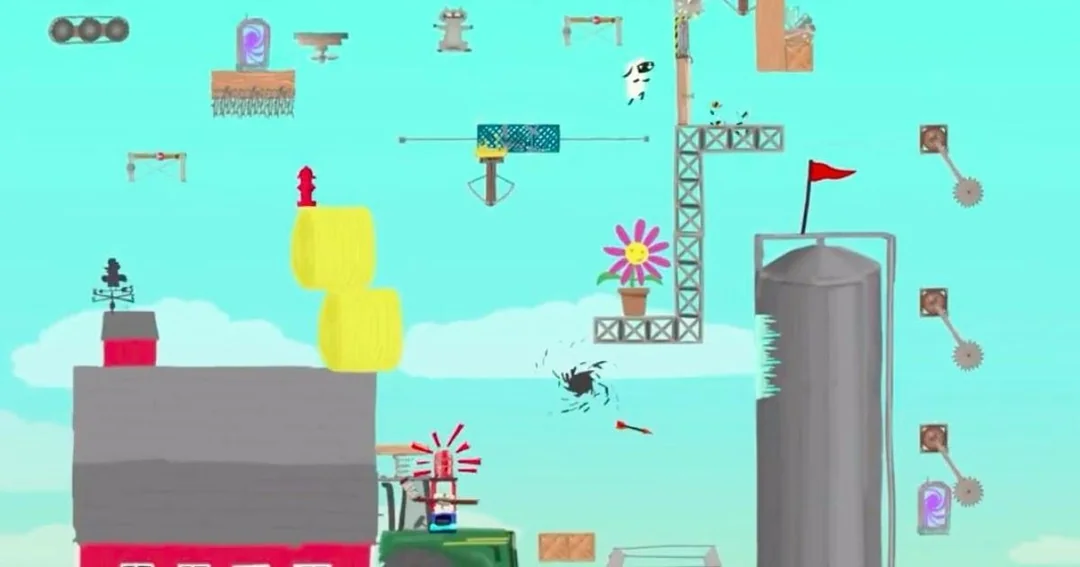
At first glance Ultimate Chicken Horse looks deceptively simple. A group of animal characters race across a 2D level, trying to reach a goal. The twist comes between rounds, when each player places a new obstacle, platform, or trap onto the stage. These additions permanently alter the level, transforming it into a living, evolving puzzle.
This mechanic creates a constant tension between helping yourself and sabotaging others. Place an easy platform, and everyone benefits. Add a spinning saw or arrow trap, and the balance shifts. The brilliance lies in how these decisions stack over time, turning once-friendly layouts into treacherous gauntlets.
The core concept rewards creativity over reflexes. While platforming skill matters, clever design choices often determine victory. This ensures that no two matches feel the same, even on familiar maps.
Simple Controls, Deep Strategy
Accessibility is one of the game’s greatest strengths. Controls are intuitive, allowing new players to jump in quickly. Movement, jumping, wall-climbing, and basic interactions are easy to grasp within minutes.
However, beneath this simplicity lies surprising depth. Timing jumps around moving obstacles, predicting how others will place traps, and planning several rounds ahead all become part of the experience. Strategy emerges naturally as players adapt to the evolving level.
This balance between ease of entry and long-term mastery makes the game appealing to a wide range of players. Casual groups can enjoy quick laughs, while competitive friends can dive deep into optimization and mind games.
The Social Experience at Its Core
More than anything, the game thrives on social interaction. Laughter, groans, and sudden shouts are as much a part of the experience as the gameplay itself. Every trap placed feels personal, every failed jump a shared moment.
Winning rarely feels mean-spirited, even when sabotage is involved. The tone remains playful, encouraging experimentation rather than frustration. Losses often become stories retold later, while victories feel earned through cleverness rather than brute skill.
This social focus is what keeps people coming back. The game becomes less about individual success and more about collective entertainment.
Level Design as a Living System
Traditional platformers rely on carefully crafted levels designed by developers. Here, level design is collaborative and reactive. Each player contributes a piece, resulting in layouts that reflect the personalities and strategies of the group.
Over time, levels develop their own identity. Certain sections become infamous, known for causing repeated failures or dramatic last-second saves. This emergent design creates a sense of ownership, as players remember not just the map but how it came to be.
The system encourages experimentation. Sometimes a risky obstacle placement pays off, while other times it backfires spectacularly. Both outcomes are equally entertaining.
Risk, Reward, and Player Psychology
Every placement decision carries psychological weight. Should you block an obvious path, or subtly make it harder? Do you target the strongest player, or protect your own route first?
These choices introduce mind games. Players start predicting each other’s behavior, setting traps that rely on expected reactions. This layer of anticipation adds depth far beyond simple platforming.
Risk and reward are carefully balanced. Being too aggressive can make levels impossible, preventing anyone from scoring. Being too generous can allow rivals to catch up. Finding the sweet spot becomes a fascinating challenge.
Visual Style and Audio Identity
The visual design embraces clarity and charm. Characters are expressive without being distracting, and environments are colorful yet functional. Obstacles are instantly recognizable, ensuring that players can react quickly.
Animations emphasize humor, especially during failures. Characters tumble, slide, and bounce in ways that soften frustration and reinforce the game’s lighthearted tone.
Sound design supports this atmosphere. Subtle effects highlight danger, while playful music keeps energy high. Together, visuals and audio create an inviting space where experimentation feels safe.
Accessibility and Inclusivity
One of the reasons Ultimate Chicken Horse has remained popular is its inclusive design philosophy. Matches can be enjoyed by players of varying skill levels, with scoring systems that reward progress rather than perfection.
Options allow customization of difficulty and rules, ensuring that groups can tailor sessions to their preferences. This flexibility makes the game suitable for families, friends, and mixed-experience groups.
Inclusivity extends beyond mechanics. The game encourages cooperation even in competition, fostering an environment where everyone feels involved.
Replayability and Longevity
Replayability is built into the core loop. Because players shape each level differently, repetition never feels stale. Even familiar maps can evolve into entirely new challenges based on placement choices.
Regular sessions often feel like fresh experiences. New strategies emerge, old habits are challenged, and unexpected moments keep the game exciting. This organic variability ensures long-term appeal.
Longevity is also supported by community engagement. Shared clips, stories, and custom challenges extend the life of each session beyond the screen.
Multiplayer Dynamics and Modern Play
The game excels in both local and online multiplayer settings. Playing in the same room enhances immediacy and laughter, while online play allows distant friends to share the experience.
Communication becomes part of the strategy. Taunts, negotiations, and sudden betrayals add layers to each match. Even silence can be meaningful, as players watch each other’s choices unfold.
These dynamics reflect modern multiplayer expectations, where interaction matters as much as mechanics.
Creative Freedom and Player Expression
Beyond winning, the game offers a canvas for expression. Some players focus on elegance, building clean paths that reward precision. Others embrace chaos, creating absurd obstacle courses that challenge everyone equally.
This freedom encourages creativity without pressure. There is no single correct way to play, only choices and consequences. The result is a game that feels personal to every group.
Player expression becomes a form of storytelling, told through platforms, traps, and timing rather than dialogue.
Conclusion
At its heart, Ultimate Chicken Horse is a celebration of shared creativity and playful competition. It transforms simple platforming into a social experience where every decision matters and every mistake becomes a memory. By empowering players to shape their own challenges, it breaks away from traditional design and invites endless experimentation.
The game’s lasting appeal lies in its balance of accessibility, depth, and humor. It reminds us that the best multiplayer experiences are not just about winning, but about laughing together along the way. In a landscape crowded with competitive titles, this one stands out by making creativity the true objective.