Few browser strategy games have made the transition from early web gaming to modern platforms as successfully as Stick War. What began as a simple stick-figure strategy experience became a recognizable game series, eventually reaching mobile audiences through Stick War: Legacy.
The appeal is easy to understand. The visuals are deliberately simple, but the gameplay combines resource management, unit production, tactical positioning, direct unit control, and campaign progression. Players mine gold, build armies, defend their statue, and decide when to attack or hold the line.
That combination gives Stick War more depth than its minimalist appearance suggests.
Today, searches for stick war can refer to the original browser game, the wider Stick War series, or Stick War: Legacy. Understanding that distinction is important when exploring the game’s history, mechanics, and continued popularity.
What Is Stick War?
Stick War is a strategy game series centered around stick-figure armies fighting for control of a fantasy world.
The original game became known during the era of browser-based Flash gaming. Instead of relying on elaborate graphics, it focused on straightforward controls and tactical decision-making.
Its central gameplay loop revolves around several interconnected tasks:
- Mining gold
- Producing military units
- Building an army
- Defending your territory
- Attacking enemy forces
- Destroying the opposing statue
- Managing resources during combat
The formula is easy to understand but creates meaningful decisions once multiple unit types enter the battlefield.
Stick War vs. Stick War: Legacy
One of the most important distinctions for modern players is the difference between the original Stick War and Stick War: Legacy.
The original Stick War was designed for browser gaming and became part of the Flash-game era.
Stick War: Legacy brought the concept to modern mobile gaming, expanding and adapting the experience for contemporary devices. It includes campaign content, additional gameplay features, unit upgrades, and other systems designed around mobile play.
This means that references to “Stick War” online can describe different releases rather than one identical game.
Why Stick War Became So Popular
The game’s popularity came from an unusually effective combination of simplicity and depth.
Many strategy games require players to learn large interfaces, complicated technology trees, or dozens of unit commands.
Stick War takes a more accessible approach.
A new player can understand the basic objective quickly:
Build an army, survive the enemy attack, and destroy their statue.
The strategic possibilities become more complicated as players learn how different units interact.
This creates an effective progression from beginner-friendly gameplay to tactical experimentation.
The Core Gameplay Loop
At the center of Stick War is a simple economic and military cycle.
1. Mine Gold
Miners collect gold, which provides the resources needed to create units.
This immediately introduces an important strategic choice: how much of your army should be dedicated to the economy?
2. Build Units
Gold can be converted into different types of soldiers.
Each unit serves a different battlefield purpose, meaning that spending all your resources on one type of soldier is not always the best strategy.
3. Control the Battlefield
Units move toward enemy positions and engage opposing forces.
Players can influence positioning and, in some situations, directly control individual units.
4. Defend the Statue
Your army must protect its own statue while attempting to destroy the enemy’s.
This creates a clear win condition and prevents battles from becoming directionless.
5. Attack at the Right Moment
A successful player learns when to stop expanding the economy and invest in offense.
That decision is one of the most satisfying parts of the game.
The Importance of Resource Management
Gold is more than a simple currency.
It creates the central tension between economic development and military pressure.
If you spend everything immediately on soldiers, you may create a powerful early army but struggle to maintain momentum.
If you invest too heavily in miners, the opponent may gain enough military strength to overwhelm your defenses.
This creates a fundamental strategy question:
Should you strengthen your economy or strengthen your army?
The answer changes depending on the enemy, the stage of the campaign, and your current battlefield position.
Understanding Unit Roles
One reason Stick War remains engaging is that units are not simply stronger versions of one another.
Different soldiers perform different roles.
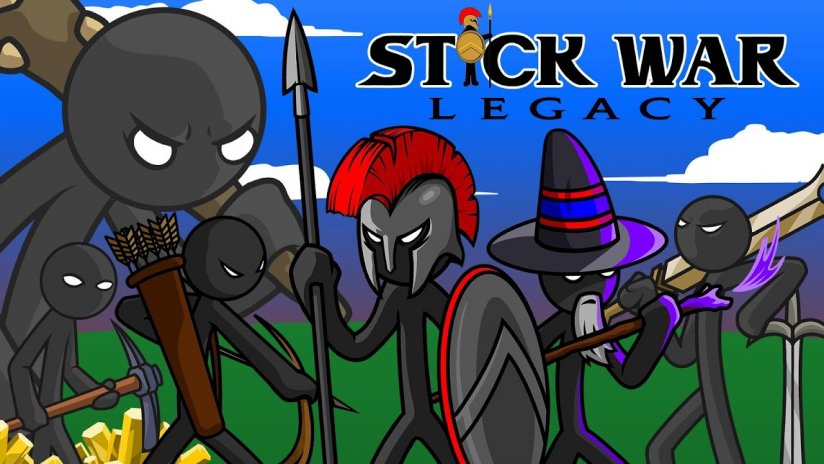
Sword Units
Sword-wielding units are generally associated with close-range combat. They are useful when an army needs direct melee pressure.
Archers
Archers provide ranged attacks and can weaken opponents before they reach the frontline.
Their effectiveness depends heavily on positioning and protection.
Speartons
Speartons are heavily armored spear-wielding units that can serve as a defensive frontline.
Their durability makes them useful for absorbing pressure while other units attack from behind.
Magikill
Magikill provide powerful magical attacks and add another layer of tactical decision-making.
Because powerful units can require significant resources, timing their deployment becomes important.
The exact balance and abilities can vary between Stick War releases, so players should distinguish between the original game and later versions when discussing unit statistics.
Why Unit Counters Matter
Stick War becomes more interesting when players stop thinking about individual units and start thinking about combinations.
A large army of one unit type may look powerful, but a well-designed opposing force can exploit its weaknesses.
For example:
- Ranged units can pressure exposed melee troops.
- Armored units can withstand certain attacks more effectively.
- Fast melee units can threaten vulnerable ranged units.
- Powerful magic units can punish concentrated enemy formations.
The goal is therefore not simply to produce the most expensive unit.
It is to build an army that fits the situation.
Direct Unit Control Adds Another Layer
One of the game’s distinctive features is the ability to directly control individual soldiers in relevant gameplay situations.
This changes the experience from pure army management into a combination of:
- Strategy
- Positioning
- Timing
- Individual combat
A player can therefore make a difference even when two armies appear relatively evenly matched.
Good tactical control can sometimes compensate for an imperfect army composition.
The Importance of Timing
Timing is one of the most important skills in Stick War.
A player may have enough gold to create an army, but that does not necessarily mean an immediate attack is the best decision.
Consider three situations:
Early Attack
An early attack can disrupt an opponent before their economy becomes strong.
The downside is that a failed assault may leave your own economy vulnerable.
Defensive Strategy
A defensive approach allows you to build resources and strengthen your army.
The danger is giving the opponent too much time to prepare.
Late Push
A larger, carefully assembled army can create overwhelming pressure.
However, waiting too long can also allow the opponent to reach the same strength.
The strongest players learn to recognize these changing battlefield conditions.
The Role of Strategy and Adaptation
Stick War rewards adaptation more than a single universal strategy.
A tactic that works against one opponent may perform poorly against another.
Players gradually learn to ask:
- What units is the enemy producing?
- Where is their army strongest?
- Is their economy exposed?
- Should I defend or attack?
- Which unit combination gives me the best response?
- Can I afford another production cycle?
These questions turn relatively simple mechanics into genuine strategic decisions.
Why the Minimalist Art Style Works
The stick-figure aesthetic is one of the game’s most recognizable characteristics.
Instead of detailed character models, Stick War uses simple silhouettes and animations.
That visual approach offers several advantages.
Clear Battlefield Information
Simple characters are easy to distinguish from one another.
Players can quickly understand where their units are and what is happening.
Strong Character Identity
Despite the minimal graphics, different units have recognizable silhouettes, weapons, and animations.
Timeless Visual Style
Because the game was never dependent on photorealistic graphics, its visual identity has aged differently from many older 3D games.
The result is a style that feels intentionally simple rather than merely outdated.
Stick War and the Flash Game Era
The original Stick War belongs to an important period in internet gaming.
During the 2000s and early 2010s, browser games provided millions of people with quick access to games without requiring a traditional console or PC installation.
Flash-powered websites hosted enormous collections of:
- Strategy games
- Puzzle games
- Action games
- Tower-defense titles
- Platformers
- Simulation games
Stick War fit naturally into this environment.
Its relatively straightforward controls made it easy to understand, while its strategy systems gave players a reason to keep playing.
The End of Flash Changed Browser Gaming
Adobe Flash was officially discontinued at the end of 2020.
That transition significantly affected the classic browser-gaming ecosystem.
Many older Flash games became difficult to access through normal browsers, while preservation projects and modern ports helped some titles survive.
Stick War benefited from having later versions and mobile adaptations, allowing its gameplay concept to continue beyond the original Flash environment.
This is an important part of its legacy.
It was not simply preserved as a historical browser game; the series was adapted for a new generation of devices.
Stick War: Legacy and Modern Players
Stick War: Legacy helped introduce the franchise to players who may never have experienced the original browser version.
Mobile gaming changed the way people interacted with the series.
Instead of sitting at a desktop computer and playing inside a browser window, players could access Stick War-style strategy directly on smartphones and tablets.
The core appeal remained recognizable:
- Build an army
- Manage resources
- Counter enemies
- Control units
- Progress through battles
But the modern version could support additional progression and gameplay systems.
Why Stick War Still Appeals to New Players
Nostalgia explains part of the game’s continued attention, but it is not the entire story.
A new player does not need to remember Flash gaming to enjoy the basic mechanics.
The game remains accessible because:
The Objective Is Clear
There is little ambiguity about what the player is trying to accomplish.
Controls Are Approachable
The basic gameplay does not require a huge number of complicated commands.
Strategy Develops Naturally
Players can begin with simple decisions and gradually understand more advanced tactics.
Battles Create Immediate Feedback
A good decision produces a visible result on the battlefield.
That connection between decision and consequence is a major part of the game’s appeal.
The Psychology of Commanding an Army
There is a satisfying psychological loop behind strategy games.
Players make a decision, watch their army respond, observe the result, and then adjust their next decision.
Stick War makes this loop particularly visible.
A player can watch:
- Miners collect resources
- Soldiers form a frontline
- Archers attack from behind
- Enemy forces advance
- A defensive position collapse
- A counterattack succeed
The simplicity of the presentation makes cause and effect easy to understand.
Why Losing Can Be Fun
A good strategy game does not make every victory effortless.
In Stick War, failure can teach players something about:
- Poor resource allocation
- Weak army composition
- Bad timing
- Inadequate defense
- Incorrect unit counters
A failed battle therefore becomes useful information.
The player can restart, change the strategy, and attempt the encounter again.
That creates a classic learn–adapt–retry gameplay loop.
Stick War as an Introduction to Strategy
Although Stick War is not intended to replace a full-scale real-time strategy game, it introduces several fundamental RTS concepts.
Players encounter:
- Resource management
- Unit production
- Counter systems
- Positioning
- Tactical timing
- Defensive strategy
- Offensive pressure
- Risk management
These ideas appear in much larger strategy games as well.
The difference is that Stick War presents them through a much simpler interface.
What Makes the Game Memorable?
Several elements work together to create its lasting identity:
Simple visuals make the game immediately recognizable.
Straightforward objectives make it accessible.
Resource management gives the player meaningful choices.
Unit variety creates tactical depth.
Direct control adds personal involvement.
Campaign progression provides motivation to continue.
Distinctive enemy factions and units give battles personality.
The combination is more important than any individual feature.
Common Mistakes New Players Make
Spending Too Much Gold Too Quickly
Producing units continuously can leave your economy too weak to sustain the army.
Ignoring Miners
An army without a stable economy can lose momentum.
Using Only One Unit Type
A specialized army may be vulnerable to an effective counter.
Attacking Without Preparation
An aggressive move can fail if your army lacks enough support.
Ignoring Defense
Focusing entirely on attacking can leave your own statue exposed.
Failing to Adapt
Repeating the same strategy after it has already failed rarely produces a different result.
Is Stick War Still Worth Playing?
For players who enjoy accessible strategy games, Stick War: Legacy remains interesting because it combines straightforward mechanics with meaningful tactical choices.
It is particularly suitable for people who want:
- Shorter strategy sessions
- Easy-to-understand mechanics
- A distinctive visual style
- Unit-based combat
- Resource management
- Campaign progression
Players looking for highly complex grand strategy or competitive RTS systems may eventually want something deeper.
But that was never the main strength of Stick War.
Its strength is making strategic decision-making immediately understandable and entertaining.
The Legacy of Stick War
The importance of Stick War is not necessarily that it revolutionized the entire strategy genre.
Its real achievement is more focused.
It demonstrated that a game could create satisfying strategic decisions without expensive graphics, enormous interfaces, or complicated controls.
That lesson remains relevant.
Modern independent developers continue to prove that strong gameplay systems can matter more than visual complexity.
Stick War belongs to the generation of browser games that helped demonstrate this principle to a huge online audience.
FAQ
What is Stick War?
Stick War is a strategy game series featuring stick-figure armies, resource management, unit production, tactical combat, and statue-based objectives.
Is Stick War the same as Stick War: Legacy?
Not exactly. The original Stick War was a browser game, while Stick War: Legacy is a later version adapted for modern platforms with expanded features and progression.
Why was Stick War so popular?
Its popularity came from accessible controls, simple visuals, resource management, different unit roles, direct combat control, and a satisfying strategy loop.
Can you still play Stick War?
The original Flash-based experience is affected by Adobe Flash’s discontinuation. Modern versions such as Stick War: Legacy provide a way for players to experience the series on contemporary platforms.
What is the best strategy in Stick War?
There is no single strategy that works in every situation. Successful play generally involves balancing your economy, choosing appropriate units, protecting your statue, and adapting to the opponent.
Is Stick War an RTS game?
It contains several real-time strategy elements, including resource gathering, unit production, battlefield control, and tactical decision-making. Its simplified design makes it more accessible than many traditional RTS games.
Final Thoughts
Stick War remains memorable because it proves that strategic depth does not require visual complexity.
Its stick-figure armies, simple battlefield, resource system, and straightforward objectives create a surprisingly engaging experience. The original browser game captured the attention of players during the Flash era, while Stick War: Legacy helped carry the concept into modern gaming.
Its lasting appeal comes from a powerful combination: clarity, tactical choice, direct control, and satisfying progression.
For longtime players, Stick War represents an important piece of browser-gaming nostalgia. For newcomers, it remains an accessible introduction to the fundamentals of strategy.
Ultimately, the game’s legacy is bigger than its minimalist characters. Stick War demonstrates a principle that remains true across gaming generations:
When the gameplay is strong, a few simple shapes can still create an unforgettable battlefield.