Some platform games teach you through careful level design. Others reward perfect timing and memorization. Cat Mario does something completely different: it teaches you not to trust anything.
Also known as Syobon Action, Cat Mario became famous for taking the familiar rules of classic 2D platformers and turning them into elaborate traps. A harmless-looking platform can disappear, a seemingly safe path can trigger an unexpected obstacle, and the solution to a level often requires learning from failure.
That combination of simple controls and deliberately deceptive level design is what made Cat Mario memorable. You do not need complicated mechanics to understand the game. You simply move, jump, experiment, fail, and try again.
But the real appeal goes deeper than difficulty. Cat Mario turns frustration into comedy and failure into part of the entertainment. This article explores how that design works, why players continue returning to it, how it influenced the broader “rage game” experience, and what modern players can learn from its unusual approach to challenge.
What Is Cat Mario?
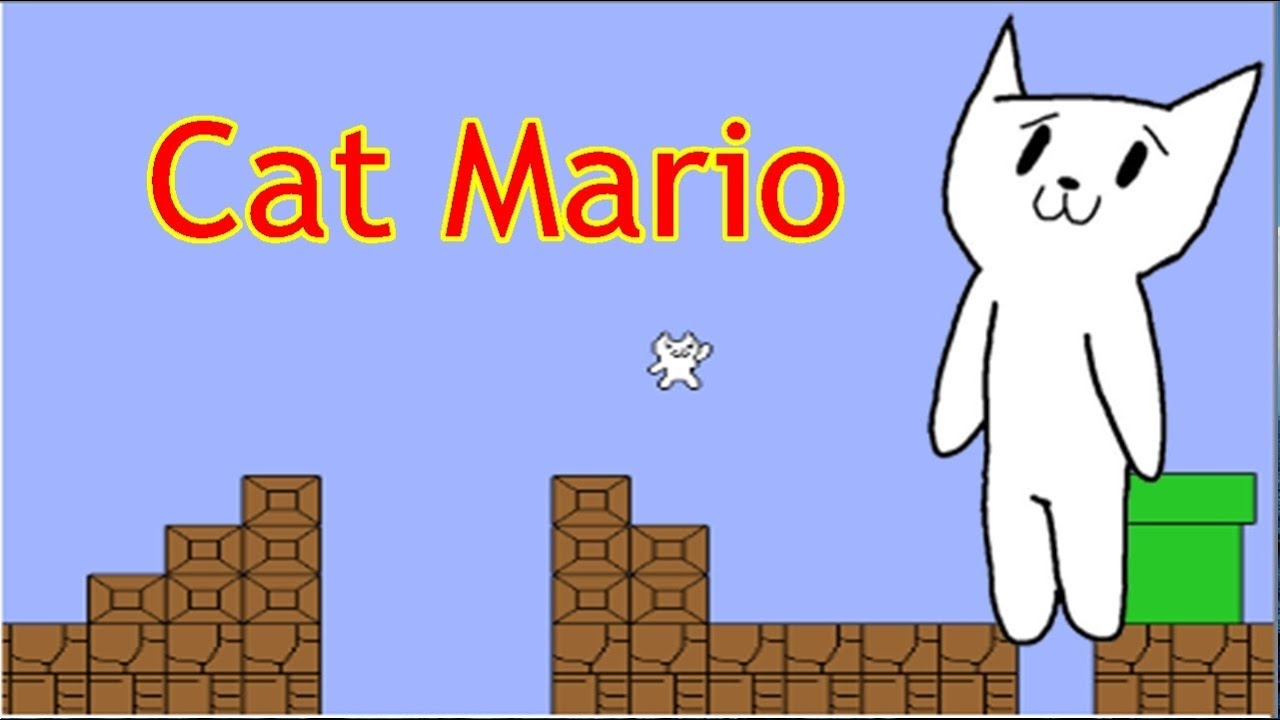
Cat Mario is the common name used for Syobon Action, a Japanese freeware platform game created by Chiku. The game deliberately resembles classic side-scrolling platformers while introducing unexpected traps and deceptive level elements.
The protagonist is a small white cat-like character, and the basic controls are intentionally simple. You run, jump, and navigate obstacles just as you would in a traditional platform game.
The difference is that the environment cannot always be trusted.
A block that appears safe may behave differently than expected. A familiar jump may contain a hidden surprise. An apparently obvious route can lead directly into a trap.
This creates a distinctive gameplay loop:
Expectation → Surprise → Failure → Discovery → Adaptation → Progress
That loop is the foundation of Cat Mario’s enduring appeal.
Why Cat Mario Feels So Unfair
The difficulty is not primarily based on demanding controls.
Instead, much of the challenge comes from information.
In a conventional platformer, players gradually learn how the game’s world behaves. A platform usually remains a platform, an obstacle usually looks dangerous, and collecting an item generally feels beneficial.
Cat Mario deliberately breaks those assumptions.
Familiar Objects Become Threats
The game’s most effective tricks work because players already understand platformer conventions.
For example, a player may naturally assume that:
- A visible platform is safe to land on.
- A power-up should be collected.
- A suspicious-looking area should be avoided.
- A gap can be crossed using normal jumping techniques.
- A stationary object will remain stationary.
Cat Mario can turn those assumptions against you.
The result is a game where knowledge becomes more valuable than reflexes.
The Psychology of Surprise
One of the cleverest aspects of Cat Mario is that failure often provides useful information.
When a player dies unexpectedly, the reaction is usually something like:
“Okay, I know what happened now.”
That changes the meaning of failure.
Instead of simply losing progress, the player has learned something about the level.
The next attempt becomes an experiment.
Failure Creates a Memory
A normal obstacle may take several attempts to master.
A ridiculous trap can become memorable after just one attempt because the player remembers the exact moment when their expectation was violated.
This is an important design insight: surprising failures can be easier to remember than predictable ones.
The player does not merely memorize the location of a trap. They remember the story surrounding it.
That is one reason Cat Mario can remain memorable even after a relatively short play session.
The Simplicity of the Game Is Part of Its Strength
Cat Mario does not need complicated systems to create difficulty.
Its core mechanics are extremely accessible:
- Move horizontally.
- Jump over obstacles.
- Explore the level.
- Learn from mistakes.
- Reach the end.
Because the controls are simple, deaths usually feel connected to the player’s decision rather than complicated button combinations.
This creates an interesting contrast.
Simple controls + unpredictable level design = complex decision-making.
The player has few actions available, but those actions can produce very different outcomes depending on the environment.
Why the Traps Work So Well
The game’s traps are effective because they exploit player expectations.
Imagine walking toward an object that looks like a normal platform. You prepare to land on it. Suddenly, the expected outcome changes.
The important part is not simply that the player dies.
It is that the game creates a moment of:
“Wait… what just happened?”
That moment creates surprise, and surprise creates curiosity.
The player immediately wants to test the situation again.
The Game Makes You Question Your Own Assumptions
After several failures, players naturally change their behavior.
They begin asking:
- Is this platform actually safe?
- Is that item a trap?
- Can I trust this gap?
- Is there something hidden above me?
- What happens if I approach this differently?
At this point, the player is no longer simply navigating a platforming level.
They are reverse-engineering the designer’s intentions.
That is one of the less obvious reasons Cat Mario remains interesting.
Cat Mario and the Rise of Rage Games
Cat Mario is frequently associated with the broader culture of “rage games”—games designed to produce intense frustration through difficult, surprising, or deceptive challenges.
The appeal of this genre is unusual.
Players voluntarily choose an experience that they know may make them angry.
Why?
Because the frustration is balanced by achievement.
When the player finally succeeds, they know exactly how many failed attempts came before that moment.
The victory therefore carries emotional weight.
Games such as I Wanna Be the Guy, Getting Over It, and other deliberately difficult titles developed their own audiences around this same general relationship between failure and persistence, although their mechanics and design philosophies differ significantly from Cat Mario.
Why People Laugh When They Fail
Failure is not automatically funny.
The context matters.
Cat Mario keeps the consequences relatively simple. You fail, restart, and try again.
There is no complicated inventory to rebuild or lengthy progression system to recover.
That makes failure easier to accept.
A player might initially react with frustration, but after realizing how deliberately the trap was designed, that frustration can turn into laughter.
The emotional sequence often looks like this:
Confidence → Shock → Frustration → Recognition → Humor → Retry
That cycle is a major part of the game’s personality.
The Main Character’s Role in the Experience
The cat protagonist is visually simple and almost innocent-looking.
That simplicity creates an effective contrast with the environment.
The character does not look like a hardened action hero entering a dangerous world. Instead, the player guides a cute, uncomplicated character through a level that seems determined to cause disaster.
This visual mismatch strengthens the comedy.
The more harmless the character appears, the more ridiculous an unexpected death can feel.
Cat Mario Is Really a Game About Learning
At first, Cat Mario appears to test reflexes.
After playing for a while, it becomes obvious that it is also testing adaptability.
Consider two players.
Player A repeats exactly the same action after dying.
Player B asks what caused the failure and changes their approach.
Player B will generally progress more effectively because the game rewards information gathering.
This makes Cat Mario surprisingly close to a puzzle game in disguise.
The puzzle is not:
“What button should I press?”
It is:
“What rule am I missing?”
That distinction explains much of the game’s unusual difficulty.
Practical Tips for Playing Cat Mario
If you are playing for the first time, changing your mindset can make the experience much more enjoyable.
1. Expect the obvious solution to be suspicious
If a route looks unusually convenient, investigate it carefully.
Do not assume that something is safe simply because traditional platformer design tells you it should be.
2. Treat every death as information
Instead of thinking:
“That was unfair.”
try thinking:
“Now I know what happens there.”
That small mental shift makes repeated attempts considerably less frustrating.
3. Experiment
When you encounter a strange object, try approaching it differently.
Jump earlier. Wait. Move slowly. Take another route.
The game often rewards experimentation more than speed.
4. Remember locations
Once you discover a trap, try to remember its position.
The second attempt should not be identical to the first.
5. Do not rush
Fast movement can make unexpected hazards harder to react to.
Sometimes the best strategy is simply to slow down and observe.
Common Mistakes New Players Make
Trusting visual cues too much
Traditional platform games teach players to interpret visual design.
Cat Mario deliberately manipulates those cues.
Assuming every death is random
Many traps may initially appear random, but successful players gradually learn their patterns and locations.
Playing aggressively
Constant movement can make it harder to notice environmental clues.
Giving up after the first few failures
The early failures are effectively teaching you the level.
If you quit immediately, you never reach the point where that knowledge becomes useful.
Searching for shortcuts too early
Trying to skip difficult sections can prevent you from understanding how the level is constructed.
Sometimes learning the intended trap is the fastest way to eventually overcome it.
A Deeper Design Lesson: The Player’s Knowledge Is the Progression System
One of Cat Mario’s most interesting characteristics is that the player themselves become upgraded.
There may not be a conventional character progression system where your avatar gains better equipment or statistics.
Instead, your knowledge improves.
At the beginning:
Unknown trap → death
After learning:
Recognized trap → correct response
That means the most important resource is not necessarily points, equipment, or experience.
It is information.
This is a powerful design technique that can be seen in many difficult games, but Cat Mario presents it in an especially straightforward way.
Why Cat Mario Still Gets Remembered
Many games from the same era have disappeared from everyday conversation.
Cat Mario remains recognizable because its core idea is easy to explain:
It’s a platformer where the game itself tries to fool you.
That concept is immediately understandable.
You do not need a long explanation of its mechanics to understand why someone might find it entertaining.
The game also became particularly suitable for shared gaming culture. Watching another person encounter a trap for the first time can be almost as entertaining as experiencing it yourself.
That makes the game naturally suited to:
- Friendly challenges
- Reaction-based entertainment
- Gaming discussions
- Speedrunning experimentation
- “Can you beat this?” challenges
- Shared memories of ridiculous failures
Cat Mario Compared With Traditional Platformers
The difference becomes clearer when the two approaches are placed side by side.
| Traditional Platformer | Cat Mario |
|---|---|
| Teaches predictable rules | Frequently challenges assumptions |
| Difficulty often comes from execution | Difficulty often comes from discovery |
| Visual cues are usually reliable | Visual cues can be deceptive |
| Failure teaches timing | Failure teaches information |
| Progress rewards mastery | Progress rewards adaptation |
| Obstacles are usually identifiable | Obstacles may be disguised |
This does not necessarily make Cat Mario a better platformer.
It makes it a different type of platforming experience.
Its goal is not simply to test how precisely you can control a character.
It tests whether you can change your expectations.
The Lasting Cultural Appeal
The most important legacy of Cat Mario is not a particular level or trap.
It is the idea that failure itself can be entertainment.
Modern games often focus heavily on accessibility, progression systems, rewards, and polished experiences. Those things can be excellent, but Cat Mario demonstrates another possibility.
A game can deliberately frustrate its audience and still create affection if the frustration feels clever, memorable, and ultimately conquerable.
That is a difficult balance.
Too much randomness makes a game feel pointless.
Too much difficulty makes players quit.
Too little challenge makes the experience forgettable.
Cat Mario operates in the strange space between those extremes.
Why the Game Is More Clever Than It Looks
The graphics and mechanics may appear simple, but the underlying design idea is surprisingly sophisticated.
The developer does not need hundreds of mechanics to create variety.
Instead, the game repeatedly changes the player’s expectations.
That produces a large number of emotional reactions from a relatively small set of mechanics.
This is perhaps the game’s most useful lesson for aspiring game designers:
You do not always need more mechanics. Sometimes you need better manipulation of the mechanics players already understand.
FAQ
What is Cat Mario?
Cat Mario is the commonly used name for Syobon Action, a Japanese freeware platform game known for deceptive traps and unexpectedly difficult levels. It uses simple side-scrolling platform mechanics but deliberately challenges conventional player expectations.
Is Cat Mario actually difficult?
Yes, but its difficulty is unusual. Rather than relying entirely on precise controls, many challenges depend on discovering hidden or unexpected hazards. Once you learn the level’s traps, later attempts can become significantly easier.
Why is Cat Mario considered a rage game?
It is associated with rage-game culture because it deliberately creates frustration through surprising deaths, difficult challenges, and deceptive level design. The important difference is that the frustration is often mixed with humor, making failure part of the entertainment.
Is Cat Mario random?
The game can initially feel random because its traps violate normal platformer expectations. However, learning where and how the traps work allows players to adapt. The experience therefore becomes less about guessing and more about remembering and responding.
What is the best strategy for Cat Mario?
The best strategy is to treat every failed attempt as information. Move carefully, remember where traps occur, question obvious routes, and experiment when something behaves unexpectedly. Patience and observation are often more useful than simply moving faster.
Why is Cat Mario still popular?
Its appeal comes from a combination of simplicity, surprise, humor, and memorable failure. Players can understand the controls almost immediately, while the unpredictable level design gives them a reason to keep experimenting. That combination has helped the game remain recognizable within internet gaming culture.
Conclusion
Cat Mario succeeds because it understands something that many conventional platformers avoid: failure can be fun when the player wants to discover why they failed.
Its simple controls make the game accessible, while its deceptive environments create a constant sense of uncertainty. Every mistake provides another piece of information, gradually turning an apparently impossible level into something the player can understand and overcome.
More importantly, Cat Mario demonstrates that memorable game design does not always require sophisticated graphics or complicated mechanics. A clever idea, consistent execution, and a strong understanding of player expectations can be enough to create an experience people remember for years.
That is the real charm of Cat Mario. It does not simply ask whether you can reach the end of a level.
It asks whether you can learn to stop trusting the level.