Action role-playing games thrive on rhythm. The rhythm of combat, the rhythm of exploration, and the rhythm of learning from defeat. When a series reaches a third entry, expectations sharpen. Players want refinement without losing the edge that made the earlier titles memorable. This review explores how the latest chapter balances continuity with growth, delivering an experience that respects its roots while pushing forward with confidence.
From the opening moments, the game signals its intent. The world feels more cohesive, the systems more readable, and the pace more deliberate. It is still demanding, still precise, and still deeply rewarding for players willing to meet it on its own terms. What changes is not the soul of the experience, but the way that soul is expressed.
Setting the Stage for a New Journey
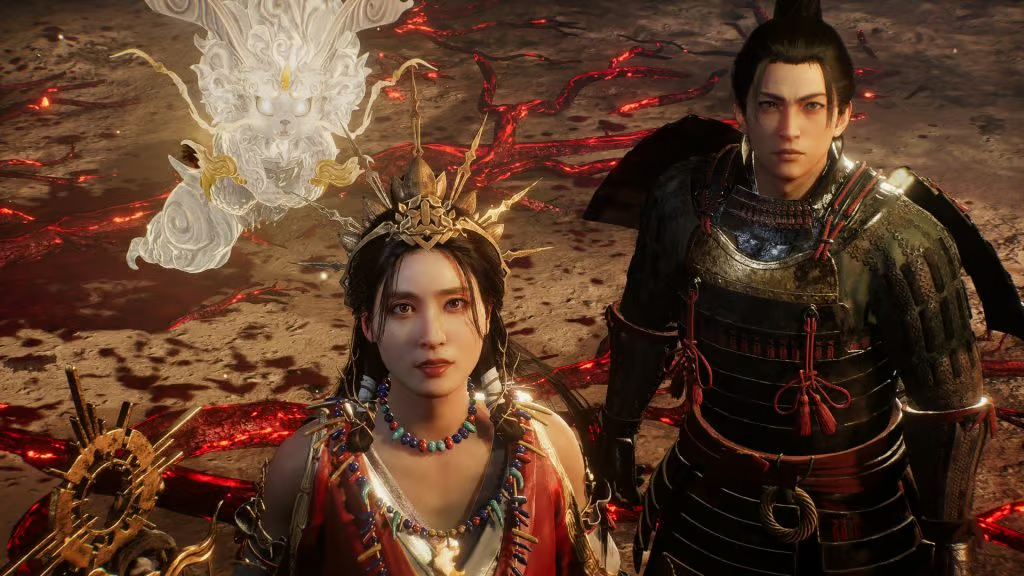
The narrative frames the action within a myth-inflected vision of feudal Japan. Spirits roam the margins of human conflict, and history bends toward legend. The story does not seek to dominate the experience. Instead, it acts as a thread that guides the player through regions shaped by war, decay, and resilience.
Environmental storytelling carries much of the weight. Crumbling temples, rain-soaked battlefields, and quiet mountain paths speak without words. Each location feels lived in, marked by struggle and memory. The atmosphere sets a tone of tension and melancholy that pairs naturally with the precision of combat.
Combat That Rewards Intention
Combat remains the beating heart of the experience. Every encounter is a small test of attention and restraint. Enemies punish carelessness, but they also reveal patterns that can be learned. Victory comes from reading the field, managing stamina, and choosing moments to strike.
Weapon variety continues to shape play styles. Each category brings a distinct rhythm, from heavy strikes that demand commitment to agile tools that reward timing. The stance system adds depth by offering multiple approaches within a single weapon type. Switching stances mid-fight feels purposeful rather than ornamental, encouraging adaptation instead of repetition.
Stance Flow and Player Agency
The stance system encourages players to think in layers. High stances emphasize power. Mid stances balance offense and defense. Low stances prioritize mobility. Learning when to shift between them creates a flow that feels almost musical. Mastery emerges when stance changes become instinctive, allowing players to respond fluidly to shifting threats.
Enemy Design and Fair Challenge
Enemy design leans into clarity. Each foe communicates danger through readable animations and distinct attack cues. Boss encounters test understanding of these cues at a higher level. They feel punishing when approached carelessly, but fair when approached with attention. The satisfaction of overcoming a difficult opponent lies in recognizing patterns and refining execution, not in exploiting hidden tricks.
Progression Without Overwhelm
Progression systems can either deepen engagement or drown it in complexity. Here, growth feels structured and legible. Skill trees offer meaningful choices without forcing players into narrow paths. Experimentation is encouraged. Respec options reduce anxiety around commitment, allowing players to refine their builds as their understanding evolves.
Loot remains an integral part of the loop, but it no longer overwhelms. Equipment traits are clearer. Synergies are easier to spot. The result is a smoother relationship between exploration and optimization. Players spend less time sorting and more time playing, which keeps momentum intact.
Nioh 3 review: Systems in Harmony
The defining strength of this entry lies in how its systems interlock. Combat, progression, and exploration reinforce one another rather than compete for attention. Each layer supports the others, creating a cohesive loop that respects player time and curiosity.
New mechanics integrate naturally into existing frameworks. They add texture without fragmenting the experience. The result is a sense of continuity that feels earned. Long-time players will recognize familiar structures, while newcomers will find a welcoming learning curve that rewards patience.
World Design and Exploration
Exploration strikes a careful balance between openness and focus. Levels offer multiple routes, hidden shortcuts, and optional challenges. Discovery feels intentional rather than accidental. The game rewards attention to detail without turning exploration into a scavenger hunt.
Shrines and checkpoints provide rhythm to the journey. They mark progress, offer respite, and create moments of reflection after intense encounters. This cadence keeps tension high without tipping into exhaustion.
Visual Language and Clarity
Visual design prioritizes clarity. Environments are detailed, but they do not obscure threats. Lighting guides attention toward points of interest. Color contrasts help players read the battlefield at a glance. These choices may seem subtle, but they significantly improve readability during high-pressure moments.
Sound Design and Immersion
Sound design reinforces atmosphere and feedback. Weapon strikes carry weight. Enemy roars signal danger. The ambient score supports tension without overwhelming the senses. Audio cues provide information as well as mood, helping players anticipate threats and time their responses.
Performance and Technical Polish
Performance remains steady across extended play sessions. Load times are restrained. Frame pacing feels consistent, which is essential for precision-driven combat. Technical polish does not draw attention to itself, which is exactly the point. When systems fade into the background, immersion deepens.
Minor rough edges appear in densely populated scenes, but they do not disrupt the core loop. The overall impression is one of stability and care. The game feels built to be played for long stretches without fatigue.
Accessibility and Learning Curve
Accessibility options broaden the potential audience without diluting challenge. Interface scaling, input customization, and tutorial clarity help players engage on their own terms. The learning curve remains steep, but it is now better scaffolded. Early encounters teach fundamental rhythms. Later challenges build on those lessons.
This approach respects both new players and veterans. It acknowledges that mastery takes time while providing tools that make the process less opaque. The result is a learning experience that feels demanding but fair.
Narrative Texture and Characterization
The narrative does not overwhelm gameplay, but it provides texture. Characters appear as anchors within the shifting landscape of conflict. Their motivations feel grounded in personal loss, duty, and survival. Dialogue is concise, allowing space for the player’s own interpretation.
The story’s strength lies in restraint. It gestures toward larger themes without over-explaining. This leaves room for players to fill gaps with their own reflections. The world feels richer for what it implies rather than what it spells out.
Themes of Balance and Consequence
Themes of balance and consequence weave through the narrative. Power carries cost. Victory leaves scars. These ideas echo through gameplay, where every aggressive push risks exposure. The harmony between theme and mechanics reinforces the sense that the world responds to player choices.
Endgame and Longevity
Longevity depends on systems that remain engaging after the credits roll. Endgame content builds on established mechanics rather than replacing them. New challenges test mastery. Variations in enemy behavior keep encounters fresh. The reward structure encourages continued experimentation with builds and strategies.
Replay value emerges from choice. Different weapons, stances, and approaches create distinct experiences. Returning to earlier areas with refined skills reveals new possibilities, turning familiar ground into a canvas for mastery.
Community and Shared Learning
The experience benefits from a culture of shared learning. Players trade insights, strategies, and discoveries. This communal layer extends the life of the game by turning individual struggles into collective knowledge. Even in solitude, the sense of participating in a broader conversation enriches the journey.
Final Thoughts on Craft and Direction
This installment demonstrates the value of iteration guided by clarity. Instead of chasing novelty for its own sake, it refines what already works. The result is a confident expression of the series’ identity, sharpened by thoughtful design choices and technical polish.
The game respects player effort. It challenges without condescension. It rewards attention without demanding perfection. That balance is rare and valuable in a genre defined by intensity.
Conclusion
A strong sequel does not reinvent its foundation. It deepens it. This Nioh 3 review reflects an experience shaped by deliberate refinement, cohesive systems, and a clear respect for player agency. The journey demands focus, but it repays that focus with moments of clarity and hard-earned satisfaction. In a landscape crowded with action RPGs, this entry stands out by knowing exactly what it wants to be and executing that vision with steady hands.