In the sprawling world of online gaming, where cutting-edge graphics and million-dollar budgets dominate headlines, an unexpected hero emerged—one that proved simplicity, creativity, and community could still win hearts. This hero was Krunker, a fast-paced, browser-based first-person shooter that defied expectations and built a passionate global following.
At first glance, Krunker seemed deceptively simple—a retro-style shooting game that could run in almost any web browser. But beneath its pixelated exterior was a world of competition, customization, and creativity that made it one of the most influential indie games of its generation.
This is the story of how a small project became a cultural phenomenon, how it redefined browser gaming, and why its pixelated world continues to thrive long after its humble beginnings.
The Birth of a Browser Legend
The early 2010s were a fascinating era for online games. Flash-based titles like Club Penguin, Transformice, and Happy Wheels ruled the internet, offering accessible fun for anyone with an internet connection. But when Flash was slowly phased out, a new generation of browser games needed to rise from its ashes.
Enter Sidney de Vries, an independent developer from Australia with a vision. He wanted to create a shooter that was fast, fun, and accessible—something that could be played instantly without downloads or complicated setups. His creation would soon become known around the world: Krunker.
Released in 2018, the game was built using HTML5, ensuring smooth gameplay across devices. Players could jump into matches within seconds—no installation, no registration, just pure action. This accessibility became its greatest strength, allowing schools, offices, and even public libraries to host spontaneous battles between friends.
What started as a passion project quickly exploded into an online sensation.
Krunker – The Game That Redefined Browser Shooters
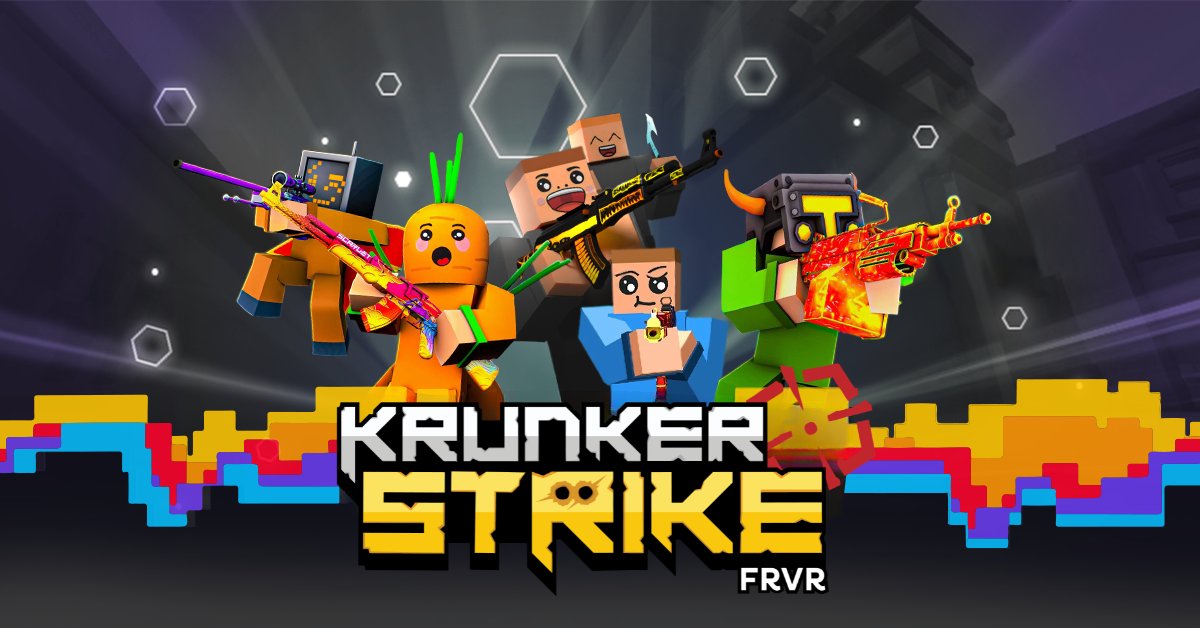
When you first load krunker, you’re greeted with blocky graphics reminiscent of Minecraft mixed with the adrenaline rush of classic shooters like Call of Duty or Counter-Strike. The controls are simple—move, aim, shoot—but mastery takes skill, precision, and practice.
The secret to its success lies in its speed. Matches are short, intense, and incredibly satisfying. Players can hop in for two minutes or lose themselves for hours. The gunplay feels crisp, the movement is fluid, and the community-driven maps keep every session fresh.
Krunker offers a variety of character classes, each with unique weapons and playstyles. From the rapid-firing Triggerman to the deadly Hunter armed with a sniper rifle, players can find a role that fits their preferred combat style. Each weapon has its quirks—recoil, accuracy, reload time—encouraging players to experiment and adapt.
And then there’s the movement system. Sliding, jumping, wall-climbing, and bunny-hopping give the game a rhythm all its own. The smooth mobility makes every firefight a dance of agility and strategy, rewarding players who master momentum and timing.
The Power of Community and Creativity
Beyond gameplay, Krunker owes much of its success to its thriving community. From the very beginning, the developers empowered players to create, share, and innovate.
The in-game map editor became a powerful tool—allowing fans to design custom battlegrounds, from intricate cityscapes to whimsical obstacle courses. Soon, the community began producing thousands of unique maps, transforming the game into a living, breathing ecosystem of creativity.
Players didn’t just play Krunker—they built it.
Modders and creators added custom skins, new weapons, game modes, and even entire mini-games within Krunker’s engine. This flexibility mirrored what made sandbox titles like Roblox and Minecraft so popular, giving players ownership and freedom to shape their experience.
What truly made the difference, however, was how the developers listened. Community feedback shaped updates, balanced weapons, and improved features. That collaborative relationship between creators and players became one of Krunker’s defining traits—a partnership rather than a hierarchy.
The Competitive Edge
No great shooter survives without competition, and Krunker delivered that in spades.
Its ranking system, leaderboards, and clan features turned casual fun into serious esports ambition. Players began forming teams, participating in online tournaments, and streaming their matches to growing audiences.
What made Krunker’s competitive scene unique was its accessibility. Unlike many esports titles requiring expensive hardware, Krunker could run on almost any device—from high-end gaming rigs to school laptops. This leveled the playing field, letting talent shine over technology.
As more streamers and YouTubers discovered the game, viewership soared. Krunker tournaments became adrenaline-filled spectacles, proving that even a low-poly browser shooter could command global attention.
The Evolution of a Modern Classic
In the years that followed, Krunker continued to evolve. Regular updates introduced new weapons, modes, and customization options. Players could earn in-game currency, trade skins, and even participate in a player-driven economy.
The introduction of Krunker Hub and dedicated servers helped build an even more connected ecosystem. Players could create profiles, join communities, and share their creations directly.
One of the most remarkable aspects of Krunker’s growth was its adaptability. It wasn’t just a shooter anymore—it became a platform. From parkour maps to social hangouts and even role-playing modes, it transformed into a miniature virtual universe powered entirely by creativity.
At a time when major gaming companies released massive titles with complex systems, Krunker’s strength lay in its simplicity. It reminded gamers that fun doesn’t require realism or billion-dollar budgets—it requires heart, accessibility, and a sense of community.
The Design Philosophy Behind the Magic
Every great game has a soul—a philosophy guiding its creation. For Krunker, that soul was freedom.
Freedom to play anywhere.
Freedom to create anything.
Freedom to compete without barriers.
Its minimalist aesthetic wasn’t a shortcut—it was a statement. By stripping away distractions, the developers allowed gameplay to take center stage. The pixelated graphics gave it charm, but the smooth mechanics gave it staying power.
The design also encouraged inclusivity. Players from around the world, regardless of age or skill level, could enjoy it instantly. It became a global playground where gamers could meet, compete, and connect.
In an age dominated by realism and complexity, Krunker’s philosophy was refreshingly pure: make it fun, make it fast, and make it for everyone.
The Impact on Gaming Culture
Few indie projects have had the cultural impact that Krunker achieved.
It didn’t just inspire a new wave of browser-based shooters—it reignited interest in the genre entirely. Developers realized there was still immense potential in lightweight, accessible web games.
For schools and casual gamers, Krunker became a social hub—a way to unwind between classes or connect with friends online. For competitive players, it was an arena to test reflexes and skill. For creators, it was a canvas.
The game’s influence spread beyond its digital boundaries. It became part of internet culture—featured in memes, reaction videos, and community content. It reminded people that gaming could still be spontaneous, playful, and community-driven.
The Future of Krunker
So where does Krunker go from here?
Its developers continue to expand and experiment, adding new layers of gameplay and creativity. With support for modding, trading, and custom scripting, the possibilities seem endless.
The key to its longevity lies in its adaptability. It doesn’t try to compete directly with massive shooters—it thrives in its own niche. Its community, still vibrant years after release, ensures the game stays alive and evolving.
And as long as there are players who crave instant, skill-based fun, Krunker will continue to hold its place in gaming history.
Lessons from the Pixel Battlefield
Krunker isn’t just a game—it’s a lesson in innovation. It shows how passion, accessibility, and community can challenge the biggest names in the industry.
It proves that gamers don’t always need hyper-realistic graphics or massive budgets. Sometimes, they just need a browser, a mouse, and a few minutes to escape into a thrilling digital world.
In a time when gaming often feels divided by platform and price, Krunker stands as a unifying force—a reminder that anyone, anywhere, can play.
Conclusion
The legacy of krunker lies not only in its gameplay but in its spirit. It began as a humble project and became a cultural phenomenon that redefined what browser games could be.
Its success wasn’t built on hype or marketing—it was built on fun. The simplicity, creativity, and community that defined Krunker have made it timeless.
For every player who logged in for “just one match” and stayed for hours, for every creator who built their first map, and for every competitor who chased the leaderboard—Krunker is more than a game. It’s a revolution in pixels, proof that greatness doesn’t require grandeur, just passion and imagination.
And in the ever-changing landscape of gaming, its message remains clear: sometimes, the smallest games leave the biggest impact.