Before browser gaming became dominated by HTML5, mobile apps, and massive online platforms, Flash games offered a remarkably simple way to have fun. A web browser could turn an ordinary afternoon into hours of entertainment, with thousands of small games covering everything from puzzles and platformers to strange physics experiments.
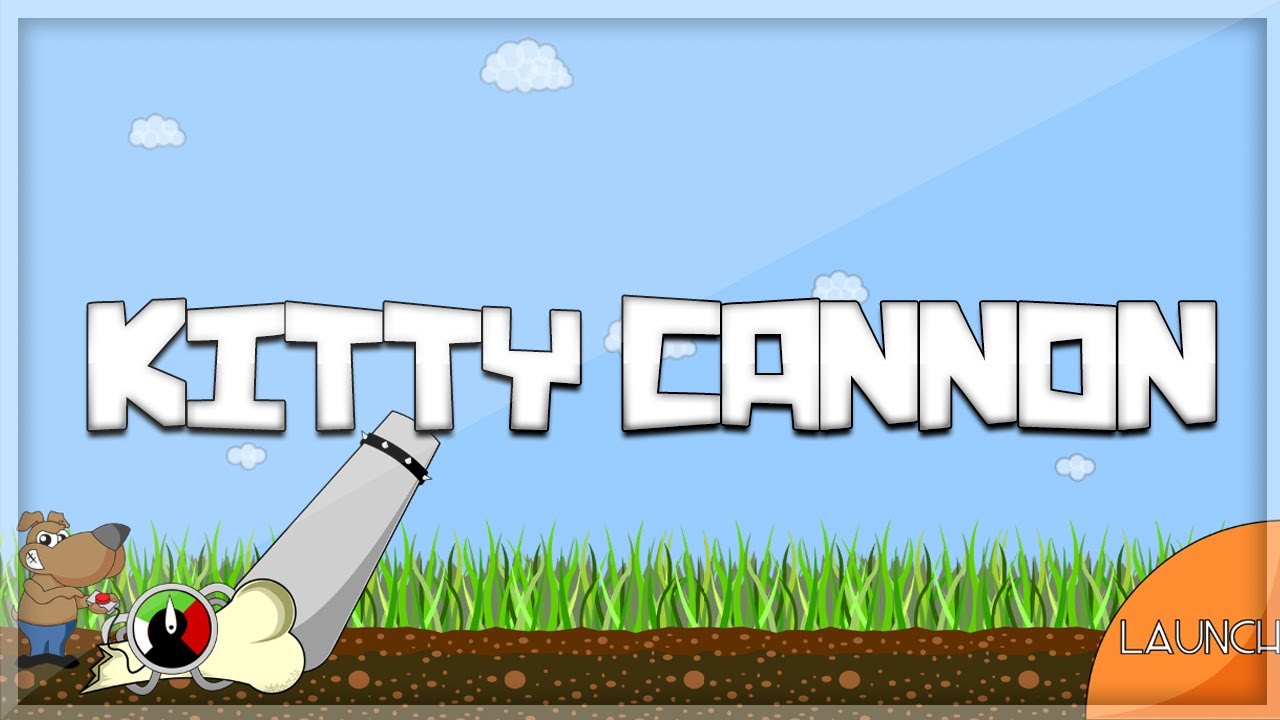
Among the memorable titles from that era was Kitten Cannon, a deliberately absurd launch game built around a remarkably simple question: how far can you send a kitten?
The premise was intentionally cartoonish, but the gameplay had a surprisingly effective formula. Players adjusted the launch, watched the character travel through a hazardous environment, and immediately wanted another attempt. The combination of simple controls, unpredictable outcomes, dark humor, and quick retries made it a recognizable part of the Flash-game era.
Today, Kitten Cannon is best understood not simply as an old browser game, but as an example of the experimental creativity that made early web gaming so distinctive.
What Is Kitten Cannon?
Kitten Cannon is a browser-based physics game in which players launch a kitten from a cannon and attempt to achieve the greatest possible distance.
The concept is intentionally straightforward. Players control the launch, and after firing, the kitten travels through an obstacle-filled environment. Various objects can affect the journey, sometimes extending the flight and sometimes bringing it to an abrupt end.
The objective is not built around a complicated story or a large progression system. Instead, the entertainment comes from the launch itself and the unpredictable chain of events that follows.
That simplicity is important.
A player can understand the basic idea almost immediately, which made the game particularly suitable for the quick-play culture of early browser gaming.
The Flash Game Era
To understand why Kitten Cannon became memorable, it helps to understand the environment in which it appeared.
During the height of Adobe Flash, websites such as Newgrounds and other browser-game portals provided enormous libraries of small, experimental games. Many required only a browser and a few moments of attention.
There were several characteristics that defined this period.
Instant Accessibility
Players could open a webpage and start playing without installing a large game or waiting for a lengthy update.
Experimental Ideas
Independent creators could build games around unusual concepts that might never have received funding from a traditional publisher.
Short Play Sessions
Many Flash games were designed around quick attempts, making them ideal for breaks at school, home, or work.
Viral Word of Mouth
Players often discovered games by sharing links with friends or posting them on forums and online communities.
This environment was perfect for unusual concepts. A game did not necessarily need sophisticated graphics to attract attention. It simply needed to be fun enough that players wanted to send it to somebody else.
The Simple Formula Behind Kitten Cannon
The design of Kitten Cannon demonstrates how a small number of mechanics can create a surprisingly compelling experience.
The basic loop is easy:
Aim → Launch → Watch → React → Retry
The player makes an initial decision, then watches how physics and obstacles influence the result.
That creates an important separation between control and uncertainty. You control the launch, but you do not completely control everything that happens afterward.
This makes each attempt feel like a small experiment.
What happens if you change the angle?
What happens if you alter the launch?
Can you reach a different obstacle?
Can you improve your previous distance?
Those questions naturally encourage another attempt.
Why the Physics Made It Fun
Physics-based gameplay has always been effective in simple browser games because it creates variation without requiring a huge amount of content.
In a conventional level-based game, designers may need dozens of stages to provide variety. A physics game can create different outcomes from the same basic environment.
In Kitten Cannon, the launch trajectory interacts with the surrounding objects. Small differences in the initial launch can therefore lead to very different results.
This gives the game an experimental quality.
Players aren’t simply completing a predetermined sequence. They are testing a system and seeing what happens.
The Importance of the Retry Button
One of the strongest design decisions in games like this is the extremely short distance between failure and another attempt.
If a run ends, the player does not have to navigate menus, wait for a new level, or replay a long section.
They can simply try again.
This creates a powerful rhythm:
Attempt → Failure → Adjustment → Attempt
That structure is common in successful arcade and casual games because it turns failure into information.
A bad result is not necessarily discouraging. It tells the player that something needs to change.
Perhaps the launch angle was wrong.
Perhaps the timing could be improved.
Perhaps the player simply wants to see what happens with a different approach.
The result is a game that can occupy only a few minutes while still encouraging repeated attempts.
Humor as a Game Mechanic
The game’s absurd premise immediately separates it from conventional physics titles.
Launching a kitten from a cannon is deliberately ridiculous. The humor comes from the exaggerated situation rather than from a complicated narrative.
This type of comedy was common during the Flash era, when developers frequently experimented with bizarre concepts simply because they could.
The contrast between a cute animal and an intentionally chaotic launch creates a memorable identity.
It is also an example of how tone can become part of gameplay. The player isn’t approaching the experience as a serious simulation. The ridiculous premise tells you from the beginning that the game is meant to be taken as cartoonish entertainment.
The Appeal of Distance-Based Challenges
Distance is a particularly effective measurement for arcade-style games.
Instead of requiring players to understand a complex scoring system, the game gives them an easy question:
How far did you get?
That makes improvement immediately understandable.
If one attempt produces a shorter distance than the previous one, the player knows they need to try again. If they achieve a better result, they have a clear reason to feel successful.
Distance-based objectives also create natural competition.
Friends can compare results, players can chase personal records, and repeated attempts can become a challenge to beat the previous best.
The simplicity of the measurement makes the competition accessible.
Why Browser Games Were So Addictive
The success of games like Kitten Cannon was closely connected to the way people used the internet at the time.
Browser gaming required very little commitment.
A player could discover a game, understand it within seconds, play several rounds, and move on to something else.
There was no expectation of completing a huge campaign.
This was particularly useful for players who had only a few free minutes.
The game therefore fit naturally into a broader culture of casual internet entertainment.
Kitten Cannon and the Culture of Flash Games
The Flash era produced an enormous range of unusual games.
Some focused on physics.
Others relied on puzzle mechanics.
Some were simple platformers, while others experimented with animation, comedy, strategy, or interactive storytelling.
What connected many of them was a willingness to try unconventional ideas.
Kitten Cannon represents that creative attitude particularly well.
It demonstrates that a game could be memorable without a huge budget or elaborate world. A single unusual mechanic, presented clearly and supported by entertaining feedback, could be enough.
That philosophy remains relevant today.
From Flash to Modern Browser Gaming
Adobe ended support for Flash Player at the end of 2020, marking the end of an important chapter in browser gaming.
The disappearance of Flash did not eliminate casual web games. Instead, many developers moved toward technologies such as HTML5 and JavaScript.
Modern browser games can provide smoother performance, better compatibility, and support across phones, tablets, and desktop computers without requiring the old Flash plugin.
However, the spirit of Flash gaming remains visible.
Short sessions, simple mechanics, experimental concepts, and immediate accessibility continue to influence online game design.
The Legacy of Kitten Cannon
The importance of Kitten Cannon is not that it transformed the entire video-game industry. Its significance is more specific: it represents the creative, sometimes bizarre character of early browser gaming.
The game illustrates several design principles that remain effective:
- A concept can be understood instantly.
- Simple controls can support repeated play.
- Physics can create variety without complicated systems.
- Humor can make a game memorable.
- Short sessions can encourage replay.
- Clear goals make improvement easy to understand.
These principles continue to appear in modern casual and indie games.
Why Players Still Remember It
Nostalgia plays an important role in the continued interest surrounding classic Flash games.
For people who encountered browser games during the 2000s and early 2010s, these titles are connected to a particular period of internet culture.
The experience was different from modern gaming.
Websites were filled with small experiments. Games were often discovered randomly. Friends passed links around. Players competed over scores without necessarily belonging to a formal gaming community.
Revisiting an old browser game can therefore feel like revisiting the internet itself.
Kitten Cannon has become part of that memory for many players.
The Psychology of “One More Try”
The game’s replayability can be explained through a familiar arcade principle: the desire to improve immediately.
Because a round is short, the player can remember what went wrong.
That makes another attempt feel manageable.
The player doesn’t think, “I have to start the entire game again.”
Instead, the thought is closer to:
“I can do better this time.”
This distinction is powerful.
Short attempts reduce the psychological cost of failure, while visible scores or distances provide an immediate reason to continue.
What Modern Game Designers Can Learn
Although the technology behind browser games has changed dramatically, the fundamental lessons from Kitten Cannon remain useful.
Start With a Clear Idea
Players should understand the core mechanic quickly.
Make Failure Informative
A failed attempt should encourage experimentation rather than create unnecessary friction.
Keep the Feedback Immediate
Players should see the result of their decisions quickly.
Give Players a Reason to Retry
Personal records, scores, distances, or increasingly difficult challenges can provide motivation.
Let the Mechanic Create the Variety
A well-designed physics system can generate many outcomes without requiring hundreds of handcrafted scenarios.
These principles are useful far beyond browser games.
The Difference Between Nostalgia and Modern Expectations
Revisiting an old Flash game can produce two very different reactions.
Someone who remembers it from years ago may appreciate the humor and simplicity immediately.
A player discovering it for the first time may notice how basic the presentation feels compared with contemporary games.
Both reactions are valid.
The value of a classic browser game is not necessarily that it competes technically with modern releases. Its appeal comes from what it represents: quick entertainment built around a focused idea.
Modern games often provide larger worlds, sophisticated graphics, online systems, and elaborate progression. Flash games frequently did the opposite.
They asked:
What is the smallest idea we can make fun?
That difference is precisely what makes them historically interesting.
FAQ
What is Kitten Cannon?
Kitten Cannon is a classic browser-based physics game centered on launching a kitten from a cannon and attempting to achieve a high distance.
When was Kitten Cannon released?
The game was released during the Flash-game era and became associated with the popular browser gaming culture of the 2000s.
Why was Kitten Cannon popular?
Its popularity came from its unusual premise, simple controls, physics-based gameplay, humorous presentation, short sessions, and immediate retry loop.
Can you still play Kitten Cannon today?
The original game depended on Adobe Flash, which is no longer supported by modern browsers. Availability through modern preservation or archival projects can vary, so players should use reputable sources and avoid questionable downloads.
Was Kitten Cannon a major video game?
It was primarily a browser/Flash game rather than a major commercial console or PC release. Its importance comes from its place in internet and Flash-game culture.
Why are people nostalgic for Flash games?
Flash games offered quick, accessible entertainment and were closely connected to an earlier period of web culture. For many players, revisiting them brings back memories of school computers, internet cafés, forums, and casual gaming.
Final Thoughts
Kitten Cannon may look extremely simple by modern gaming standards, but that simplicity is exactly what makes it worth remembering.
It took one ridiculous idea and built an entire experience around it. The controls were easy to understand, the outcomes were unpredictable, and the short retry cycle encouraged players to keep experimenting.
More importantly, the game represents a distinctive period in internet history.
The Flash era was filled with developers willing to test strange ideas, players willing to try almost anything, and websites where an unexpected game could suddenly become a shared online obsession.
Today, browser gaming has changed dramatically. HTML5 has replaced Flash, mobile devices have transformed casual gaming, and online platforms have become far more sophisticated. Yet the fundamental appeal of a simple game remains.
Sometimes players do not need an enormous world or an elaborate storyline.
Sometimes they just need a funny idea, a clear objective, and one more chance to beat their previous score.
That is the enduring charm of Kitten Cannon.