The world of online gaming holds countless titles that have entertained millions over the years, but few evoke the nostalgia and simple joy of the Sprinter Game. At first glance, this title may seem like just another online runner, yet it stands out because of its roots in early internet culture and its enduring charm. Whether you first encountered it in a school computer lab or recently stumbled upon a modern browser version, the Sprinter Game has captured the attention of players with its fun mechanics and competitive challenge. Let’s unpack why this game continues to be talked about, remembered, and played with genuine enthusiasm.
Born in the mid-2000s, the Sprinter Game harkens back to the era when Flash powered interactive browser experiences that didn’t demand high-end graphics or complex controls. Instead, it thrived on simplicity, immediate engagement, and accessibility. That formula helped it become a beloved title among casual gamers and athletes alike. Today, versions of the game can still be found on various gaming sites, sometimes updated to work in modern browsers. Its enduring appeal says as much about gamers’ appetite for straightforward fun as about the timeless satisfaction of competitive play.
What Is the Sprinter Game?
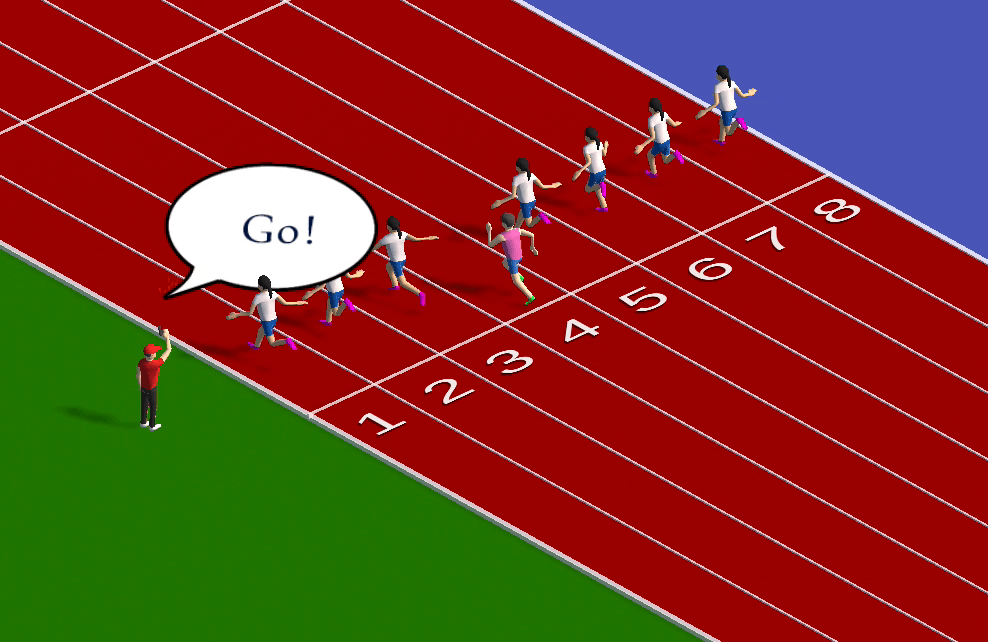
The Sprinter Game is, at its heart, a basic but deeply engaging running game where players compete in a series of 100-meter sprint races. The objective is straightforward: hit the arrow keys rapidly and with the right timing to build momentum and outrun your opponents to the finish line. What sets this game apart from many modern mobile titles is its focus on reflexes and precision rather than virtual button-mashing or endless level progression.
Playing the Sprinter Game takes a mix of strategy and pure physical timing. Too slow on your key presses and your runner will lag behind. Press the same key twice in succession and you might stumble. These mechanics add a layer of nuance that keeps the gameplay feeling fresh, even with its minimalist design and simple premise. Across its levels, the competition grows tougher, demanding greater skill and nimbleness from players.
The Gameplay Experience
When you start the Sprinter Game, you’re often pitted against a series of increasingly challenging opponents. Early races might feel easy, but as you advance, your rivals get faster, encouraging you to refine your technique. You’ll find yourself leaning into each race, trying to master timing and rhythm as much as speed.
This design reflects a core strength of the Sprinter Game: it is immediately playable yet richly engaging. The game’s controls are simple enough for anyone to understand, yet the physics of momentum and the challenge of timing create an addictive feedback loop that keeps players coming back. It’s this balance between accessibility and depth that has helped the Sprinter Game remain memorable long after its initial release.
A Journey Through Levels and Challenges
The structure of the Sprinter Game is deceptively minimalistic, but it packs a satisfying level of progression. Most versions of the game take players through a series of sprint challenges where each race tests timing and reaction. As levels progress, the difficulty increases, often introducing quicker opponents and tighter margins for error.
In many classic versions, the race categories start with simple community competitions and escalate to prestigious events. Players may find themselves sprinting against competitors who represent different age groups, skill levels, or regions. In flashier renditions, levels feature humorous or imaginative themes that keep the visual experience engaging even as the core sprinting mechanics remain consistent.
This progression creates a sense of narrative — a career path from novice runner to elite champion. It’s not a story told through cut scenes or dialogue, but through the challenge and reward of mastering the races. Each level conquered becomes a testament to the player’s ever-refining skills and drive to finish first.
Mastering the Controls
One of the most compelling aspects of the Sprinter Game is the role control mechanics play in success. Unlike many modern touch-based games or console racers, this title bases its core challenge on keyboard dexterity. Players must press alternating arrow keys rapidly and precisely, simulating the back-and-forth motion of sprinting itself.
This requirement gives the game an almost physical feel. It’s not enough to simply press keys quickly — you must time them accurately to maintain balance and momentum. Missteps may cause you to stumble, potentially losing valuable time. This simple but thoughtful mechanic encourages players to improve with each attempt, turning a digital sprint into a kind of reflex challenge with real learning curves.
Such mechanics demonstrate how deep engagement can be achieved without ultra-complex systems. The Sprinter Game thrives because it respects the player’s time and instinct, offering instant playability with lasting challenge.
The Role of Nostalgia and Accessibility
Part of why the Sprinter Game continues to captivate players across generations is its historical context. Many gamers first experienced it in the early days of web gaming, during hours spent in computer labs or on home desktops experimenting with Flash games. These titles didn’t require installation, high bandwidth, or powerful hardware — you simply loaded them in a browser and played.
Today’s gaming landscape is dominated by high-budget productions with incredible graphics and complex mechanics. In that environment, the charm of a simple sprint race stands out. It feels like a link to gaming’s roots, a reminder that engaging design doesn’t always need bells and whistles. For many players, revisiting the Sprinter Game sparks nostalgia and rekindles memories of simpler pleasures — mastering that perfect sprint start or beating a personal best time.
Modern Takes and HTML5 Adaptations
While the original Sprinter Game was built using Flash, the discontinuation of Flash players forced many browser titles to adapt or fade away. Fortunately, the enduring popularity of Sprinter has led to HTML5 versions that can run in contemporary browsers without the need for deprecated technology.
These updates maintain the spirit and mechanics of the original while ensuring that new generations of players can experience the thrill of sprinting across digital tracks. The updated versions often retain the classic control scheme and progressive difficulty, but with smoother performance and improved compatibility.
The ease of access and continuing relevance of the Sprinter Game speaks to a broader trend in gaming: the resurgence of classic game mechanics delivered in modern formats. Developers recognize that nostalgia can be paired with accessibility to create experiences that satisfy both seasoned players and newcomers.
Why the Sprinter Game Endures
So what is it about the Sprinter Game that has kept it alive in the memories of players for so long? There are several key factors at play.
First, its simplicity makes it endlessly approachable. Anyone with a keyboard and a few minutes to spare can jump into a sprint and try their best. There’s no story to remember, no tutorials to endure — just you, the track, and the will to win.
Second, the challenge is both fair and motivating. Races are short, and progress is immediate. Win one sprint, and you’re on to the next. Lose one, and you can instantly try again. This feedback loop creates a satisfying rhythm that encourages replayability.
Third, the Sprinter Game’s progression feels meaningful. Each new level is a small step forward, a chance to test your skills against faster competitors and tougher challenges. It echoes the competitive nature of real sprinting in a digital format, inviting players to sharpen their reaction time and refine their control.
Finally, the Sprinter Game endures because it taps into something fundamentally human: the desire to improve. Whether you’re chasing a faster time or trying to beat a friend’s score, the game draws you into a cycle of continual betterment. There’s no end limit to how good you can be, only how far you’re willing to push yourself.
The Broader Cultural Impact
Beyond individual enjoyment, the Sprinter Game also reflects a significant shift in how people interacted with games on the internet. At a time when browser games ruled casual gaming culture, titles like the Sprinter Game brought together accessibility, competitiveness, and community.
In classrooms and homes alike, players would challenge each other to beat sprint times, turning what was once a solo experience into a shared challenge. These social dimensions of early web games helped build the foundation for today’s competitive gaming culture — where leaderboards, streaming, and community interaction are central.
A Bridge Between Eras of Gaming
Although gaming technology has evolved dramatically, the Sprinter Game serves as a bridge between past and present. It reminds us that engaging mechanics and clever design can outshine even the most graphically impressive titles. In a gaming world that often prizes complexity, the Sprinter Game stands out for its clarity and precision.
Whether celebrated as a nostalgic throwback or enjoyed as a fresh challenge, this title exemplifies how simple ideas can leave a lasting legacy. Its endurance in the digital landscape speaks to something deeper about player preferences and the value of games that deliver immediate fun without sacrificing meaningful mastery.
Conclusion
The Sprinter Game is more than just a running game; it’s a slice of gaming history that continues to resonate with players around the world. With its straightforward mechanics, progressive challenge, and enduring accessibility, it captures the essence of fun in its purest form. From its origins as a Flash staple to its resurgence in HTML5 and browser adaptations, the Sprinter Game remains a testament to how thoughtful design and competitive spirit can create experiences that endure long after technological trends fade. Whether you’re battling for your personal best or simply enjoying a quick digital sprint, this game reminds us why we fell in love with gaming in the first place — for the joy of play.