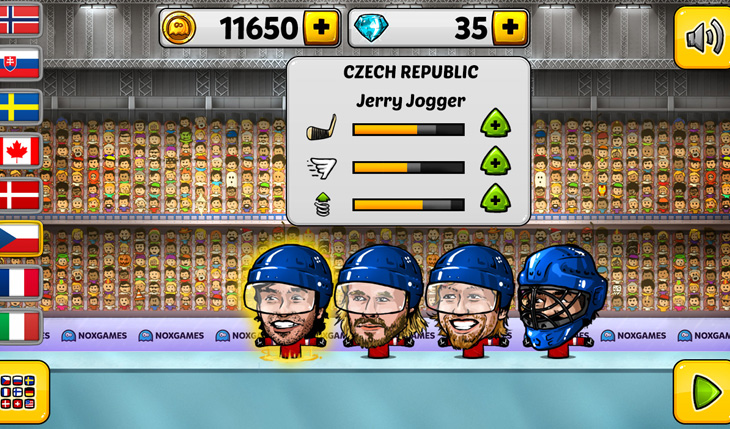
Math Playground Puppet Hockey is a fast, simple sports game that combines hockey-style competition with timing, positioning, spatial awareness, and quick decision-making. Although the game is not a traditional math practice activity, it fits naturally into Math Playground’s broader collection of skill-building games.
Math Playground currently lists Puppet Hockey among its coordination and sports games, while also featuring it as a kids’ game designed around purposeful play and skill development.
That distinction is important. Puppet Hockey does not primarily teach multiplication, fractions, equations, or other formal math topics. Instead, it offers a more action-oriented experience where players can practice coordination, timing, anticipation, and strategic thinking while playing a quick hockey match.
For children who enjoy sports games more than conventional puzzles, that can make it an appealing change of pace. This updated guide explains what Puppet Hockey is, how the gameplay works, what skills it can encourage, and how players can approach matches more effectively.
What Is Math Playground Puppet Hockey?
Puppet Hockey is a browser-based hockey game available through Math Playground. It features cartoon-style puppet characters competing in quick hockey matches.
The game’s appeal comes from its straightforward objective: control your character, interact with the puck, create scoring opportunities, and prevent the opponent from doing the same.
Math Playground categorizes Puppet Hockey under its Coordination Challenges and also includes it among its sports games.
This makes it different from the site’s dedicated math activities. Math Playground describes its broader skill games as activities that can support spatial awareness, pattern recognition, problem-solving, and strategic thinking.
Is Puppet Hockey a Math Game?
Despite the name Math Playground, Puppet Hockey is not primarily a mathematics game.
This is an important distinction for parents and teachers.
Math Playground contains several categories, including math practice, logic puzzles, spatial reasoning, strategy challenges, and sports or coordination games. Its official game directory places Puppet Hockey in the coordination/sports section rather than among its core arithmetic games.
So, instead of directly practicing equations, players can develop skills such as:
- Hand-eye coordination
- Timing
- Spatial awareness
- Reaction speed
- Anticipation
- Strategic decision-making
- Persistence
- Quick problem-solving
For direct mathematics practice, Math Playground offers separate games covering areas such as addition, multiplication, fractions, geometry, decimals, percentages, and algebraic reasoning.
Why Puppet Hockey Is Appealing
The game’s biggest advantage is accessibility.
Players do not need to learn a complicated set of rules before beginning. The hockey environment provides an immediately understandable objective, while the puppet-style presentation keeps the experience lighthearted.
Short, Action-Focused Sessions
Puppet Hockey works well for players who prefer short bursts of gameplay rather than long strategy sessions.
A quick match can provide a focused activity during a short break, classroom reward period, or casual gaming session.
Simple Concept
The basic idea is easy to understand: compete against an opponent and try to score.
Because the objective is immediately visible, younger players can spend more time learning through play rather than reading lengthy instructions.
Competitive Challenge
Even simple sports games can become surprisingly competitive.
Once players understand the basic mechanics, they can begin experimenting with positioning, defensive timing, and different ways of approaching the puck.
How to Approach a Puppet Hockey Match
The most useful way to think about Puppet Hockey is not simply as a game of button presses. Successful play depends on reading what is happening on the rink.
Watch the puck.
Watch the opponent.
Then decide whether the next move should be offensive or defensive.
A player who constantly attacks may leave the goal exposed, while someone who focuses entirely on defense may struggle to create scoring opportunities.
The best approach usually involves switching between the two.
Beginner Tips for Puppet Hockey
1. Watch the Puck Instead of Chasing It
One common beginner mistake is moving toward the puck without considering where it is going.
Instead, try to predict its path.
If the puck is moving toward a wall or another player, position yourself where it is likely to arrive rather than simply following it from behind.
2. Protect Your Goal
Scoring is important, but preventing easy goals is equally valuable.
Keep track of where your own goal is located and avoid moving so far forward that the opponent gets an uncontested opportunity.
3. Learn the Physics
Puck movement can become more predictable once you understand how it reacts to movement, collisions, and the boundaries of the playing area.
Spend a few matches observing rather than worrying about the score.
4. Time Your Attacks
A rushed attack can send the puck in an unhelpful direction.
Wait for a useful opening and try to make deliberate movements.
5. Use Positioning
Good positioning reduces the amount of frantic movement you need.
Instead of constantly chasing the puck, maintain a position that allows you to respond quickly when possession changes.
Advanced Puppet Hockey Strategy
Once the basic controls become comfortable, players can focus on strategy.
Control Space
You do not always need direct possession to influence the match.
Positioning yourself between the puck and your goal can restrict the opponent’s options.
This is a basic defensive principle that applies to many sports.
Force Predictable Angles
When possible, position yourself so that the opponent has fewer useful directions in which to send the puck.
Reducing available options makes it easier to anticipate the next move.
Transition Quickly
When the puck moves from defense to attack, react quickly.
A successful defensive play can create an immediate scoring opportunity if you are already positioned correctly.
Avoid Overcommitting
Moving too aggressively toward the puck can leave open space behind you.
A controlled approach is often better than making every play at maximum speed.
Skills Puppet Hockey Can Encourage
Although Puppet Hockey is not a formal lesson, its gameplay can support several useful skills.
Spatial Awareness
Players need to understand where the puck, opponent, goal, and boundaries are relative to their character.
This encourages awareness of position and movement within a defined space.
Timing
Successful interactions depend on acting at the right moment.
Moving too early or too late can change the outcome of a play.
Hand-Eye Coordination
Players must connect what they see on screen with their physical input.
This is particularly relevant to sports and arcade-style games.
Strategic Thinking
Players make constant decisions about whether to attack, defend, reposition, or wait.
Those decisions introduce basic strategic thinking without requiring a complicated ruleset.
Persistence
Losing a match provides immediate feedback. Players can adjust their approach and try again.
That cycle of attempt, failure, adjustment, and improvement is a useful part of game-based learning.
Puppet Hockey and Game-Based Learning
Math Playground describes its broader educational philosophy as purposeful play, with games designed to make learning and problem-solving engaging. The platform was launched in 2002 and has grown into a collection of interactive games and activities for children, particularly students in grades K–6.
Not every activity on the site teaches mathematics directly.
Some games are designed around logic, coordination, spatial reasoning, focus, or strategy. Math Playground explicitly describes these skill games as opportunities for problem-solving, flexible thinking, spatial awareness, and strategic thinking.
Puppet Hockey fits into this broader philosophy because it provides an interactive environment where players must react, make decisions, and adapt.
Why Parents May Appreciate the Format
For parents looking for online activities, the platform itself provides several useful safety features.
Math Playground states that it is designed with children’s safety and privacy in mind and says it does not collect personal information from children. It also says students can use the site without creating accounts or logging in.
The platform also states that its advertising is child-directed and does not use personal information or browsing behavior for targeting.
That does not mean parents should treat any online activity as completely risk-free. Normal supervision and age-appropriate screen-time boundaries are still sensible.
Puppet Hockey at Home
At home, Puppet Hockey can work as a short recreational activity.
Parents can make the experience more meaningful by asking children questions after playing:
- What made that shot successful?
- Why did you move toward that position?
- What happened when you defended the goal?
- How could you stop the same attack next time?
- Did waiting for the puck help?
These questions turn a simple game into an opportunity to discuss prediction, cause and effect, timing, and decision-making.
Puppet Hockey in a Classroom
Teachers can also use sports-style games as brief brain breaks or coordination activities.
Math Playground describes its skill games as suitable for cognitive breaks, indoor recess, classroom warm-ups, and reward time.
A teacher could pair a short Puppet Hockey session with a discussion about:
- Angles
- Motion
- Prediction
- Reaction time
- Position
- Strategy
- Cause and effect
For formal mathematical instruction, however, a dedicated Math Playground math activity would be more appropriate.
How Puppet Hockey Compares With Math Playground’s Math Games
The distinction becomes clearer when comparing the categories.
| Puppet Hockey | Dedicated Math Games |
|---|---|
| Sports-focused | Mathematics-focused |
| Coordination and timing | Arithmetic and mathematical reasoning |
| Action-oriented | Puzzle or problem-solving oriented |
| Spatial awareness | Concepts such as fractions, multiplication, geometry |
| Quick decisions | Structured mathematical practice |
| Recreational skill-building | Direct academic practice |
Math Playground’s official collection includes dedicated games for addition, subtraction, multiplication, division, fractions, decimals, percentages, geometry, graphing, and other mathematical topics.
Common Mistakes Beginners Make
Chasing the Puck Constantly
Following the puck everywhere can make your movement predictable and leave your goal open.
Ignoring Defense
An aggressive strategy is not useful if it repeatedly creates easy scoring chances for the opponent.
Moving Without a Plan
Random movement makes it harder to control the match.
Try to think about where you want to be before making a move.
Forgetting the Opponent
The puck is important, but the opposing player is equally important. Watch their position and anticipate what they may do next.
Giving Up After Losing
A lost match can provide useful information.
Identify what caused the goal and change that part of your strategy during the next attempt.
Why Simple Sports Games Can Be Valuable
Not every educational gaming experience needs to involve equations or vocabulary questions.
Sometimes the value comes from practicing the mental processes surrounding gameplay.
A player sees a moving object, predicts its direction, chooses an action, observes the result, and adjusts.
That is a miniature feedback loop.
The same basic process—observe, predict, act, evaluate—is relevant to many forms of problem-solving.
Is Math Playground Puppet Hockey Educational?
Yes, but indirectly.
Puppet Hockey should not be described as a mathematics lesson. It is better understood as a sports and coordination game that can encourage skills such as spatial awareness, timing, focus, and strategic thinking.
Math Playground itself places the title among its sports/coordination games rather than its direct math-practice categories.
For direct academic practice, children should use the platform’s dedicated math activities alongside other appropriate learning resources.
FAQ
What is Math Playground Puppet Hockey?
Puppet Hockey is a sports game on Math Playground in which players control puppet-style hockey characters and compete in a quick hockey match.
Is Puppet Hockey a math game?
Not directly. Math Playground categorizes it as a sports and coordination game. It can encourage skills such as timing, spatial awareness, focus, and strategic thinking, but it does not primarily teach arithmetic.
What skills can children practice while playing?
The game can encourage coordination, timing, spatial awareness, quick decision-making, anticipation, and persistence.
Is Math Playground designed for children?
Math Playground describes its platform as a collection of educational games and activities aimed particularly at students in grades K–6.
Does Math Playground require children to create accounts?
According to Math Playground’s support information, students can use the site without creating accounts or logging in, and the company says it does not collect personal information from children.
Where does Puppet Hockey fit within Math Playground?
The official game directory lists Puppet Hockey under Coordination Challenges, alongside other sports games such as Air Hockey, Ice Hockey, Head Soccer, and Tennis Hero.
Final Thoughts
Math Playground Puppet Hockey is best understood as a fun sports and coordination game rather than a traditional math-learning activity. Its appeal comes from quick gameplay, simple objectives, competitive matches, and the need to make decisions while the puck is moving.
For children, that can make it a useful change of pace from conventional academic exercises. Players can practice timing, positioning, spatial awareness, anticipation, and persistence without feeling like they are completing a formal lesson.
At the same time, parents and teachers should distinguish between skill-building play and direct mathematics practice. Math Playground offers both, with Puppet Hockey belonging to the sports and coordination side of the platform.
If the goal is a quick, entertaining hockey challenge, Puppet Hockey fits the role well. If the goal is multiplication, fractions, geometry, or another specific math skill, Math Playground’s dedicated math categories are the better choice.
That balance—purposeful play alongside focused learning—is what makes the wider Math Playground collection useful for children, families, and classrooms.