Released at a time when open-world racing games were evolving rapidly, Midnight Club: Los Angeles arrived with a clear identity and an uncompromising vision. It was not just another racing title built around speed and spectacle. Instead, it captured the rhythm of a living city, blending high-stakes street racing with a deeply immersive urban atmosphere. For many players, it became more than a game; it felt like a late-night drive through a city that never truly sleeps.
From neon-lit boulevards to quiet industrial zones, the experience offered something rare: freedom paired with precision. Every turn, shortcut, and skyline detail contributed to a sense of authenticity that still resonates years later.
The Evolution of Street Racing Games
Before its release, the street racing genre had already seen success. However, many titles relied on scripted tracks and predictable layouts. Players learned courses through repetition rather than exploration. This game challenged that formula by encouraging discovery and instinct.
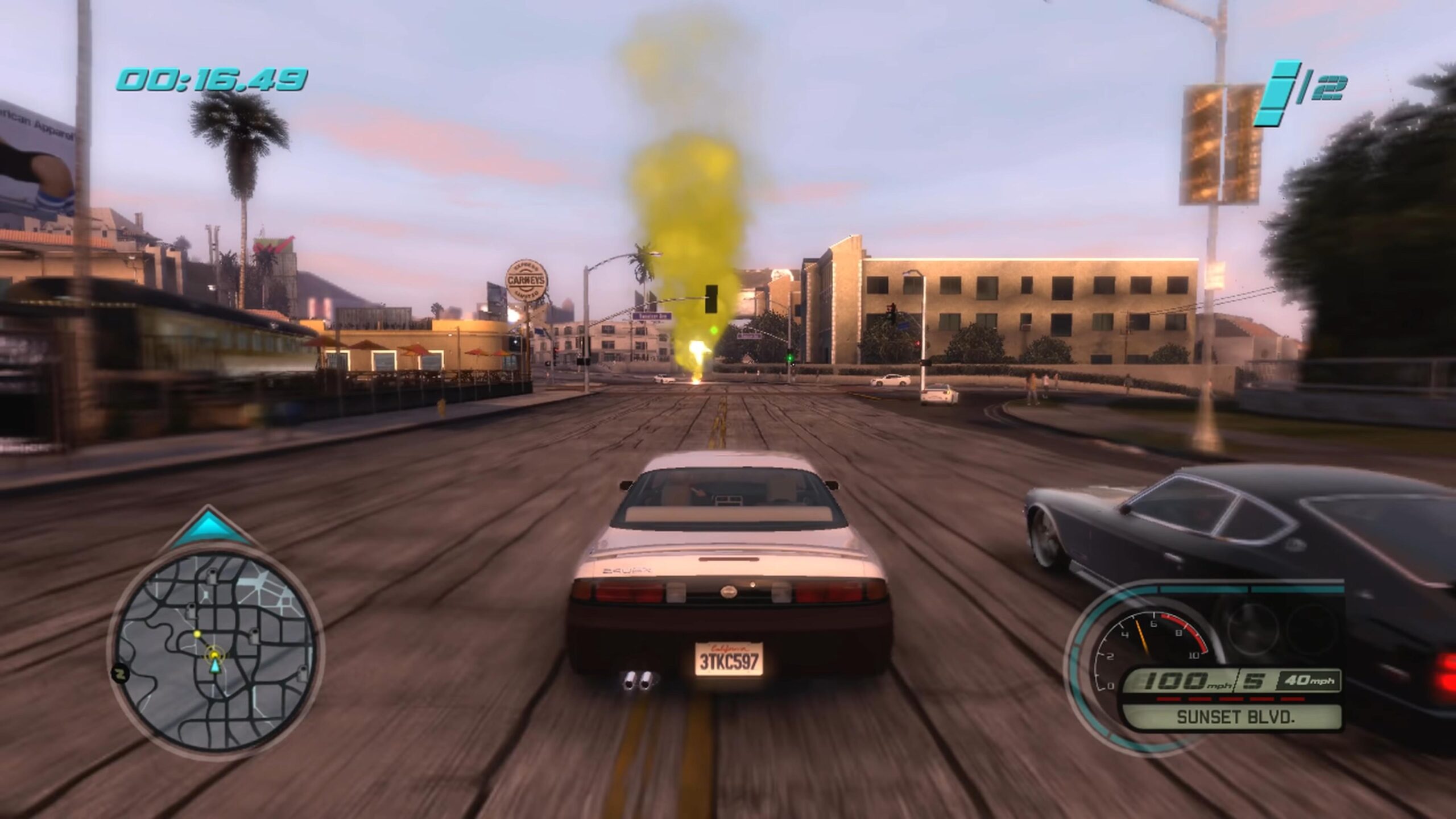
Los Angeles was recreated not as a simplified map but as a sprawling urban landscape. Streets intertwined naturally, highways cut through neighborhoods, and shortcuts rewarded curiosity. The city itself became a character, shaping how races unfolded and how players adapted their driving styles.
Midnight Club: Los Angeles and Its Open-World Philosophy
How Midnight Club: Los Angeles Redefined Freedom on the Road
The defining strength of Midnight Club: Los Angeles lay in its open-world design. Races were not confined to narrow tracks but unfolded across the city’s real streets. Players could choose routes on the fly, weaving through traffic or escaping down hidden alleys.
This freedom demanded skill rather than memorization. Success depended on quick thinking, map awareness, and the courage to take risks. Each race felt unique because no two drivers would necessarily choose the same path.
The absence of rigid boundaries also heightened tension. One wrong turn could cost a race, while a daring shortcut could secure victory. That balance between control and chaos made every event feel alive.
A City That Breathes After Dark
Los Angeles was depicted as vibrant and reactive. Traffic flowed realistically, weather conditions altered visibility, and lighting shifted naturally from dusk to deep night. These elements combined to create a world that felt inhabited rather than decorative.
Landmarks were recognizable but never distracting. They served as navigational cues rather than static scenery. Over time, players developed a mental map of the city, learning which roads favored speed and which demanded caution.
The city’s scale encouraged long drives between races, reinforcing immersion. Cruising through empty streets at midnight became as memorable as the races themselves.
Car Culture and Customization
Customization played a major role in personal expression. Vehicles were not merely tools but reflections of the player’s identity. Performance upgrades affected handling and acceleration, while visual modifications allowed for individuality.
What set this system apart was its balance. Cosmetic changes did not overshadow performance, and upgrades required strategic investment. Players learned to tune cars according to their driving preferences and race types.
This approach respected car culture rather than exploiting it. The focus remained on how a car felt on the road, not just how it looked in a garage.
Progression Through Reputation
Instead of traditional championship ladders, progression was tied to reputation. Winning races earned respect, unlocking tougher opponents and higher stakes. This structure mirrored underground racing culture, where status matters as much as trophies.
Opponents felt distinct, each with unique driving tendencies. Some favored aggression, others precision. Learning how to counter these styles added depth to the experience.
As reputation grew, so did the pressure. Races became faster, routes more complex, and mistakes less forgiving. This steady escalation maintained engagement without overwhelming the player.
Sound, Speed, and Atmosphere
Sound design played a crucial role in immersion. Engine notes varied realistically, conveying speed and power through audio alone. Tire screeches, collisions, and ambient city noise blended seamlessly.
Music choices enhanced the late-night vibe without dominating it. Tracks complemented the driving experience rather than distracting from it. The result was a cohesive soundscape that matched the game’s tone.
Visual effects were equally restrained. Motion blur, lighting reflections, and subtle environmental details emphasized speed without sacrificing clarity.
The Challenge of Mastery
Despite its accessibility, the game demanded mastery. High-speed navigation through dense traffic required sharp reflexes. Knowing when to brake, accelerate, or take a risk became second nature only through practice.
Police encounters added another layer of tension. Escaping law enforcement required spatial awareness and calm decision-making. These moments broke the rhythm of racing in a way that felt organic rather than forced.
Failure carried consequences, but never felt punitive. Losses encouraged improvement instead of frustration, reinforcing the game’s skill-based philosophy.
Community and Lasting Impact
Years after release, discussions around Midnight Club: Los Angeles continue among fans. Many cite its city design and driving mechanics as benchmarks that modern titles still struggle to match.
Its influence can be seen in later open-world racers that emphasize player choice and environmental realism. Few, however, replicate the same balance between freedom and challenge.
The game also fostered a sense of community. Players shared routes, strategies, and car builds, treating the city as a shared playground rather than a static map.
Timeless Design in a Changing Genre
Racing games have evolved significantly, with advancements in graphics and physics. Yet certain design principles remain timeless. This title’s emphasis on immersion, skill, and player agency continues to feel relevant.
Rather than overwhelming players with features, it focused on refining core mechanics. That restraint allowed its strengths to shine and prevented the experience from feeling cluttered.
Even today, revisiting the game reveals how carefully its systems were balanced. Its design choices feel intentional, not dated.
Conclusion
In the crowded landscape of racing games, Midnight Club: Los Angeles stands out as a thoughtful and immersive experience. It respected its setting, challenged its players, and delivered a sense of freedom rarely matched in the genre.
Its legacy lies not in flashy gimmicks but in how it made players feel behind the wheel. Speed mattered, but awareness mattered more. Victory was earned through intuition as much as reflex.
Long after the engine noise fades, the memory of those midnight drives through a living city endures, reminding players why this title remains a benchmark for open-world racing done right.