From the moment players step into its fog-covered streets, Bloodborne establishes an atmosphere that feels both hostile and mesmerizing. The world is cruel, beautiful, and deliberately confusing, drawing players into a nightmare where survival depends on observation, patience, and courage. Rather than guiding the player gently, the game challenges them to learn through failure, slowly revealing its systems and secrets through experience rather than explanation.
What makes this experience endure is not just difficulty, but intention. Every enemy placement, environmental detail, and sound cue serves a purpose. The game respects the player enough to let them struggle, trusting that persistence will lead to mastery. This approach has earned it a devoted following and a reputation as one of the most distinctive action role-playing games ever created.
The City of Yharnam and Its Dark Identity
Yharnam is not simply a setting; it is a character in its own right. Twisting streets, towering cathedrals, and decaying mansions create a sense of verticality and claustrophobia. The architecture tells stories without words, hinting at past grandeur and present corruption. Lanterns glow faintly in the darkness, offering brief moments of safety before players plunge back into danger.
The city’s design subtly teaches awareness. Shortcuts unlock gradually, looping paths back to familiar locations and rewarding careful exploration. What first appears confusing slowly becomes legible, fostering a sense of ownership over the space. This transformation from disorientation to understanding mirrors the player’s growth throughout the journey.
Why Bloodborne Redefined Fast-Paced Combat
Unlike many action RPGs that emphasize defensive play, Bloodborne encourages aggression. Shields are largely absent, replaced by a system that rewards players for striking back immediately after taking damage. This mechanic reshapes combat psychology, turning fear into momentum and hesitation into risk.
Weapons feel weighty and deliberate, each with unique rhythms and transformation states. Switching forms mid-fight allows for creativity and adaptability, making encounters feel dynamic rather than repetitive. Victory rarely comes from brute force alone; instead, it demands timing, spatial awareness, and confidence under pressure.
The Role of Fear and Tension
Fear is not an obstacle to overcome but a tool used intentionally. Enemy designs are unsettling, often unpredictable, and accompanied by eerie sound design that keeps players on edge. Silence can be just as threatening as noise, creating constant anticipation.
This tension heightens emotional investment. Every cleared area feels earned, and every defeat carries lessons. Rather than relying on scripted scares, the game cultivates unease through uncertainty, making players question what lies around the next corner.
Storytelling Through Environment and Implication
Narrative is woven into the world rather than presented directly. Item descriptions, enemy behavior, and environmental details provide fragments of a larger story. Players piece these together gradually, forming interpretations that feel personal and earned.
This approach respects curiosity. There is no single authoritative explanation for every event, allowing discussion and theorizing to thrive. The absence of explicit answers deepens engagement, encouraging players to look closer and think critically about what they encounter.
Themes of Obsession and Transformation
At its core, the story explores humanity’s pursuit of forbidden knowledge and the consequences that follow. Characters are often driven by obsession, seeking enlightenment at the cost of sanity. Transformation becomes a recurring motif, both physical and psychological.
These themes resonate because they are reflected in gameplay. As players progress, they too change, becoming more skilled, more daring, and more willing to confront danger head-on.
Enemy Design and Learning Through Failure
Enemies are designed to punish complacency. Basic foes can be deadly if underestimated, while larger adversaries demand respect and adaptation. Patterns exist, but they must be learned through observation rather than memorization alone.
Failure is an essential teacher. Each defeat highlights mistakes and invites experimentation. Over time, players internalize lessons, transforming frustration into satisfaction. This cycle creates a powerful sense of growth that extends beyond the screen.
Boss Encounters as Emotional Peaks
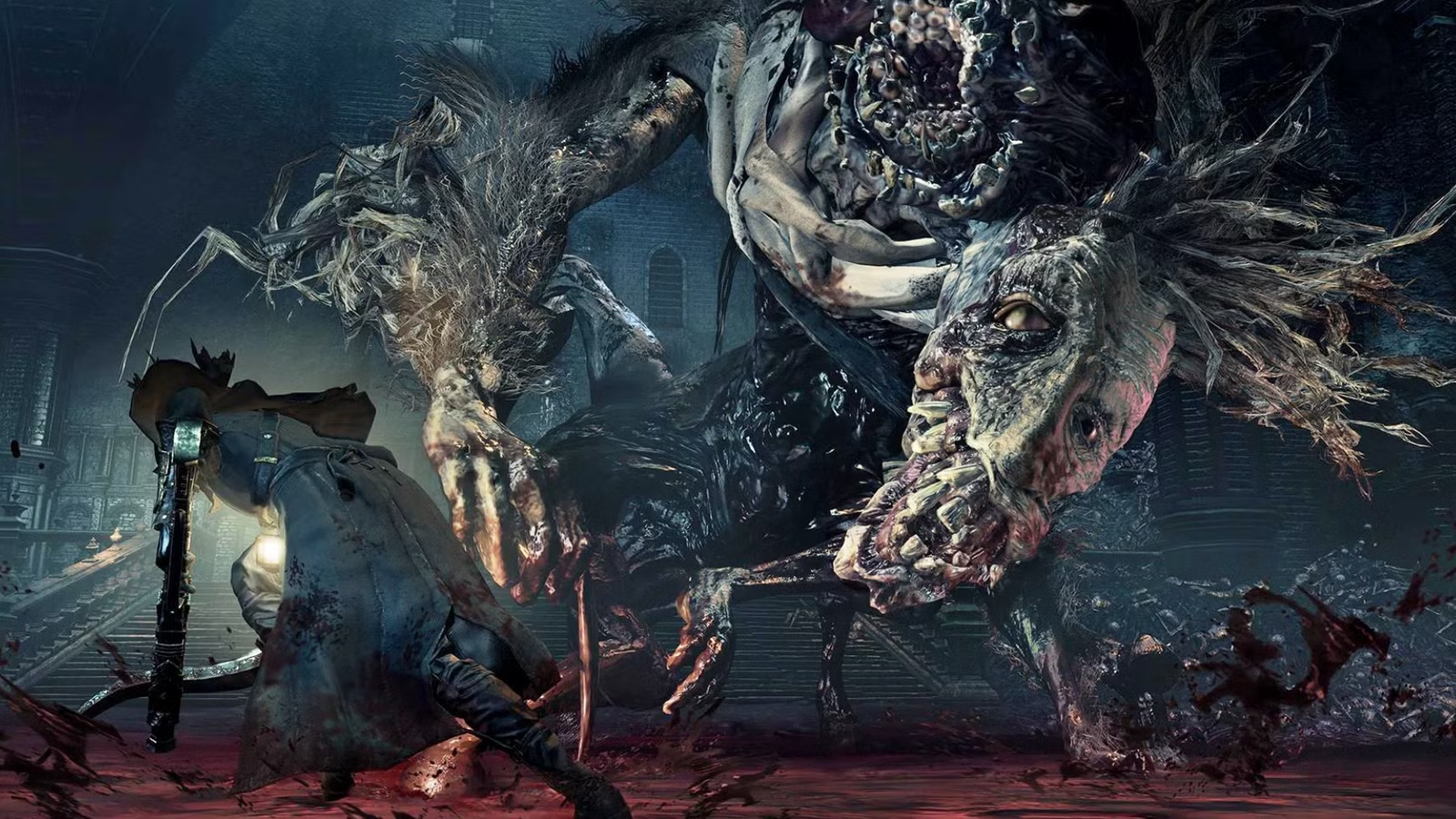
Boss battles serve as milestones, testing everything learned so far. Each encounter has a distinct personality, from swift and relentless hunters to towering monstrosities that dominate the battlefield. Music swells, arenas constrict, and the stakes feel higher.
These fights are memorable because they blend mechanics with emotion. Triumph brings relief and pride, while defeat fuels determination. The contrast between despair and victory is where the game’s intensity shines brightest.
Optional Challenges and Player Choice
Not every challenge is mandatory. Optional areas and bosses offer additional risk for those seeking mastery. Choosing to engage with them becomes a personal decision, reflecting individual playstyles and tolerance for difficulty.
This freedom enhances replay value. Players can tailor their experience, discovering new strategies and secrets with each playthrough.
Visual Style and Artistic Cohesion
The visual identity draws heavily from gothic and cosmic horror influences. Muted color palettes, grotesque designs, and intricate details create a cohesive aesthetic that feels timeless. Nothing appears accidental; every visual element reinforces tone.
Lighting plays a crucial role, guiding attention and shaping mood. Shadows conceal threats, while moonlight and fire provide stark contrast. The result is a world that feels alive, oppressive, and unforgettable.
Sound Design and Immersion
Sound complements visuals perfectly. Footsteps echo through empty streets, distant howls signal danger, and combat sounds carry weight and clarity. Music is used sparingly, making its presence during key moments more impactful.
Voice acting adds subtlety, conveying desperation, madness, and resolve. These auditory cues deepen immersion, ensuring that tension is felt as much as it is seen.
Community, Legacy, and Influence
The game’s influence extends beyond its own boundaries. It has inspired discussions, analyses, and creative works across the gaming community. Players share strategies, interpretations, and stories, keeping interest alive years after release.
Its legacy lies in confidence. By committing fully to its vision, it demonstrated that challenging, uncompromising design can resonate deeply when executed with care and purpose.
Conclusion
In the end, Bloodborne stands as a testament to thoughtful design and artistic ambition. It challenges players not just mechanically, but emotionally and intellectually, asking them to confront fear, embrace failure, and persist. The journey through its dark world lingers long after the final battle, leaving memories shaped by struggle, discovery, and triumph.