High above a busy city, a rooftop offers a completely different perspective from street level. In military history, law enforcement, journalism, movies, and video games, that elevated setting has become closely associated with one of the most recognizable tactical archetypes: the rooftop sniper.
The image is familiar—a highly trained marksman positioned above the action, observing events while remaining largely unseen. Popular culture often presents this figure as almost superhuman, capable of making perfect decisions under extreme pressure. The real-world role, however, is considerably more complicated.
A professional sniper is part of a larger team and operates within strict rules, procedures, communication structures, and legal and ethical boundaries. Observation, patience, judgment, and accountability are just as important as marksmanship.
This article explores the rooftop sniper from a broad perspective, looking at the history of elevated observation, the responsibilities associated with the role, psychological demands, modern technology, and the way snipers have been portrayed in popular culture.
What Is a Rooftop Sniper?
The term rooftop sniper generally describes a sniper operating from an elevated urban position, such as a building or other high vantage point.
However, the phrase is more commonly used in news coverage, fiction, and popular culture than as a precise description of a standardized military occupation.
In real operations, a sniper may have several responsibilities beyond engaging a target. Depending on the mission, these can include:
- Observation and surveillance
- Reporting information to other team members
- Supporting the security of personnel or civilians
- Monitoring potentially dangerous situations
- Maintaining communication with an operational team
- Operating within strict rules of engagement
This broader context is important because the popular image of a lone marksman does not accurately represent how professional military or law-enforcement teams generally function.
Why Elevated Positions Matter
The attraction of a rooftop position is relatively simple: elevation can provide a wider field of view.
Historically, elevated locations have been used for observation long before modern firearms existed. Watchtowers, castle walls, hills, and other high points allowed observers to monitor surrounding areas and identify approaching people or activity.
Modern cities changed the nature of this concept.
Tall buildings, dense streets, bridges, and other structures created new observation challenges. At the same time, they offered security and emergency-response teams opportunities to monitor large areas during certain high-risk situations.
The important principle is therefore not simply height. It is situational awareness—understanding what is happening around an operation and communicating useful information to the people responsible for responding.
The Role of Observation
One of the least understood aspects of the sniper profession is observation.
Movies frequently make marksmanship the central skill, but professional operations can involve long periods of watching, waiting, communicating, and assessing changing circumstances.
An observer may need to recognize:
- Unusual movement
- Changes in crowd behavior
- Potential threats
- Important environmental developments
- Movement of team members
- Changes in the surrounding situation
This requires concentration over extended periods.
In that sense, patience can be just as important as physical precision.
Rooftop Sniper vs. Hollywood Sniper
Popular entertainment has created a powerful version of the sniper archetype.
In films and video games, a rooftop sniper is often shown as a solitary character who operates independently and makes dramatic split-second decisions.
Real-world operations are generally much more structured.
Professional personnel may work as part of a coordinated team involving commanders, observers, communications personnel, security officers, and other specialists. Their actions are governed by mission objectives, operational procedures, and legal requirements.
This difference between fiction and reality is worth remembering whenever a movie or video game presents the sniper as an isolated action hero.
The Psychological Demands of the Role
The psychological side of the profession is arguably more interesting than the stereotype suggests.
Patience and Concentration
A sniper may spend significant periods monitoring a situation without taking action.
Maintaining attention during prolonged inactivity requires considerable mental discipline.
Stress Management
High-risk operations can involve uncertainty, pressure, and rapidly changing circumstances.
Personnel must be able to remain composed and communicate clearly despite stressful conditions.
Decision-Making
Professional snipers operate within defined rules and responsibilities. Decisions can carry serious consequences, making judgment and restraint essential parts of the job.
This is one reason the profession cannot be reduced to simply having excellent shooting ability.
The Importance of Teamwork
The popular phrase rooftop sniper can create the impression of complete independence.
In reality, teamwork is fundamental.
Depending on the organization and mission, sniper teams may coordinate with:
- Command personnel
- Spotters or observers
- Ground units
- Security teams
- Communications specialists
- Medical personnel
- Emergency responders
Information has to move between different parts of the operation.
An elevated observer may see something that people on the ground cannot, while ground personnel may have information that changes how the situation is interpreted.
Effective communication therefore becomes a critical component of the overall mission.
The Ethical Responsibilities of Snipers
The use of lethal force carries significant ethical and legal responsibilities.
Professional military and law-enforcement personnel are expected to operate within applicable laws, rules of engagement, and organizational procedures.
This makes identification, authorization, proportionality, and accountability important parts of the discussion.
The romanticized idea of a sniper simply deciding when to shoot ignores these responsibilities.
In real life, the consequences of an incorrect decision can be profound. For that reason, discipline and restraint are central themes when discussing professional sniping.
Historical Development of Snipers
The concept of specialized marksmen developed gradually.
During earlier conflicts, skilled riflemen were sometimes assigned tasks requiring greater accuracy and independence than ordinary infantry roles.
As firearms technology improved, militaries increasingly developed specialized sniper units and doctrines.
The 20th century saw particularly significant development in sniper operations, especially during conflicts involving difficult terrain and urban environments.
Modern sniper roles have subsequently incorporated improved optics, communications equipment, night-vision technology, thermal imaging, and other observation systems.
The exact equipment and procedures vary considerably between countries and organizations.
Technology Has Changed the Role
Technology has transformed what a modern sniper can observe and communicate.
Modern surveillance and observation equipment can include technologies such as:
- Thermal imaging
- Night-vision systems
- Digital communications
- Optical observation equipment
- Advanced cameras
- Mapping and situational-awareness systems
These technologies can improve the ability to gather information in difficult conditions.
However, technology does not eliminate the need for human judgment.
A sophisticated sensor can detect something, but a trained professional still needs to understand the wider context and communicate appropriately.
Rooftops in Urban Security
The concept of an elevated observer is not limited to combat.
Security teams may use elevated observation positions during certain major public events, although the exact arrangements depend on the location, threat assessment, and responsible authorities.
The objective can include identifying potential threats early and providing information to personnel on the ground.
This demonstrates an important distinction: an elevated position can serve an observation and security function without necessarily being associated with an active shooting role.
Rooftop Snipers in Movies and Video Games
The rooftop sniper has become a popular storytelling device because the character naturally creates suspense.
A rooftop provides:
- A dramatic visual setting
- Physical separation from other characters
- A sense of mystery
- A powerful viewpoint over the city
- Opportunities for suspense and surprise
Action movies often use this setup to create a moment in which a character watches an unfolding event from above.
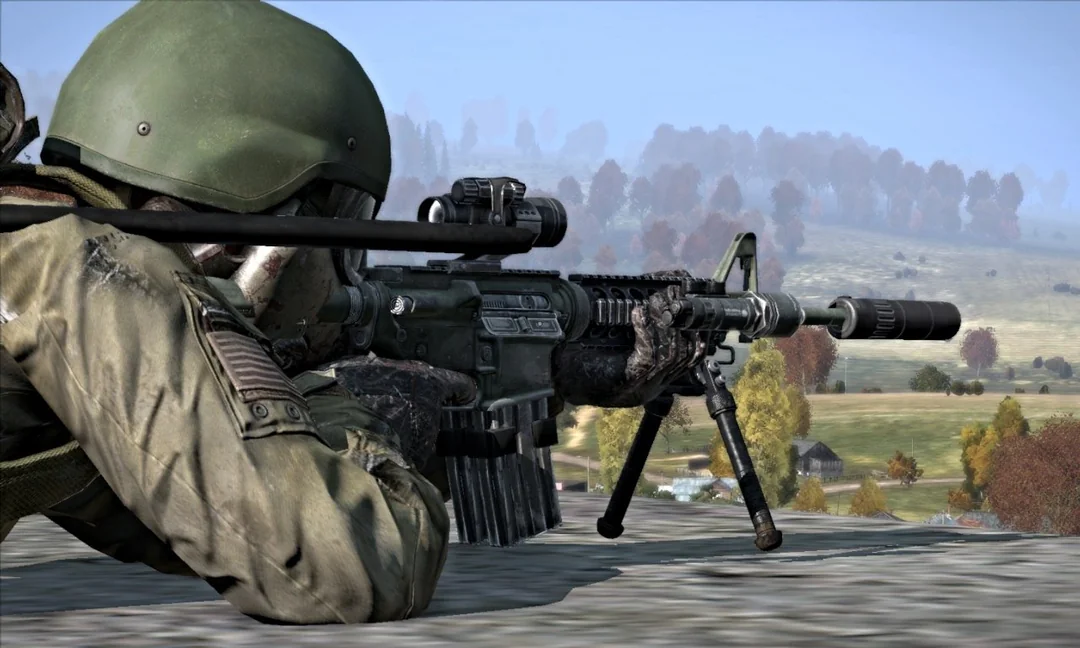
Video games take the concept even further, sometimes turning rooftop sniping into an entire gameplay mechanic.
These fictional representations can be entertaining, but they should not be confused with real-world procedures.
Why the Sniper Archetype Fascinates Audiences
There is something psychologically compelling about a character who remains quiet while everyone else is moving.
The sniper archetype represents several qualities that audiences find fascinating:
Patience: The character can wait while others rush.
Precision: Small decisions appear to have major consequences.
Isolation: The character is physically separated from the action.
Mystery: The audience may not know who the person is or what they intend to do.
Control: The character appears calm in an environment filled with uncertainty.
These qualities explain why the sniper remains a recurring character in action films, thrillers, novels, and games.
Common Myths About Rooftop Snipers
Myth 1: Snipers Always Work Alone
Not necessarily.
Professional sniper operations are generally team-oriented, with communication and coordination playing important roles.
Myth 2: A Sniper Is Defined Only by Shooting Accuracy
Accuracy is important, but observation, discipline, communication, judgment, and patience are also significant.
Myth 3: Every Rooftop Position Is an Ideal Sniper Location
This is primarily a fictional assumption.
Real operational environments involve numerous safety, visibility, legal, communication, and logistical considerations that cannot be reduced to simply choosing the highest building.
Myth 4: Movies Accurately Show Sniper Operations
Movies and games are designed for entertainment. Their portrayal of equipment, timing, communication, and decision-making is frequently simplified or dramatized.
The Human Side of the Profession
Discussions about snipers can easily become focused on technology and weapons.
The human side deserves equal attention.
Military and law-enforcement personnel working in high-risk roles can experience significant psychological pressure. Long periods of concentration, exposure to dangerous situations, responsibility for major decisions, and the potential consequences of lethal force can all create emotional challenges.
Modern organizations increasingly recognize the importance of psychological support, resilience programs, and post-operation care.
This perspective makes the profession less about the myth of the perfect marksman and more about the real person carrying significant responsibility.
The Future of Sniper and Observation Technology
The future is likely to involve an increasing relationship between human operators and advanced technology.
Improved cameras, thermal sensors, communications networks, drones, mapping systems, and artificial intelligence may provide personnel with more information than ever before.
At the same time, these developments raise important questions about:
- Human oversight
- Accountability
- Privacy
- Autonomous systems
- Rules governing the use of force
- The reliability of automated information
Technology can improve awareness, but it also increases the importance of responsible decision-making.
Rooftop Sniper: Reality vs. Fiction
The phrase rooftop sniper has two very different meanings.
In reality, it can refer broadly to a professional operating from an elevated urban position as part of a structured security or tactical mission.
In fiction, it is an archetype representing patience, danger, precision, and mystery.
Understanding the difference helps prevent entertainment portrayals from becoming mistaken for real-world instruction.
The most important characteristics of the real profession are not cinematic perfection or dramatic one-shot moments. They are discipline, observation, communication, responsibility, and adherence to law and professional standards.
FAQ
What is a rooftop sniper?
A rooftop sniper is generally understood as a sniper operating from an elevated urban position. The term is often used broadly in news coverage and entertainment rather than as a formal job title.
Do real snipers work alone?
Professional snipers typically operate within a team structure. Communication, observation, and coordination with other personnel are important aspects of their work.
Why are rooftops used for observation?
Elevated positions can provide a broader view of an area, making them potentially useful for surveillance and situational awareness during certain operations.
Are movie snipers realistic?
Usually only to a limited extent. Movies and games exaggerate abilities, simplify procedures, and create dramatic scenarios for entertainment.
What skills are important for professional snipers?
At a broad level, important qualities include patience, observation, concentration, communication, judgment, discipline, and the ability to operate under stress.
Is a rooftop sniper always associated with combat?
No. The term can appear in discussions of military operations, law enforcement, security, journalism, fictional stories, and video games. Its meaning depends heavily on context.
Conclusion
The rooftop sniper remains one of the most recognizable figures in military history and popular culture. From elevated observation posts to action movies and video games, the image continues to represent patience, precision, isolation, and control.
But the reality is considerably more complex than the stereotype.
Professional sniping involves teamwork, observation, communication, legal and ethical responsibilities, and significant psychological demands. Modern technology has changed how these professionals gather information and communicate, while entertainment continues to reshape the public image of the role.
Ultimately, understanding the rooftop sniper requires looking beyond the dramatic image on a screen. The real story is about discipline, responsibility, human judgment, and the difficult balance between technology and accountability.