
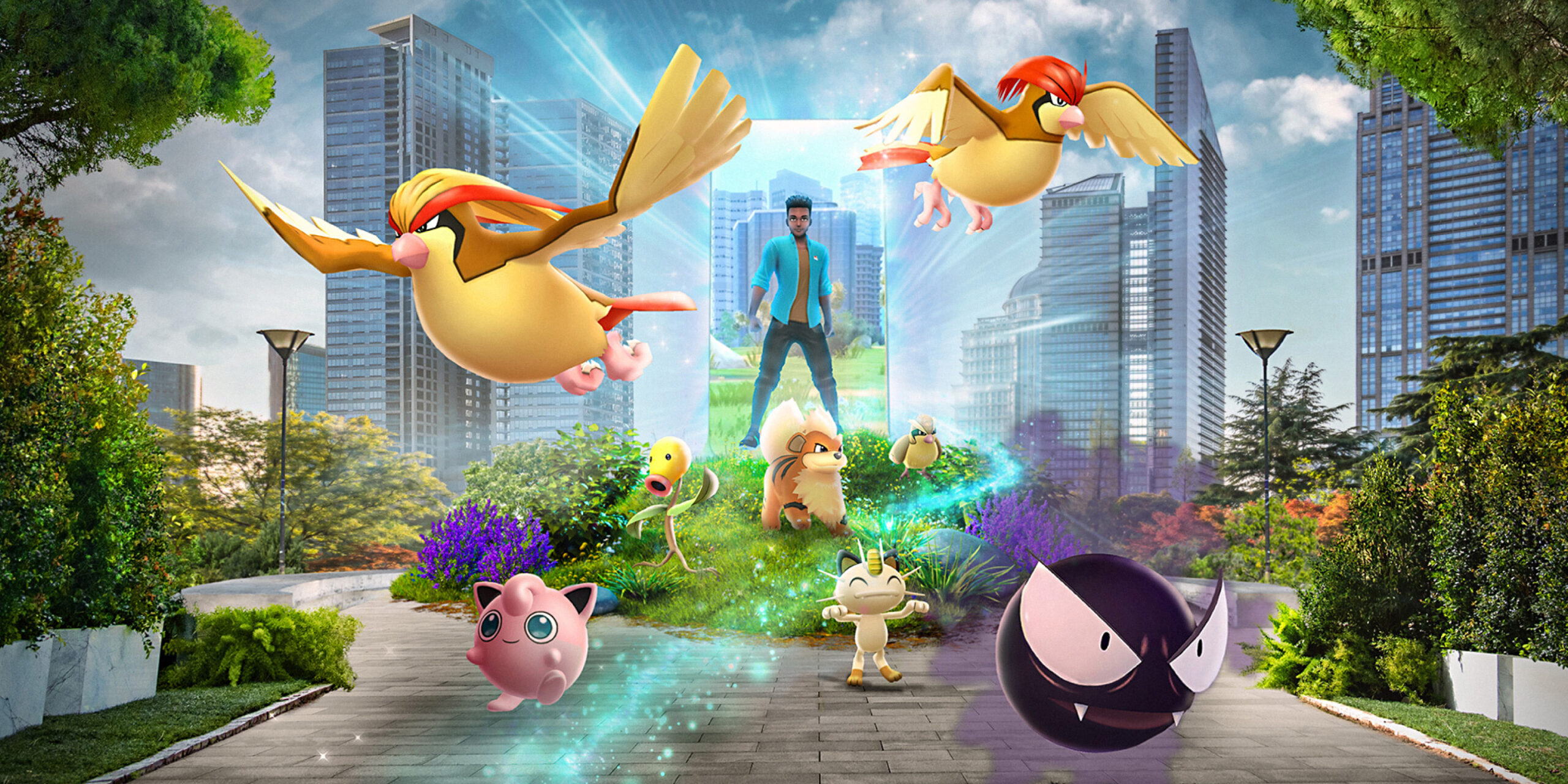
When Pokémon GO launched in 2016, it changed the way millions of people thought about mobile gaming. Instead of keeping players in front of a screen, it encouraged them to walk through real neighborhoods, visit landmarks, discover Pokémon, and interact with other players.
The concept was remarkably simple: use a smartphone to explore the real world while searching for virtual Pokémon. Yet the combination of location technology, augmented reality, collecting, progression, and social play created something much larger than a conventional mobile game.
More than a decade after its debut, Pokémon GO remains one of the most recognizable location-based games ever created. Its continued relevance comes from a design that can accommodate different types of players. Someone may open the app simply to catch Pokémon during a walk, while another player may spend considerable time preparing for raids, building teams for Trainer Battles, completing research, or optimizing collections.
The game’s history is therefore not just about its spectacular launch. It is also about how the experience evolved through new generations of Pokémon, events, battle systems, trading, raids, research, and community-focused features.
What Is Pokémon GO?
Pokémon GO is a location-based augmented-reality mobile game developed by Niantic in collaboration with The Pokémon Company and Nintendo.
The game uses a player’s real-world location to create an interactive map. Pokémon can appear around the player, while various in-game locations provide opportunities to collect items, complete activities, and participate in battles.
The basic gameplay loop involves:
- Exploring the surrounding area
- Finding and catching Pokémon
- Collecting items
- Developing and evolving Pokémon
- Completing research tasks
- Participating in battles
- Joining events
- Building a personal collection
The important difference from traditional Pokémon games is that movement through the real world is part of the gameplay itself.
How Pokémon GO Changed Mobile Gaming
Before Pokémon GO became a global phenomenon, mobile gaming was often associated with short puzzle games, arcade experiences, strategy titles, and other screen-centered activities.
Pokémon GO introduced a different model.
The player’s physical surroundings became part of the game world. A walk through a park could become a Pokémon-catching session. A trip through a city could reveal unfamiliar points of interest. Meeting friends could become an opportunity to participate in a raid together.
This concept helped popularize location-based gaming for a mainstream audience.
The significance was not simply technological. Pokémon GO demonstrated that a mobile game could influence where people went, how long they walked, and how they interacted with public spaces.
The Role of Exploration
Exploration is one of the defining characteristics of Pokémon GO.
Instead of presenting a completely fictional map, the game overlays gameplay systems onto real-world geography. Players therefore have a reason to pay attention to places they might otherwise ignore.
A public park, landmark, artwork, or community location can become relevant to a player’s journey.
This changes the psychology of an ordinary walk.
A route that once seemed routine can become an opportunity to:
- Find Pokémon
- Visit PokéStops
- Collect items
- Complete research
- Encounter event-related content
- Participate in nearby activities
The game essentially turns movement into progression.
Catching Pokémon and Building a Collection
At the heart of the experience is the familiar Pokémon concept of collecting creatures.
Players encounter Pokémon in different environments and circumstances, then attempt to catch them using Poké Balls.
Catching is only the beginning.
Players can evaluate their Pokémon, evolve them, power them up, and decide which ones are worth keeping for different purposes.
This creates multiple collection goals.
Some players want a broad Pokédex. Others search for rare Pokémon, strong individual specimens, special forms, shiny Pokémon, or event-exclusive encounters.
The collection system therefore provides motivation even when a player is not interested in competitive battling.
Pokémon GO and the Evolution System
Evolution adds another layer of progression.
Many Pokémon can evolve after players obtain the necessary resources. Depending on the Pokémon, this can involve collecting enough Candy and meeting additional requirements.
Evolution gives ordinary encounters a longer-term purpose.
A Pokémon caught today may become part of a stronger or more complete collection later. This encourages players to continue catching even when they already have multiple examples of the same species.
For collectors, completing evolutionary families can become a satisfying long-term objective.
Items and Resource Management
Pokémon GO includes several types of resources that influence how players approach the game.
Poké Balls are essential for catching Pokémon, while other items can support encounters, evolution, healing, or progression.
Resource management becomes increasingly important for active players.
Someone who catches everything without paying attention to inventory may eventually need to manage storage carefully. Players who participate heavily in battles may also need to consider resources associated with powering up and maintaining their teams.
This adds a light strategic layer to what initially appears to be a simple collection game.
Raids Turn Pokémon GO Into a Social Experience
Raids are one of the features that significantly expanded Pokémon GO beyond individual exploration.
Raid encounters can require players to work together against powerful opponents. This creates opportunities for coordination and social interaction.
A raid group can include friends, local players, or other participants connected through the game’s available systems.
The appeal is easy to understand: some challenges are more exciting when multiple players contribute to the same objective.
Successful raids can also provide opportunities to encounter Pokémon that may be difficult or impossible to obtain through ordinary wild encounters.
Trainer Battles and Competitive Play
Pokémon GO is not exclusively a collection game.
Its battle systems give players another reason to build and evaluate their Pokémon.
Trainer Battles require players to think about factors such as:
- Pokémon types
- Moves
- Team composition
- Shields
- Energy management
- Opponent choices
- Battle strategy
This creates a different experience from simply catching Pokémon.
A Pokémon that looks impressive as a collector’s item is not necessarily the ideal choice for every competitive format. Players who enjoy battling therefore have to learn a different set of skills.
Events Keep the Game Moving
Regular events are central to Pokémon GO’s long-term structure.
Special events can introduce themed encounters, bonuses, research opportunities, raids, and other temporary activities.
Community-focused events have also played an important role in bringing players together.
The event system solves one of the biggest problems faced by long-running games: repetition.
Rather than leaving the same content unchanged forever, rotating events give players reasons to return at different times.
Community Days and Shared Experiences
Community Days became particularly important to the game’s social identity.
These events encourage players to spend time outdoors together while focusing on specific Pokémon and event bonuses.
Parks and public spaces can become informal meeting points where players compare catches, exchange tips, and participate in activities together.
This illustrates one of Pokémon GO’s most distinctive characteristics: the game can create a social experience even though every player is using their own phone.
Trading and Player Interaction
Trading adds another dimension to collecting.
Instead of obtaining every Pokémon independently, players can exchange Pokémon with others under the game’s applicable requirements.
This makes the collection more personal.
A Pokémon received from a friend can have more sentimental value than an ordinary encounter because it represents an interaction between players.
Trading also encourages cooperation and gives duplicate Pokémon a potential purpose.
The Importance of Pokémon Types and Strategy
Players who move beyond casual collecting quickly discover that Pokémon GO contains considerable strategic depth.
Type matchups can influence battle performance, while moves and individual Pokémon characteristics can affect how useful a Pokémon is in different situations.
This creates a natural progression in player knowledge.
A newcomer may simply ask:
“Which Pokémon do I like?”
A more experienced player may ask:
“Which Pokémon is best for this specific battle situation?”
That transition from collecting to strategic decision-making helps keep experienced players engaged.
Augmented Reality: More Than a Gimmick
Augmented reality was one of the features that attracted enormous attention when Pokémon GO launched.
The AR mode can place Pokémon visually within the player’s surroundings through the smartphone camera, creating the impression that a virtual creature is standing in the real world.
Although players do not need to use AR for every part of the game, the feature contributed significantly to the original sense of wonder.
It reinforced the central idea behind Pokémon GO:
Pokémon are no longer confined to a fictional screen—they can appear to exist in the world around you.
How Pokémon GO Encourages Physical Activity
Walking is deeply integrated into Pokémon GO’s design.
Distance-based systems and exploration mechanics encourage players to move around rather than remain in one location.
For some players, this turns an ordinary walk into a more engaging activity.
A person who might otherwise avoid a longer walk may become more motivated when there is a Pokémon, destination, or gameplay objective along the route.
The game should not be viewed as a replacement for structured exercise, but its design can encourage additional everyday movement.
Pokémon GO and Mental Engagement
The game combines physical movement with frequent small decisions.
Players continuously decide whether to:
- Catch an encounter
- Continue exploring
- Visit another location
- Complete research
- Participate in a battle
- Save resources
- Return to a particular area
This creates a lightweight but persistent sense of purpose.
The objectives are generally easy to understand, yet players can choose how deeply they want to engage.
Safety While Playing Pokémon GO
Because Pokémon GO encourages real-world movement, responsible play is important.
Players should pay attention to their surroundings rather than focusing continuously on the phone.
Important habits include:
- Stop in a safe location before checking the screen.
- Avoid crossing roads while looking at the phone.
- Follow local property and access rules.
- Be respectful around homes, businesses, memorials, and private spaces.
- Keep volume at a reasonable level.
- Avoid playing in dangerous or restricted areas.
- Be especially careful when playing after dark.
The best experience comes from treating the game as an addition to real-world exploration, not as a reason to ignore the environment.
How the Game Adapted Over Time
One of the most important reasons Pokémon GO remained relevant is its ability to evolve.
The game that launched in 2016 is considerably broader than the original experience.
Over time, Niantic introduced systems involving:
- New Pokémon generations
- Raids
- Research
- Trading
- Trainer Battles
- More event formats
- Additional progression systems
- New ways to interact with Pokémon
- Expanded social features
This evolution allowed the game to move beyond its initial “catch Pokémon while walking” concept.
Why Pokémon GO Has Such Strong Nostalgia
The Pokémon brand already had decades of cultural recognition when Pokémon GO launched.
For longtime fans, seeing familiar Pokémon appear in the real world created an immediate emotional connection.
For newer players, the game served as an introduction to characters and creatures that had already become global pop-culture icons.
This combination of nostalgia and accessibility was particularly powerful.
A longtime fan could recognize a favorite Pokémon instantly, while someone unfamiliar with the franchise could still understand the basic goal of catching creatures.
The Global Cultural Impact of Pokémon GO
The game’s initial release produced an unusual cultural moment.
People who normally had little interest in video games were suddenly discussing Pokémon, walking through parks, and meeting other players.
News coverage, social media conversations, community gatherings, and viral encounters helped turn the game into a broader cultural phenomenon.
Its influence extended beyond gaming.
It became an example frequently discussed in conversations about:
- Augmented reality
- Location-based technology
- Mobile entertainment
- Digital communities
- Physical activity
- Public spaces
- Social interaction
Few mobile games have had such a visible effect on everyday behavior.
Why Pokémon GO Still Has Replay Value
Long-term replayability comes from the fact that there is no single way to “finish” the experience.
Players can pursue different goals depending on their interests.
A collector may focus on completing the Pokédex.
A competitive player may concentrate on Trainer Battles.
A social player may prefer raids and community events.
A casual player may simply catch Pokémon during everyday walks.
This flexibility is crucial.
The game does not need every player to follow the same progression path.
The Game’s Business Model
Pokémon GO operates as a free-to-start mobile game with optional purchases.
Players can access the core experience without necessarily spending money, while optional purchases can provide additional items, resources, or event-related opportunities.
This model allows a large audience to participate while giving highly engaged players additional ways to support or expand their experience.
As with any free-to-play game, players should understand what is optional before spending money and set appropriate limits.
Why New Players Can Still Enjoy Pokémon GO
The size of the game can appear intimidating to newcomers.
There are many Pokémon, items, events, battle systems, and features to discover.
Fortunately, beginners do not need to understand everything immediately.
A sensible starting approach is:
- Learn the basic catching mechanics.
- Explore nearby areas.
- Collect useful items.
- Catch a variety of Pokémon.
- Learn how evolution works.
- Try research tasks.
- Participate in social activities when comfortable.
- Explore battles after becoming familiar with the basics.
The game becomes easier to understand naturally through regular play.
Common Mistakes New Players Make
Spending Resources Too Quickly
New players may use valuable resources without understanding their long-term usefulness.
Ignoring Inventory Management
Item and Pokémon storage can become important as a collection grows.
Focusing Only on Combat
Not every Pokémon needs to be optimized for battle. Collection, exploration, and events are equally valid ways to enjoy the game.
Playing Without Watching the Environment
The real world should always take priority over the phone screen.
Trying to Master Everything Immediately
Pokémon GO contains many systems. Learning them gradually makes the experience less overwhelming.
FAQ
What is Pokémon GO?
Pokémon GO is a location-based mobile game that combines Pokémon collecting with real-world exploration, battles, events, and social features.
Is Pokémon GO still popular?
Yes. Its long-term appeal is supported by regular content, events, new Pokémon, social activities, collecting, and multiple gameplay systems.
Do you have to walk to play Pokémon GO?
Walking and real-world exploration are important parts of the game, but not every feature requires continuous movement. The amount of physical activity depends on how each player chooses to engage.
Is Pokémon GO free?
The game can be started and played without an upfront purchase, although optional in-game purchases are available.
Can you play Pokémon GO with friends?
Yes. Social features allow players to interact through activities such as raids, trading, and other cooperative or competitive systems.
Is Pokémon GO an augmented-reality game?
Yes. It includes augmented-reality features that can display Pokémon within the player’s real-world surroundings through a compatible smartphone camera.
Final Verdict
Pokémon GO remains important because it successfully connected several ideas that rarely existed together in a mainstream mobile game: Pokémon collecting, real-world exploration, location technology, augmented reality, physical movement, social interaction, and long-term progression.
Its greatest achievement was not simply making people catch virtual creatures. It changed the relationship between a game and the physical environment around the player.
A park could become a destination. A walk could become a collection opportunity. A group of strangers could become a raid team. A familiar neighborhood could suddenly feel worth exploring.
The game’s continued evolution has been just as important as its extraordinary launch. New Pokémon, battles, raids, research, trading, events, and community-focused activities have repeatedly expanded what players can do.
For casual players, Pokémon GO can remain a light companion during everyday exploration. For dedicated players, it offers years of collecting, strategy, competition, and social engagement.
Ultimately, the enduring appeal of Pokémon GO comes from a deceptively simple idea: take a familiar digital adventure into the real world. That idea helped redefine mobile gaming and created an experience that continues to connect virtual discovery with real-world movement, curiosity, and community.