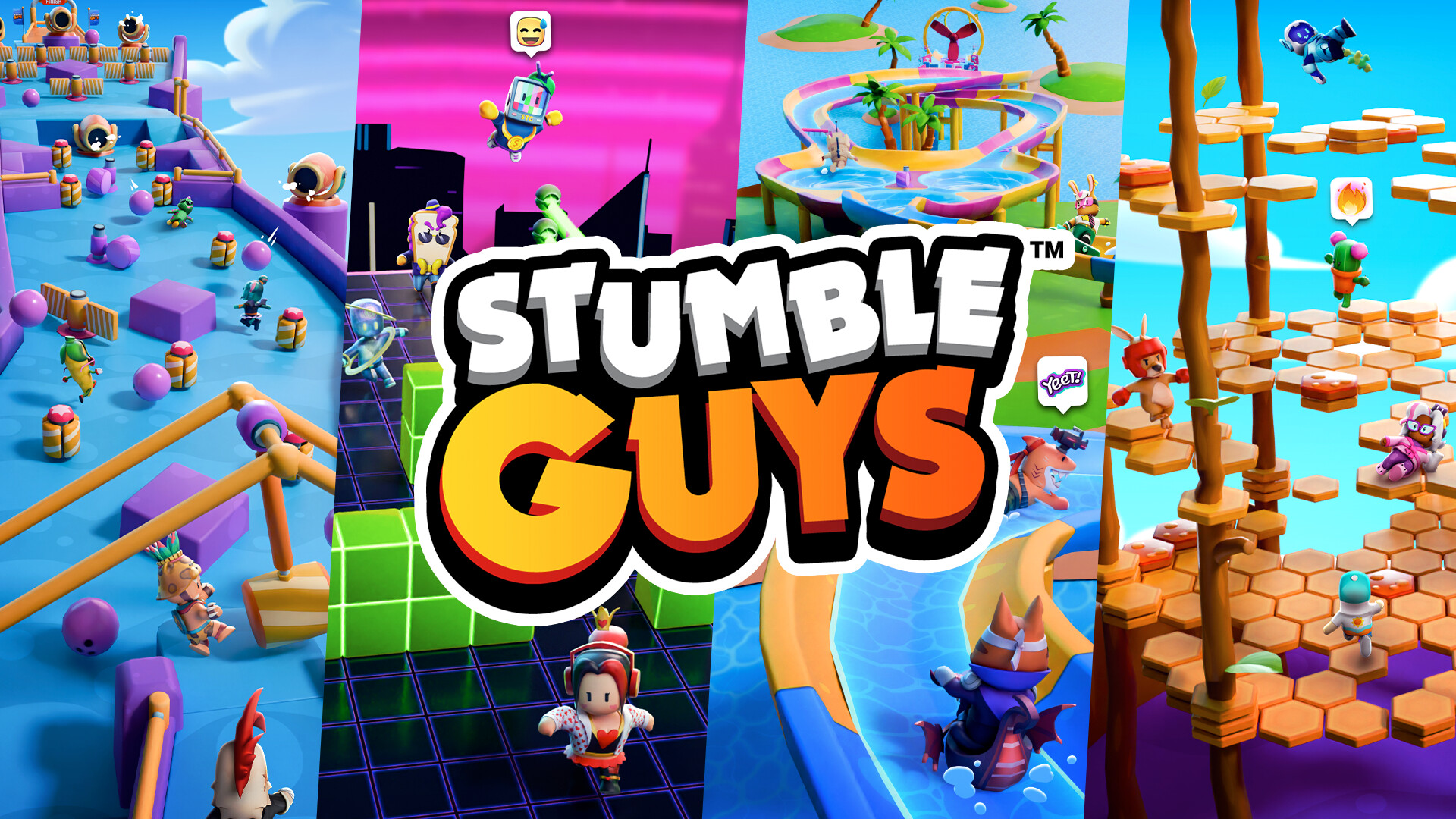
Few multiplayer games make losing as entertaining as winning. Stumble Guys built its identity around that idea: colorful characters, obstacle-filled rounds, simple controls, unpredictable collisions, and just enough competition to make every mistake funny.
What looks like a straightforward party game actually has a carefully designed progression system. Players begin with basic movement, learn how different obstacle types behave, discover safer routes, and gradually develop the timing needed to survive later rounds. At the same time, the game’s short matches make it easy to play casually without demanding a major time commitment.
Its success also comes from accessibility. Players can understand the basic objective within seconds, while cosmetics, events, map knowledge, and movement techniques give regular players reasons to keep improving.
This updated guide looks at how Stumble Guys works, why its multiplayer formula is so effective, how customization and progression fit into the experience, and what makes its controlled chaos so replayable.
What Is Stumble Guys?
Stumble Guys is a multiplayer party game centered on obstacle-course competitions. Players control small customizable characters and compete through a sequence of rounds designed around racing, survival, timing, and movement.
The basic objective is simple:
Reach the finish, survive the round, and avoid elimination.
That simplicity is one of its greatest strengths. A new player doesn’t need to understand complicated character classes, weapon systems, skill trees, or lengthy tutorials before participating.
Instead, the learning process happens naturally.
You run.
You jump.
You dive.
You fall.
Then you try again.
That straightforward structure makes the game particularly suitable for groups where players have very different levels of gaming experience.
How a Typical Stumble Guys Match Works
A match generally progresses through several rounds. Each round presents a different obstacle course or challenge, and only a portion of the players advance.
This creates a natural escalation.
Early Rounds
The opening stages usually give players an opportunity to establish their position and learn the layout. Getting eliminated immediately is possible, but the emphasis is often on movement and reaching the objective.
Middle Rounds
As the player count decreases, mistakes become more expensive. Crowded sections, moving obstacles, narrow platforms, and timing-based challenges become more important.
Final Round
The final stage determines the winner. At this point, there is less room for recovery, so route knowledge and composure matter considerably more.
The beauty of this format is that matches don’t need to last for hours. Even after elimination, players can quickly begin another game.
Why the Controls Are So Effective
Stumble Guys doesn’t require a complicated control system.
The core movement typically revolves around:
- Running
- Jumping
- Diving
- Directional movement
- Timing
That may sound basic, but these mechanics interact in interesting ways.
A jump can help clear an obstacle, while a well-timed dive can extend movement or help recover from an awkward landing. Meanwhile, other players can interrupt your path at exactly the wrong moment.
This creates an important distinction between knowing the controls and using them effectively.
Almost anyone can learn the buttons.
The challenge is learning when to press them.
The Real Skill Behind the Chaos
It is easy to describe Stumble Guys as random, but that doesn’t tell the whole story.
Randomness certainly exists, especially when many players occupy the same narrow area. However, experienced players gain an advantage through positioning, timing, route selection, and anticipation.
For example, imagine two players approaching a rotating obstacle.
A beginner may simply run toward it and react when the obstacle arrives.
An experienced player watches its movement, adjusts speed, chooses a better entry angle, and times the jump.
The obstacle hasn’t changed.
The player’s understanding of it has.
That is where much of the game’s hidden depth comes from.
Skill vs. Luck in Stumble Guys
One of the most interesting aspects of Stumble Guys is its balance between skill and unpredictability.
Skill helps you:
- Choose efficient routes
- Time jumps
- Avoid dangerous crowds
- Recover from mistakes
- Understand obstacle patterns
- Position yourself before moving hazards
But skill doesn’t guarantee victory.
Another player can collide with you.
A moving platform can disrupt your timing.
Several characters can block a narrow passage.
A small mistake can completely change the outcome.
This mixture prevents matches from becoming completely predictable. Even an experienced player can have a disastrous round, while a beginner can occasionally produce a surprisingly successful run.
That unpredictability is not a flaw. It is central to the game’s personality.
Why Falling Is Part of the Fun
Many competitive games make failure feel punishing.
Stumble Guys takes the opposite approach.
Falling off a platform is often funny because the characters react in exaggerated, cartoon-like ways. A spectacular mistake can become the most memorable moment of a match.
This changes the emotional experience.
Instead of thinking:
“I lost, so the game is over.”
Players often think:
“That was ridiculous. I want to try again.”
The short match structure reinforces this attitude. There usually isn’t a huge investment of time attached to a single attempt, making failure easier to accept.
Character Customization and Cosmetics
Customization is another major part of the experience.
Players can personalize their characters through different visual items, including:
- Outfits
- Skins
- Emotes
- Animations
- Other cosmetic elements
The important distinction is that cosmetics are primarily about expression rather than competitive power.
A player wearing an unusual costume doesn’t automatically become better at navigating an obstacle course. This helps preserve the party-game character of the experience.
Customization also gives players a reason to develop a personal identity. In a match containing dozens of similar-looking characters, a distinctive outfit can make your character immediately recognizable.
Why Cosmetics Matter More Than They First Appear
Cosmetic progression serves a psychological purpose.
Winning isn’t the only reward.
Players can also work toward collecting something they like, completing an event, or simply creating a character that feels personal.
This creates multiple reasons to return.
One player might care about winning crowns.
Another might want to collect cosmetics.
Someone else may simply want to play with friends.
A successful multiplayer game doesn’t always need one universal motivation. Stumble Guys benefits because different players can find different reasons to continue.
Level Design: The Hidden Engine of Replayability
The obstacle courses are arguably more important than the characters.
A good level needs to accomplish several things at once:
- Be understandable quickly.
- Create opportunities for mistakes.
- Reward good timing.
- Keep players moving.
- Remain entertaining after repeated attempts.
Different map designs achieve this in different ways.
Racing Maps
These reward players who can identify efficient routes and maintain momentum.
Survival Maps
These focus less on reaching a destination and more on remaining on the platform.
Timing-Based Challenges
These require players to observe moving obstacles and act at the correct moment.
Crowd-Heavy Sections
These create unpredictable interactions because multiple players are competing for limited space.
This variety prevents every match from feeling like the same race with a different background.
A Practical Strategy for New Players
If you’re struggling to survive consistently, don’t focus exclusively on speed.
Try this approach instead.
1. Watch the obstacle
Before committing to a jump, understand its movement.
2. Avoid unnecessary crowds
If several players are fighting for the same narrow route, another path may be safer.
3. Don’t jump automatically
Jumping can sometimes make a situation worse. Some obstacles are easier to navigate by simply running.
4. Learn recovery techniques
A failed jump doesn’t always mean elimination. Learn when diving or changing direction can save the run.
5. Prioritize consistency
A safe route that works nine times out of ten is often better than a risky shortcut that works only occasionally.
This last point becomes particularly important when trying to reach final rounds consistently.
Advanced Players Should Think About Positioning
Once basic movement becomes comfortable, positioning becomes one of the most valuable skills.
Consider a narrow platform with a moving obstacle.
You don’t necessarily want to be the first person through.
Sometimes allowing another player to trigger the obstacle gives you information about its timing. In other situations, being near the front prevents a crowd from pushing you backward.
The correct decision depends on the map.
This is one of the less obvious lessons of Stumble Guys:
The fastest-looking route isn’t always the fastest route.
A slightly longer path with fewer collision risks can produce better results over many matches.
Multiplayer Is the Heart of the Experience
Stumble Guys becomes significantly more entertaining when played with friends.
The game naturally creates moments worth discussing:
- Someone gets knocked off at the finish line.
- A friend accidentally blocks your route.
- Two players reach the same platform simultaneously.
- Someone survives after appearing certain to be eliminated.
- A perfectly planned jump fails because another player collides with you.
These moments create stories.
That’s why the game works particularly well in group settings. Players aren’t simply competing against one another; they’re creating funny situations together.
Why Streamers and Content Creators Fit the Game So Well
The game’s visual language is easy to understand even for someone watching rather than playing.
A viewer can immediately recognize:
- Who is winning
- Who is falling
- What obstacle is causing trouble
- When someone makes an impressive recovery
- When a player is eliminated
That makes Stumble Guys naturally suited to short-form clips and livestreams.
Importantly, the funniest content isn’t always produced by the best players.
A spectacular failure can be more entertaining than a flawless victory.
That reinforces the game’s central identity: the entertainment comes from what happens, not just who wins.
Cross-Platform Accessibility
Cross-platform availability has helped Stumble Guys reach players who use different devices.
The game has expanded beyond its original mobile-focused identity, with versions available across multiple platforms. This matters because multiplayer communities become stronger when players aren’t forced into completely separate ecosystems.
For families and friend groups, that flexibility can make a major difference.
One person may prefer mobile controls while another prefers playing on a console or PC. Broader platform support reduces that barrier.
However, exact features and availability can vary by platform and region, so players should always check the current version available for their device.
Updates Keep the Game Fresh
Long-term multiplayer games need new reasons to return.
Stumble Guys has maintained interest through additions such as:
- New maps
- Limited-time events
- Cosmetic rewards
- Seasonal content
- Collaborations
- Gameplay adjustments
The important part isn’t simply adding content.
New content needs to preserve the game’s recognizable identity while giving regular players something unfamiliar to learn.
That balance is difficult. Change too little and the game becomes repetitive. Change too much and longtime players may feel that the original experience has disappeared.
Common Mistakes That Hold Players Back
Always Choosing the Fastest Route
The shortest route can be dangerous if it is crowded or timing-dependent.
Jumping Too Frequently
Constant jumping reduces control in situations where running would be safer.
Following Everyone Else
A large group heading toward one path doesn’t necessarily mean it is the best option.
Panicking Near the Finish
Some players make unnecessary movements when they’re already close to qualifying.
Blaming Luck for Everything
Luck matters, but repeated mistakes usually contain useful information. If the same obstacle eliminates you repeatedly, there is probably something about your timing or positioning worth changing.
Three Less-Obvious Insights About Stumble Guys
The Best Players Don’t Always Look Fast
Experienced players often appear calm rather than frantic. They avoid unnecessary movements and make decisions before an obstacle becomes dangerous.
Recovery Is a Skill
A perfect run isn’t realistic. Strong players learn how to recover when something goes wrong instead of assuming every mistake means elimination.
Crowd Management Matters
You are not navigating an empty obstacle course. You’re navigating it alongside other moving players.
Sometimes the smartest decision is based less on the obstacle itself and more on where everyone else is standing.
This is an important distinction between practicing alone and actually playing multiplayer matches.
Is Stumble Guys Still Worth Playing?
For players who enjoy casual multiplayer competition, the answer is largely yes.
Its biggest strength remains its accessibility. You can understand the basic concept almost immediately, yet continued play reveals movement techniques, map knowledge, positioning decisions, and route optimization.
The game also doesn’t demand that every session be competitive.
You can:
- Play seriously
- Experiment with cosmetics
- Play with friends
- Practice maps
- Chase victories
- Laugh at ridiculous failures
- Complete short sessions when you have limited time
That flexibility gives it broader appeal than many highly specialized competitive games.
What Makes Stumble Guys Different?
At first glance, Stumble Guys can look like a simple obstacle-course game.
Its lasting appeal is more complicated.
It combines accessible controls, unpredictable multiplayer interactions, short matches, cosmetic progression, varied level design, and social entertainment into one loop.
Most importantly, it changes how players experience failure.
Falling isn’t necessarily frustrating.
Sometimes falling is the funniest part.
That emotional design decision is easy to overlook, but it explains much of the game’s staying power.
Conclusion
Stumble Guys succeeds because it turns competition into entertainment without making every mistake feel serious. Its simple controls make the game accessible, while obstacle patterns, movement timing, positioning, and route selection provide enough depth for players who want to improve.
Customization gives players another reason to engage, multiplayer creates memorable moments, and continuing updates help prevent the experience from becoming stale.
For beginners, the best advice is to slow down, study obstacles, avoid unnecessary risks, and learn how to recover from mistakes. For experienced players, the next level is about efficiency: better positioning, cleaner movement, smarter routes, and understanding how other players affect the course.
Ultimately, Stumble Guys isn’t memorable because everyone finishes perfectly.
It’s memorable because everyone stumbles—and somehow, that is what makes the race fun.