Few video game franchises have had the lasting influence of Prince of Persia. From its groundbreaking animation in the 1980s to the cinematic action-adventure design that followed, the series has repeatedly experimented with movement, storytelling, atmosphere, and time.
What makes the franchise important is not simply nostalgia. Its ideas have influenced how developers approach platforming, parkour, environmental storytelling, combat, and narrative-driven exploration. The series has also gone through major changes, from a minimalist 2D platformer to the celebrated Sands of Time trilogy and later experiments with different gameplay styles.
Today, Prince of Persia remains relevant because its strongest ideas are surprisingly durable: movement should feel expressive, environments should communicate information, mistakes can become part of the experience, and an adventure can be exciting without turning the protagonist into an unstoppable superhero.
What Is Prince of Persia?
Prince of Persia is an action-adventure video game franchise originally created by Jordan Mechner. The first game was released in 1989 and became particularly notable for its unusually realistic character animation and precision-based platforming.
The franchise has since expanded into multiple games, including:
- Prince of Persia
- Prince of Persia 2: The Shadow and the Flame
- Prince of Persia 3D
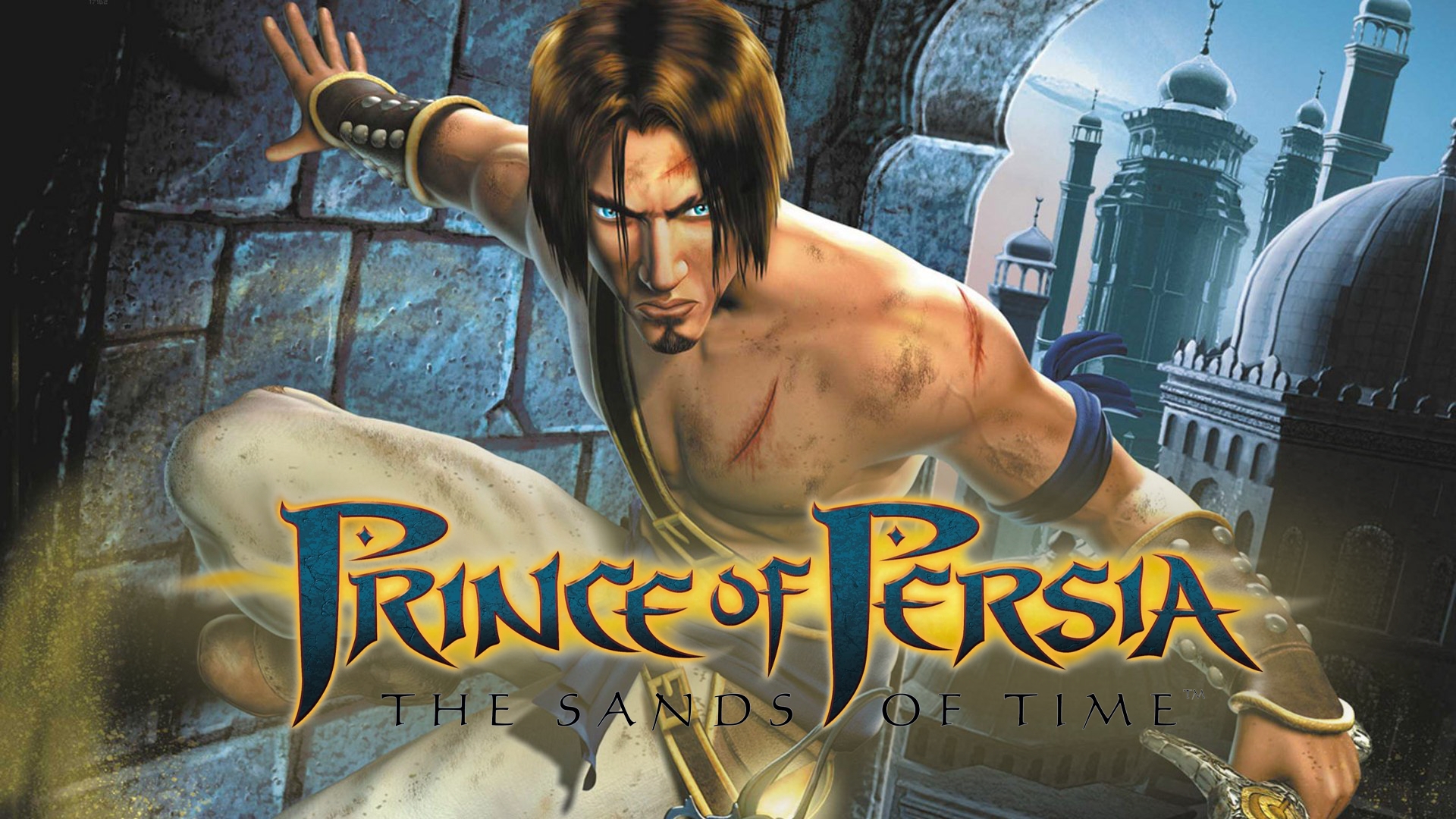
- Prince of Persia: The Sands of Time
- Prince of Persia: Warrior Within
- Prince of Persia: The Two Thrones
- Prince of Persia
- The Forgotten Sands
- Prince of Persia: The Lost Crown
Although these games differ considerably, they share a common identity built around movement, adventure, danger, exploration, and fantasy.
The Original Prince of Persia Changed Platforming
The original Prince of Persia arrived at a time when platform games generally used much simpler animation.
Its protagonist moved differently.
Instead of appearing to glide from one position to another, the character’s movements were carefully animated to resemble human motion. Running, jumping, climbing, falling, and landing had a sense of physical weight.
This was one of the game’s most important innovations.
Rotoscoping and Realistic Movement
The game’s animation was famously developed using rotoscoping, a technique in which movement from recorded footage was used as a reference for animation.
This helped create unusually fluid movement for its era.
The result was more than visual polish. It changed gameplay.
Players had to pay attention to:
- Running speed
- Jump distance
- Landing position
- Character balance
- Trap timing
- Distance between platforms
The character’s animation effectively became part of the control language.
Why the Original Game Felt Different
The first game did not make the player feel overwhelmingly powerful.
Instead, the protagonist was vulnerable.
A badly timed jump could result in a fall. A poorly judged movement could trigger a trap. Enemies could be dangerous if approached carelessly.
That vulnerability created tension.
The player was not simply moving through a level. They were learning how the character’s body behaved.
This relationship between animation, physics, and player timing became one of the franchise’s most important contributions to game design.
Prince of Persia and Environmental Storytelling
Another enduring quality of the franchise is its use of environments to create atmosphere.
Palaces, underground passages, courtyards, towers, and abandoned chambers often communicate the history of the world without requiring lengthy explanations.
Instead of constantly telling the player what happened, the environment creates questions:
- Who built this place?
- Why was it abandoned?
- What lies beyond the next corridor?
- Why are these traps here?
- What happened to the people who once lived here?
This approach allows exploration itself to become part of storytelling.
The Transformation Into 3D
The transition from 2D to 3D was a major challenge for the franchise.
Three-dimensional environments introduced new possibilities but also new problems. Developers had to rethink:
- Camera control
- Jumping
- Navigation
- Vertical movement
- Collision detection
- Combat
- Environmental puzzles
Prince of Persia 3D attempted this transition, but it was The Sands of Time that demonstrated how effectively the series’ movement philosophy could work in a modern 3D environment.
Prince of Persia: The Sands of Time
Released in 2003, Prince of Persia: The Sands of Time became the defining modern entry in the franchise.
The game combined:
- Acrobatics
- Platforming
- Environmental puzzles
- Combat
- Time manipulation
- Storytelling
- Cinematic presentation
Its biggest strength was integration.
Movement was not simply something that happened between story sequences. It was central to the experience.
The player climbed walls, swung from poles, ran across gaps, navigated traps, and manipulated the environment as part of the adventure itself.
The Revolutionary Rewind Mechanic
One of the most memorable ideas in The Sands of Time was the ability to reverse mistakes.
Instead of forcing players to restart immediately after a failed jump, the game allowed the Prince to rewind time.
This mechanic solved a practical design problem while reinforcing the game’s central theme.
Why Rewind Worked So Well
Traditional platforming often treats failure as punishment.
The rewind mechanic turned failure into information.
A player could:
- Attempt a difficult jump.
- Make a mistake.
- Rewind.
- Observe what went wrong.
- Try again with better timing.
This made experimentation less frustrating.
More importantly, the mechanic was connected directly to the narrative. Time manipulation was not merely a convenient gameplay feature; it was part of the fictional world.
That alignment between story and mechanics is one reason the game remains so highly regarded.
Storytelling Through Time
Time became more than a gameplay mechanic in the series.
It represented:
- Regret
- Consequence
- Responsibility
- Memory
- Destiny
- The desire to correct mistakes
This created an interesting relationship between the player’s experience and the protagonist’s story.
The player makes mistakes and rewinds.
The character confronts the consequences of manipulating time.
The two experiences reinforce one another.
That kind of mechanical storytelling remains an important lesson for modern game developers.
The Sands of Time Trilogy
The success of The Sands of Time led to two major follow-ups.
Warrior Within
Prince of Persia: Warrior Within took the franchise in a darker direction.
It introduced:
- More aggressive combat
- A darker atmosphere
- Expanded exploration
- Time-based story elements
- More complex enemy encounters
Its tone was noticeably different from The Sands of Time, showing that the franchise could experiment with atmosphere while retaining its central movement mechanics.
The Two Thrones
Prince of Persia: The Two Thrones attempted to combine elements from the previous games.
It brought back a more adventurous tone while retaining expanded combat and movement systems.
The trilogy became one of the most recognizable action-adventure series of its generation.
Combat in Prince of Persia
Combat has changed considerably throughout the franchise.
However, the strongest entries generally treat combat as part of the broader movement experience rather than as a completely separate system.
The Prince’s agility allows him to:
- Dodge attacks
- Move around opponents
- Use environmental objects
- Chain attacks
- Position himself strategically
This helps maintain the feeling that the protagonist is an agile adventurer rather than a conventional warrior.
The Importance of Movement
Movement is arguably the defining language of Prince of Persia.
In many action games, movement simply gets the player from one combat encounter to another.
In Prince of Persia, movement itself is often the challenge.
A wall, ledge, pole, gap, or platform becomes something to interpret.
The player constantly asks:
Where can I go, and what movement will get me there?
That question has influenced countless action-adventure games.
Influence on Parkour and Traversal Games
Modern games featuring parkour, climbing, wall-running, and elaborate traversal owe something to the foundation established by earlier adventure games, including Prince of Persia.
The franchise demonstrated that movement could be:
- Visually impressive
- Mechanically meaningful
- Narratively expressive
- Central to exploration
Later games expanded these ideas with larger environments and more sophisticated animation systems.
The important legacy is not that every modern traversal mechanic came directly from Prince of Persia, but that the franchise helped establish the appeal of movement as a core form of gameplay.
Prince of Persia and Assassin’s Creed
The relationship between Prince of Persia and Assassin’s Creed is particularly important in Ubisoft’s history.
The development lineage connecting the two franchises is well documented, with ideas from Prince of Persia eventually contributing to the design direction that produced Assassin’s Creed.
The connection is most visible in:
- Climbing
- Traversal
- Vertical environments
- Parkour
- Historical-inspired settings
- Movement across buildings
This makes Prince of Persia an important predecessor to one of the industry’s largest action-adventure franchises.
Prince of Persia: The Forgotten Sands
The Forgotten Sands returned to the Sands of Time era and explored ideas connected to the earlier trilogy.
The game emphasized:
- Platforming
- Environmental puzzles
- Combat
- Elemental abilities
- Time manipulation
Although it did not redefine the franchise in the same way as The Sands of Time, it demonstrated that the series’ core formula still had room for experimentation.
A Different Direction: Prince of Persia
In 2008, Ubisoft released a self-titled Prince of Persia that took the franchise in a substantially different direction.
The game introduced:
- A new protagonist
- A new visual style
- A different interpretation of the world
- A more open exploration structure
- A distinctive companion character
One notable design decision was the treatment of failure.
Instead of repeatedly killing the player character and forcing a conventional restart, the game often used its companion to rescue the protagonist.
This reduced traditional punishment but also changed the tension associated with failure.
It remains one of the franchise’s more interesting experiments.
The Return of the Franchise With The Lost Crown
After years without a major new mainline release, Prince of Persia: The Lost Crown brought the name back into significant conversation.
Rather than attempting to replicate The Sands of Time, the game took the franchise in another direction.
It used a 2D action-platformer / Metroidvania-style structure, combining:
- Fast movement
- Combat
- Exploration
- Abilities
- Platforming
- Environmental puzzles
- A connected world
This was an important decision because it showed that Prince of Persia did not need to remain locked into one formula.
The franchise could return to its platforming roots while incorporating modern design principles.
Why The Lost Crown Was Significant
The game’s approach emphasized movement once again.
Traversal abilities are not merely tools for reaching the next location. They can open previously inaccessible areas and change how players understand the world.
This creates a satisfying relationship between:
Exploration → discovery → new ability → new possibilities.
That structure fits naturally with the franchise’s historical emphasis on movement.
The Artistic Identity of Prince of Persia
The franchise has always experimented with visual interpretations of its world.
Rather than relying on one permanent art style, different games have explored different combinations of:
- Architecture
- Color
- Clothing
- Mythology
- Fantasy
- Lighting
- Environmental design
The strongest entries use their visual style to create a sense of place.
Ancient structures are often presented as both beautiful and dangerous.
That contrast is central to the franchise’s atmosphere.
The Human Side of the Prince
Another important part of the series is the vulnerability of its protagonist.
The Prince is usually athletic and capable, but he is not simply a superhuman force.
He can:
- Fall
- Make mistakes
- Become trapped
- Misjudge situations
- Face consequences
This makes movement meaningful.
When a character is invulnerable, a dangerous jump can feel like a visual effect.
When a character feels vulnerable, the same jump creates tension.
That distinction remains central to good action-adventure design.
Common Misconceptions About Prince of Persia
It Is Only an Old Platform Game
The franchise began as a platformer, but it has developed into several different genres and gameplay structures.
Its history includes cinematic action-adventure games, 3D platforming, combat-focused entries, and modern 2D exploration.
Every Game Uses the Same Story
The series contains different continuities, protagonists, interpretations, and settings.
Players should not assume that every Prince of Persia title tells one continuous story.
The Franchise Is Defined Only by Time Travel
Time manipulation is particularly associated with The Sands of Time, but movement and environmental traversal are arguably even more fundamental to the franchise’s identity.
What Makes Prince of Persia Still Relevant?
Three design ideas stand out.
1. Movement Can Communicate Character
A character’s movement can tell players whether they are confident, vulnerable, powerful, or afraid.
2. Mechanics Can Reinforce Story
The rewind mechanic works because its gameplay purpose and narrative meaning are connected.
3. Failure Can Teach Rather Than Simply Punish
The best games use failure to help players understand systems.
Prince of Persia repeatedly experimented with this idea, especially through time manipulation and forgiving traversal mechanics.
The Lasting Influence of Prince of Persia
The franchise’s influence can be seen across modern gaming.
Its legacy can be connected to the development of:
- Cinematic platforming
- Parkour systems
- Environmental traversal
- Character animation
- Time-reversal mechanics
- Integrated narrative mechanics
- Acrobatic action games
- Exploration-focused platformers
But its greatest contribution may be conceptual.
Prince of Persia demonstrated that movement itself could be a storytelling tool.
A jump could communicate danger.
A climb could communicate determination.
A fall could communicate vulnerability.
A rewind could communicate regret.
That is a powerful design philosophy.
FAQ
What is Prince of Persia known for?
Prince of Persia is particularly known for fluid character animation, platforming, acrobatic movement, environmental puzzles, fantasy storytelling, and—in The Sands of Time—time manipulation. The original 1989 game was especially notable for its realistic movement animation.
Which Prince of Persia game should beginners play?
There is no single correct starting point because the games offer very different experiences. The Sands of Time is a strong choice for players interested in the classic 3D cinematic formula, while The Lost Crown is a good option for players who prefer modern 2D action-platforming and exploration.
Is Prince of Persia connected to Assassin’s Creed?
The franchises are connected through development history. Concepts and work associated with Prince of Persia contributed to the evolution of ideas that eventually helped shape Assassin’s Creed, particularly around parkour and traversal. However, they are separate franchises with different stories and identities.
Why is The Sands of Time so important?
The Sands of Time successfully combined acrobatic traversal, environmental puzzles, combat, cinematic storytelling, and a rewind mechanic into a cohesive experience. Its use of time manipulation also demonstrated how a gameplay system could reinforce the themes of a game’s narrative.
Is Prince of Persia still active?
Yes. The franchise returned to prominence with Prince of Persia: The Lost Crown, which introduced a modern 2D action-platforming interpretation. Ubisoft has also continued working on the broader future of the Prince of Persia brand.
Final Thoughts
The history of Prince of Persia is ultimately a history of experimentation.
The original game demonstrated how animation could make movement feel human. The Sands of Time showed how 3D traversal, narrative, and time manipulation could work together. Later entries experimented with darker storytelling, new characters, different structures, and eventually a return to 2D platforming.
What connects these eras is not one specific character or mechanic.
It is the idea that movement should matter.
The Prince climbs because the environment demands it. He jumps because timing matters. He falls because mistakes have consequences. And when time can be reversed, the mechanic turns failure into another part of the story.
That philosophy explains why the franchise continues to matter decades after its debut. Prince of Persia is not simply remembered because it was an influential game series. It remains relevant because its central design ideas—movement, vulnerability, exploration, rhythm, and meaningful interaction with space—continue to be useful foundations for great adventure games.