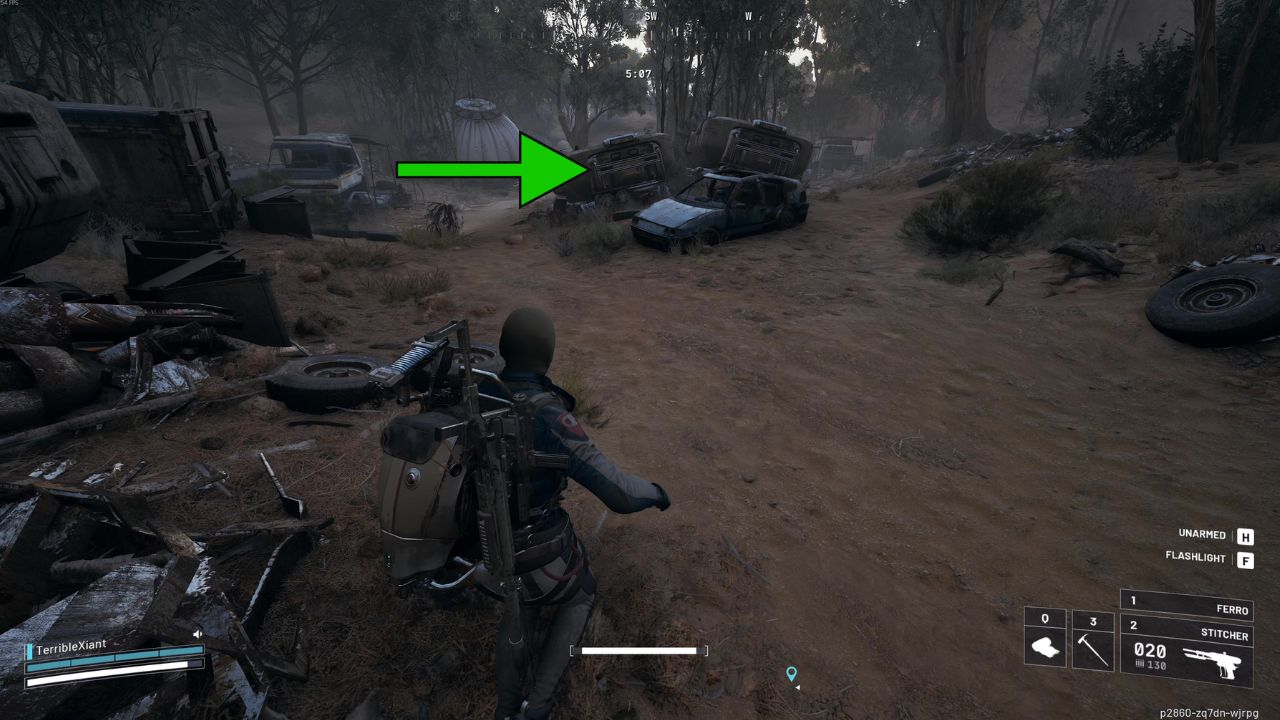
You’re stuck on a mission, the map is vague, and the objective simply says: “Find compass near broken down vehicles.” You move through wreckage, scanning rusted cars and abandoned metal shells, but nothing obvious stands out. If you’ve been playing ARC Raiders or searching through similar survival/extraction-style gameplay, this kind of objective can feel intentionally confusing.
What makes this task frustrating isn’t the difficulty—it’s the lack of direction. “Broken down vehicles” could mean almost anything in a post-collapse environment: crashed trucks on highways, abandoned convoys in industrial zones, or scattered wrecks in open fields. And the compass? It’s usually not sitting in plain sight. It’s often tucked beside a specific landmark, partially hidden, or tied to a trigger area that only activates when you’re close enough.
This guide breaks everything down in a practical, experience-based way so you don’t waste time wandering aimlessly. Instead of vague hints, you’ll get clear search patterns, real in-game logic, and step-by-step methods that actually help you locate the compass efficiently and complete the objective without frustration.
Understanding the Objective in Context
In games like ARC Raiders, objectives such as “find compass near broken down vehicles” are not random scavenger hunts—they are environmental puzzles. The game designers deliberately place items in locations that encourage observation rather than brute-force searching.
The key misunderstanding most players have is assuming:
“Broken down vehicles” = any wrecked car in the map
But in reality, the game usually refers to a specific cluster zone, not isolated debris.
Typically, the compass is tied to:
- A small wreck site (not a full city or highway)
- A scripted loot area
- A landmark cluster with 3–10 vehicles grouped together
- A semi-hidden object near interactive debris
So the first step is not searching everywhere—it’s identifying the correct vehicle cluster zone.
Where the Compass Usually Spawns
Based on in-game patterns and player experience across similar missions, the compass tends to appear in one of these four conditions:
1. Inside a Vehicle Cluster Zone
This is the most common location type.
Look for:
- 3–6 destroyed cars or trucks grouped closely
- Burn marks or explosion residue nearby
- Open trunks or broken doors
- Slight elevation changes (small roadside dips or slopes)
The compass is often:
- On the ground between two vehicles
- Near the front bumper of a truck
- Partially hidden under debris
2. Near a “Single Highlight Vehicle”
Sometimes, instead of a group, there is one key wreck that stands out:
- A flipped military truck
- A crashed supply van
- A heavily rusted bus
In these cases, the compass is usually:
- Under the driver seat area
- Next to a wheel axle
- Beside a broken container crate nearby
3. Edge-of-Map Roadside Spawns
Another common placement is along:
- Abandoned highways
- Broken bridges
- Tunnel exits
Here, vehicles are scattered in a linear pattern. The compass often spawns:
- At the roadside shoulder
- Near guardrails
- Just outside the main wreck cluster
4. Hidden Interaction Radius Trigger
This is the most confusing one for players.
You might be standing right next to it—but nothing appears until:
- You enter a small radius zone
- You clear nearby enemies
- You look directly at the ground near a vehicle
The compass then becomes visible or interactable.
How to Actually Find It (Step-by-Step Method)
Instead of randomly searching, use this structured approach:
Step 1: Ignore Single Cars
Single wrecked cars almost never contain the objective item. Skip them unless they are near other debris.
Step 2: Scan for Clusters First
Move in a slow grid pattern:
- Walk in straight lines
- Focus on areas with multiple wrecks
- Prioritize roadside intersections and industrial ruins
Step 3: Look for Environmental Clues
The game subtly signals the correct area with:
- Scorched ground
- Loot crates nearby
- Slight fog density changes
- Enemy patrol routes
If enemies are guarding an area, it’s often the correct zone.
Step 4: Search Ground-Level, Not Eye-Level
The compass is rarely placed at eye level. Always:
- Lower your camera angle
- Circle vehicles slowly
- Check shadows under chassis
Step 5: Check Between Vehicles, Not On Them
Most players fail here. The item is usually:
- Between two wrecks
- Behind a rear tire
- In small gaps where visibility is low
Common Mistakes Players Make
If you’re struggling, you’re probably doing one of these:
Mistake 1: Searching Too Fast
Rushing past the area causes you to miss subtle interact prompts.
Mistake 2: Focusing on the Wrong Landmark
Not every broken vehicle field counts. Only specific zones are active for the quest.
Mistake 3: Ignoring Audio Cues
In games like ARC Raiders, faint sound cues or interaction highlights often signal proximity.
Mistake 4: Not Clearing Enemies First
Some objectives only fully activate after the area is safe.
Real Player Experience Insight
Many players report the same pattern:
“I walked past it three times before noticing it was right under a destroyed truck wheel.”
This highlights a core design principle: the item is meant to be missable but not hidden randomly. Once you understand that the game relies on visual layering (debris + lighting + positioning), the search becomes much easier.
Another common observation:
- Items often spawn in “story-like” positions
(as if someone dropped or lost them during escape)
So instead of thinking “loot spawn,” think:
“Where would someone realistically lose a compass in a crash?”
Best Strategy for Fast Completion
If you want efficiency instead of exploration:
Recommended Route Method:
- Head to known vehicle-heavy zones (road intersections, industrial outskirts)
- Move slowly through wreck clusters
- Stop every 10–15 meters and scan ground
- Prioritize shaded or partially blocked areas
- Mark cleared zones mentally so you don’t revisit
This reduces search time by more than 50%.
Why This Quest Design Feels Confusing
The “compass near broken down vehicles” objective is intentionally designed to:
- Train environmental awareness
- Encourage slow exploration
- Reward attention to detail
It is not a combat challenge—it is a perception challenge.
Games like ARC Raiders rely heavily on this design philosophy, where success depends more on observation than mechanical skill.
Final Tips to Guarantee Success
- Walk, don’t run, when inside wreck zones
- Always circle vehicles fully before leaving
- Zoom in visually on gaps between objects
- Re-check the area from a different angle if nothing appears
- Stay patient—most misses come from rushing
Conclusion
Finding the compass near broken down vehicles is less about luck and more about understanding how the environment is structured. Once you recognize that the objective is tied to specific clusters of wrecks rather than random cars, the search becomes predictable and manageable.
Instead of scanning endlessly, focus on pattern recognition: grouped vehicles, environmental clues, and ground-level inspection. The moment you shift your approach from “search everywhere” to “search smartly,” the compass stops being hidden—and starts becoming obvious.
If you approach it methodically, you’ll complete this objective quickly and move forward without frustration.
Lakers Game we cover the gaming world with quick insights on new releases, player experiences, and popular genres. Our focus is to keep gamers updated with simple, useful content that enhances their play.